
As Ebony has become increasingly difficult and expensive to source, the guitar industry has been looking for alternatives that can balance tone, feel, durability, and responsible sourcing. Pau Ferro has emerged as one of the most popular choices, particularly for guitar fingerboards.
Since the mid-2010s, major guitar brands have increasingly adopted Pau Ferro as an alternative to Ebony and Rosewood on selected models. Its combination of hardness, smooth playing feel, attractive grain, and balanced tonal response has made it especially popular among guitar builders, luthiers, and custom instrument makers.
This guide introduces Pau Ferro and explains why it has become such a respected tonewood for modern guitar making.
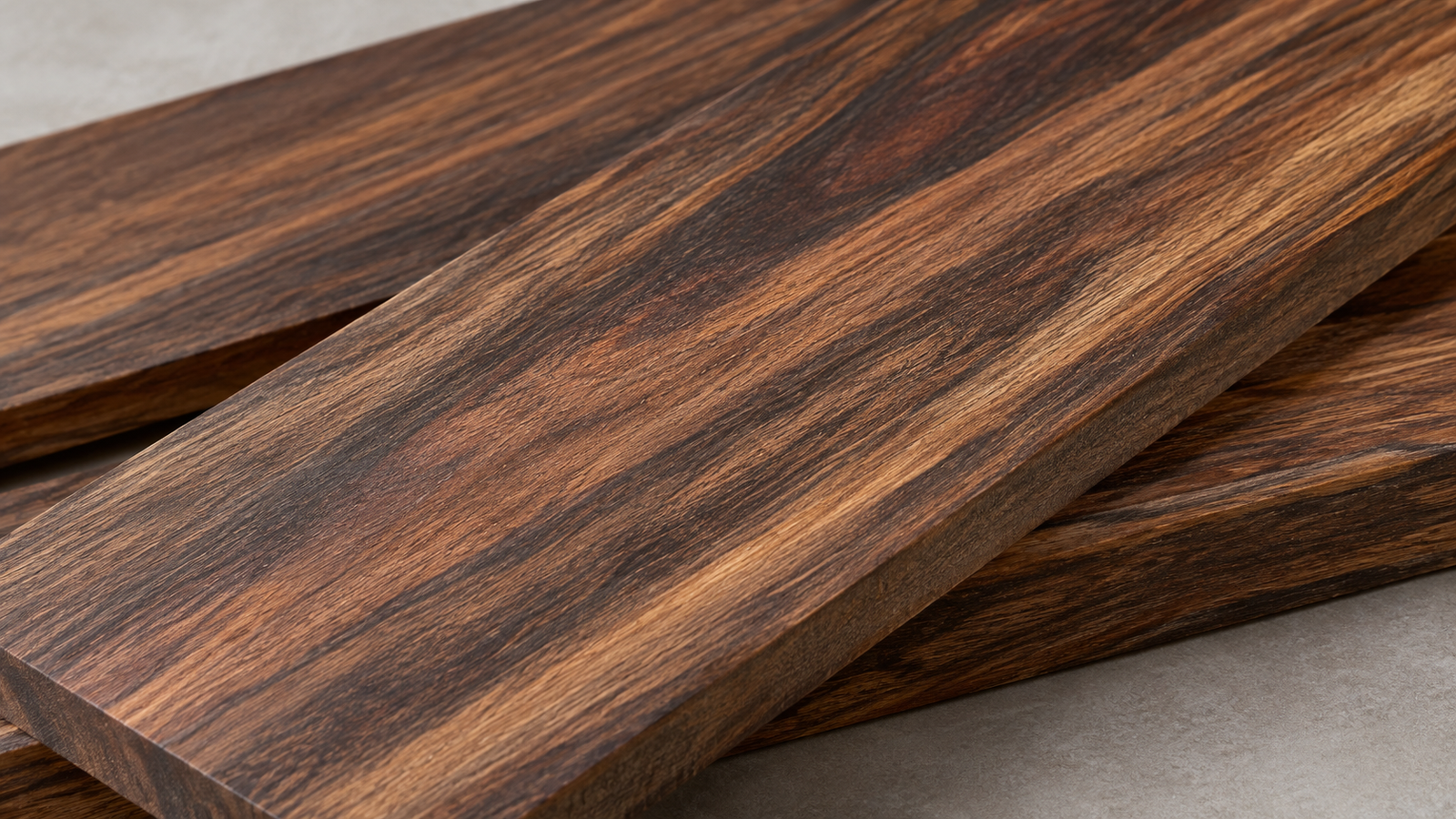
What Is Pau Ferro?
Pau Ferro, most commonly referring to Machaerium scleroxylon, is a dense hardwood native primarily to Bolivia and Brazil in South America. It belongs to the Fabaceae family and is widely used in musical instruments, particularly guitar fingerboards.
The Portuguese name “Pau Ferro” literally translates to “Iron Wood,” a fitting name considering its high density and hardness.
Pau Ferro is also known in the timber trade by several other names, including Morado, Bolivian Rosewood, and Santos Rosewood. However, these trade names can sometimes create confusion because different species may be sold under similar commercial names.
There are also African hardwoods marketed as “Pau Ferro,” including some Swartzia species, which are botanically different from the South American Pau Ferro discussed in this guide.
For professional tonewood purchasing, it is therefore important to confirm the botanical name, geographic origin, and supplier documentation rather than relying only on the common trade name.
Appearance and Grain Characteristics
One of the main attractions of Pau Ferro is its natural appearance.
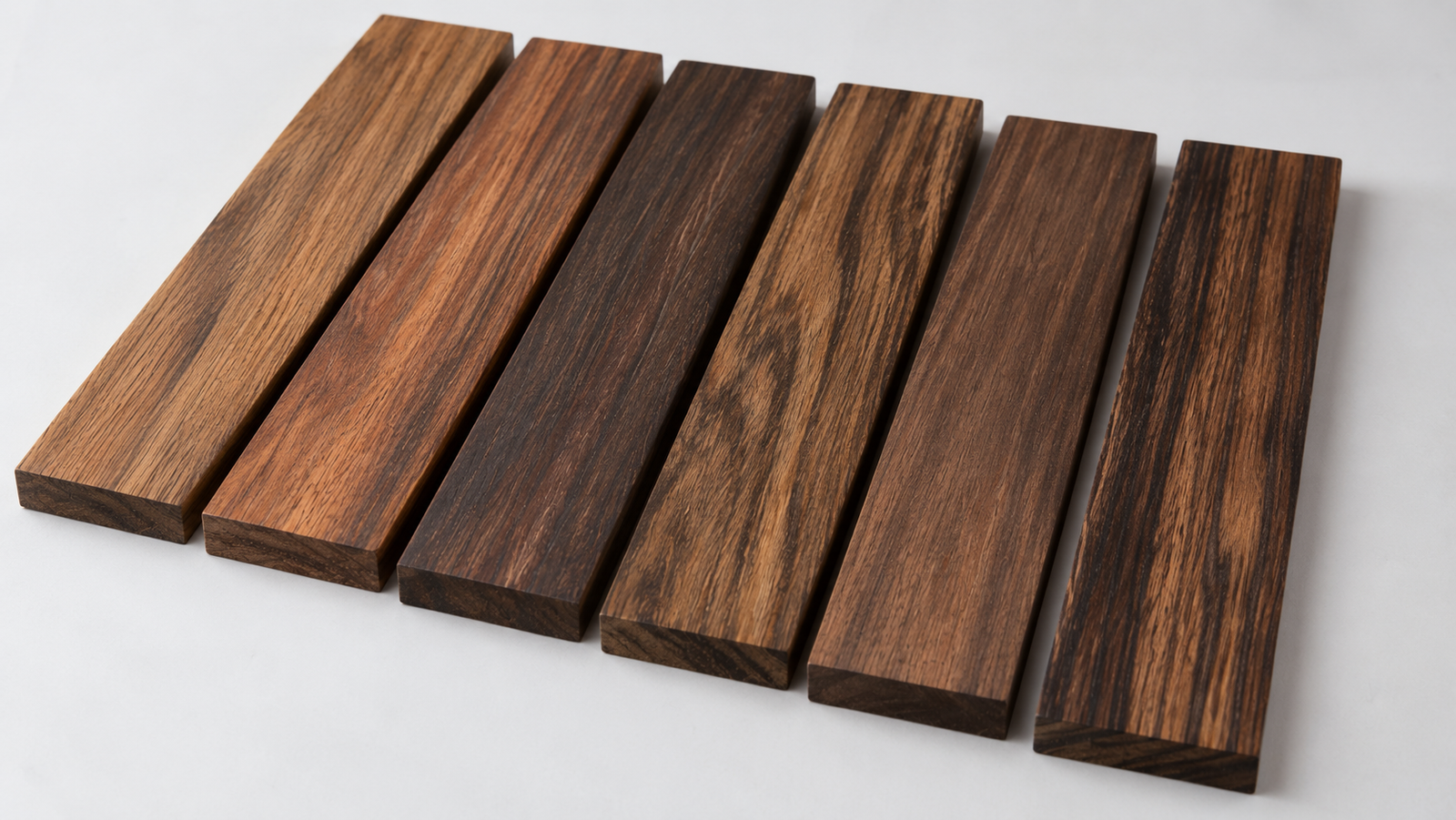
Its color can range from light brown and reddish brown to chocolate brown and deep purplish brown. Many boards feature contrasting streaks of lighter and darker colors, creating a subtle but distinctive visual character.
Compared with Ebony, Pau Ferro generally offers more visible natural grain and color variation. Compared with Rosewood, its appearance can be somewhat more restrained and uniform, depending on the individual piece.
The grain is usually straight to interlocked, with a fine and relatively smooth texture. Some pieces can show particularly attractive figure and color variation, making them suitable for high-end custom instruments.
Like many hardwoods, Pau Ferro can also change in appearance with age and exposure to light. Its color may become deeper and more visually integrated over time.
Density and Physical Properties
Pau Ferro is a high-density hardwood, making it particularly suitable for components that require hardness, durability, and dimensional stability.
Air-dry density is commonly reported in the approximate range of 0.75–0.85 g/cm³, although actual density can vary depending on species, growing conditions, moisture content, and individual boards.
Its density places Pau Ferro between many Rosewood species and very dense Ebony species.
This combination of hardness and density gives Pau Ferro several useful characteristics for guitar making:
- High wear resistance — suitable for fingerboards that experience constant contact with strings and fingers
- Good dimensional stability — properly dried material can perform well in changing environmental conditions
- Smooth surface — it can be polished to a very smooth finish
- Good durability — its hardness makes it suitable for long-term instrument use
Pau Ferro is also naturally oily. This contributes to its smooth feel, but it also requires attention during gluing.
Before bonding Pau Ferro, the gluing surfaces should generally be properly cleaned and degreased. Many luthiers use acetone or an appropriate wood-safe degreasing method immediately before gluing to remove surface oils and improve bond strength.
As always, the exact preparation method should be matched to the adhesive manufacturer’s recommendations.
Tonal Characteristics
Pau Ferro is often described as having a tonal character that sits somewhere between Ebony and Rosewood.
Although the final sound of a guitar depends on the entire instrument rather than the fingerboard material alone, Pau Ferro is generally associated with:
Clear High Frequencies
Pau Ferro can provide good note articulation and a relatively clear high-end response without necessarily sounding as sharp or pronounced as some very dense Ebony fingerboards.
Balanced Midrange
Its density contributes to a solid and focused midrange, helping individual notes remain well defined.
Good Sustain and Note Definition
The hardness of Pau Ferro allows it to provide a firm contact surface for strings. This can contribute to good sustain, attack, and note clarity when used for fingerboards and other guitar components.
Overall, Pau Ferro is often appreciated because it does not sit at an extreme end of the tonal spectrum. Instead, it provides a balanced combination of clarity, warmth, and definition.
Common Applications of Pau Ferro
1. Guitar Fingerboards
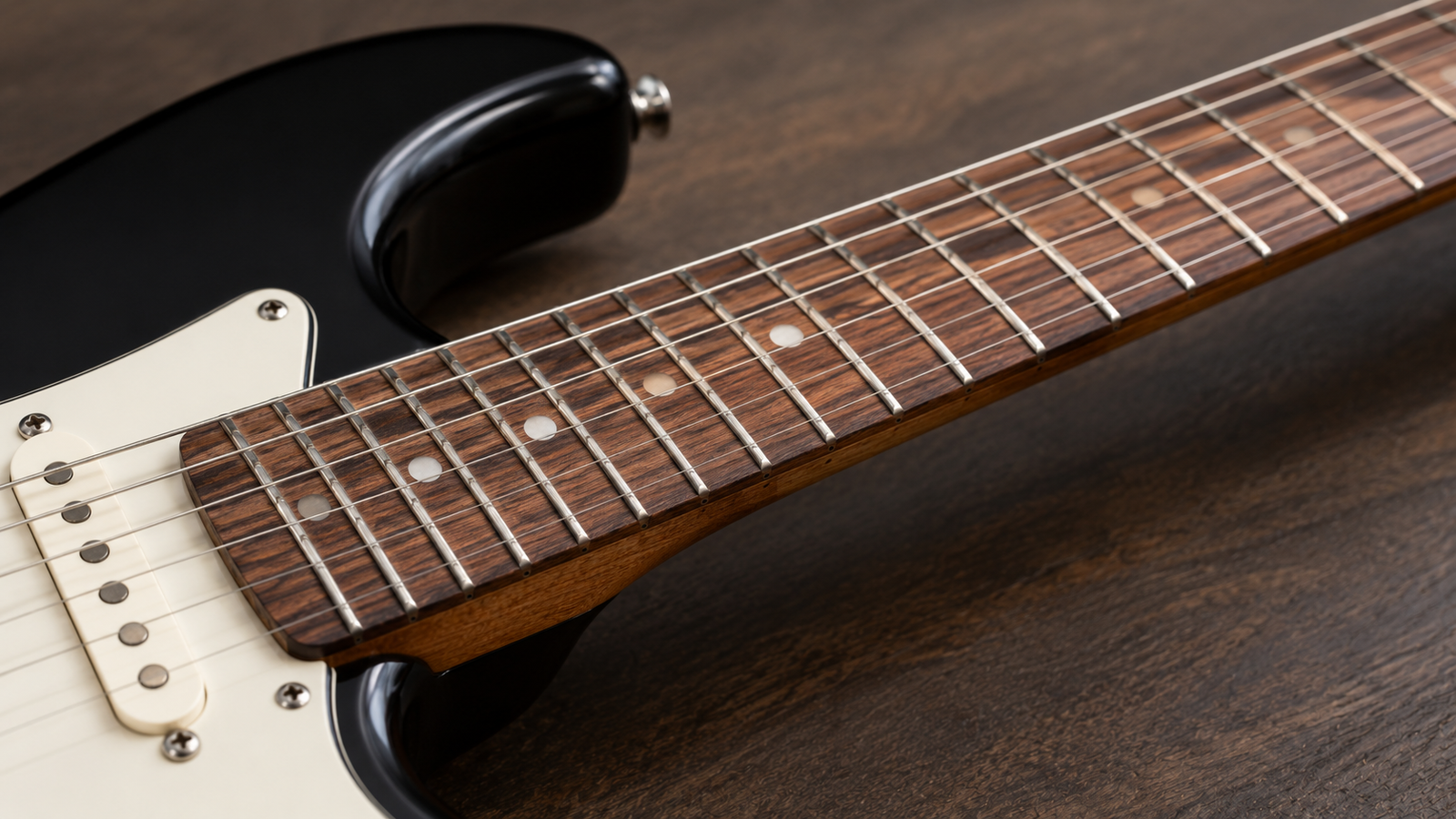
The fingerboard is by far the most recognized application of Pau Ferro in guitar making.
Its hardness, smooth texture, durability, and attractive appearance make it a practical alternative to traditional fingerboard materials such as Ebony and Rosewood.
Pau Ferro is especially popular for:
- Electric guitar fingerboards
- Acoustic guitar fingerboards
- Custom guitars
- Boutique instruments
- Replacement fingerboards
2. Guitar Bridges
Pau Ferro can also be used for acoustic guitar bridges and other structural components where hardness and wear resistance are important.
3. Acoustic Guitar Back and Sides
Although much less common than Rosewood, some builders use Pau Ferro for acoustic guitar back and side sets.
Its relatively high density and distinctive appearance can make it an interesting choice for custom and boutique instruments.
4. Small Instrument Components
Because of its hardness and attractive figure, Pau Ferro can also be used for smaller components such as:
- Control knobs
- Pickup covers
- Decorative inlays
- Headstock veneers
- Other guitar hardware accents
Pau Ferro vs. Ebony: Which Should You Choose?
For many guitar builders, the choice between Pau Ferro and Ebony ultimately comes down to appearance, feel, tonal preference, availability, and budget.
Ebony remains one of the most established fingerboard materials in guitar making. Its exceptional hardness, dark appearance, and long history in premium instruments make it a benchmark material.
Pau Ferro, however, offers a different combination of advantages.
It is generally less visually uniform than Ebony, with natural brown and reddish tones rather than a predominantly black appearance. It also offers a slightly different tactile and tonal character while maintaining the hardness required for a durable fingerboard.
For builders looking for a high-quality alternative to Ebony, Pau Ferro can therefore be an excellent option.
This comparison can be especially useful for buyers who want to understand the differences in tone, feel, appearance, workability, and price before choosing a fingerboard material.
Sourcing and Compliance Notes
Pau Ferro has an important advantage when it comes to sourcing: Machaerium scleroxylon is not currently subject to the same CITES restrictions that apply to several well-known Dalbergia rosewood species.
However, international trade regulations can change, and requirements may also depend on the species, country of origin, destination country, and applicable national regulations.
For international tonewood purchases, it is therefore good practice to confirm the current regulatory status and obtain appropriate documentation from your supplier when required.
When selecting Pau Ferro stock, buyers should also pay attention to several practical factors:
1. Grain Consistency
Look for boards with attractive and reasonably consistent grain. Extremely irregular grain can sometimes make machining more difficult.
2. Moisture Content
Proper moisture content is essential for tonewood stability. For many indoor guitar-building environments, properly kiln-dried or air-dried wood is commonly brought to approximately 8–12% moisture content, depending on the local climate and storage conditions.
3. Surface Oil
Because Pau Ferro is naturally oily, gluing surfaces should be properly prepared before assembly.
4. Cracks and Defects
Inspect fingerboard blanks carefully for:
- End checks
- Surface cracks
- Insect damage
- Excessive knots
- Warping
- Uneven thickness
High-quality fingerboard blanks should be properly seasoned, dimensionally stable, and free from significant structural defects.
How to Choose Pau Ferro Fingerboard Blanks
For guitar builders and luthiers, choosing the right Pau Ferro blank involves more than simply looking at color.
Consider the following factors:
Color:
Choose between lighter brown, reddish brown, chocolate brown, or darker purplish-brown pieces depending on the desired appearance.
Grain:
Straight and relatively stable grain is generally easier to machine, while figured pieces can provide a more distinctive appearance.
Thickness:
Make sure the blank has sufficient thickness for your intended fingerboard design and final machining process.
Dimensions:
Check the length and width against your guitar scale length and fingerboard design.
Moisture:
Properly seasoned material is essential for reducing the risk of movement after installation.
Surface quality:
Look for blanks with minimal cracks, checks, insect damage, and other defects.
 []
[]
Final Thoughts
Pau Ferro has grown from a relatively niche material into one of the most widely recognized alternatives to traditional guitar fingerboard woods.
Its combination of high density, durability, smooth feel, attractive natural grain, and balanced tonal characteristics makes it particularly well suited to modern guitar making.
While Ebony remains an excellent choice for builders who prefer its distinctive appearance and playing characteristics, Pau Ferro offers a compelling alternative for those looking for a different visual character and a practical, high-performance fingerboard material.
For custom guitar builders, luthiers, and tonewood buyers, Pau Ferro is certainly a wood worth considering.
Browse our Pau Ferro tonewood selection to find fingerboard blanks available in different grades, grain patterns, dimensions, and specifications for your next guitar project.
Pau Ferro is an excellent choice for guitar builders looking for a durable and visually distinctive alternative to traditional fingerboard woods such as Ebony and Rosewood.