
If Maple represents brightness and clarity, and Mahogany represents warmth and heft, Black Walnut sits somewhere in between — while carving out a personality all its own.
Deep brown coloring, fine grain, and a balanced midrange have made Black Walnut increasingly popular among custom guitar builders and boutique guitar brands.
This guide introduces Black Walnut — a wood that’s understated, but far from plain.
What Is Black Walnut?
Black Walnut (Juglans nigra) is a hardwood in the Juglandaceae family, native to eastern North America, particularly the central and eastern United States.
It is one of North America’s most valued native hardwoods and is widely used for high-end furniture, gunstocks, interior millwork, and musical instruments.
Black Walnut trees can grow to substantial sizes, producing large, usable boards. The heartwood is typically deep brown to dark purplish-brown, while the sapwood is much lighter, ranging from pale yellow to creamy white.
The contrast between heartwood and sapwood can create an attractive natural appearance, especially in carefully selected tonewood.
Appearance and Grain Characteristics
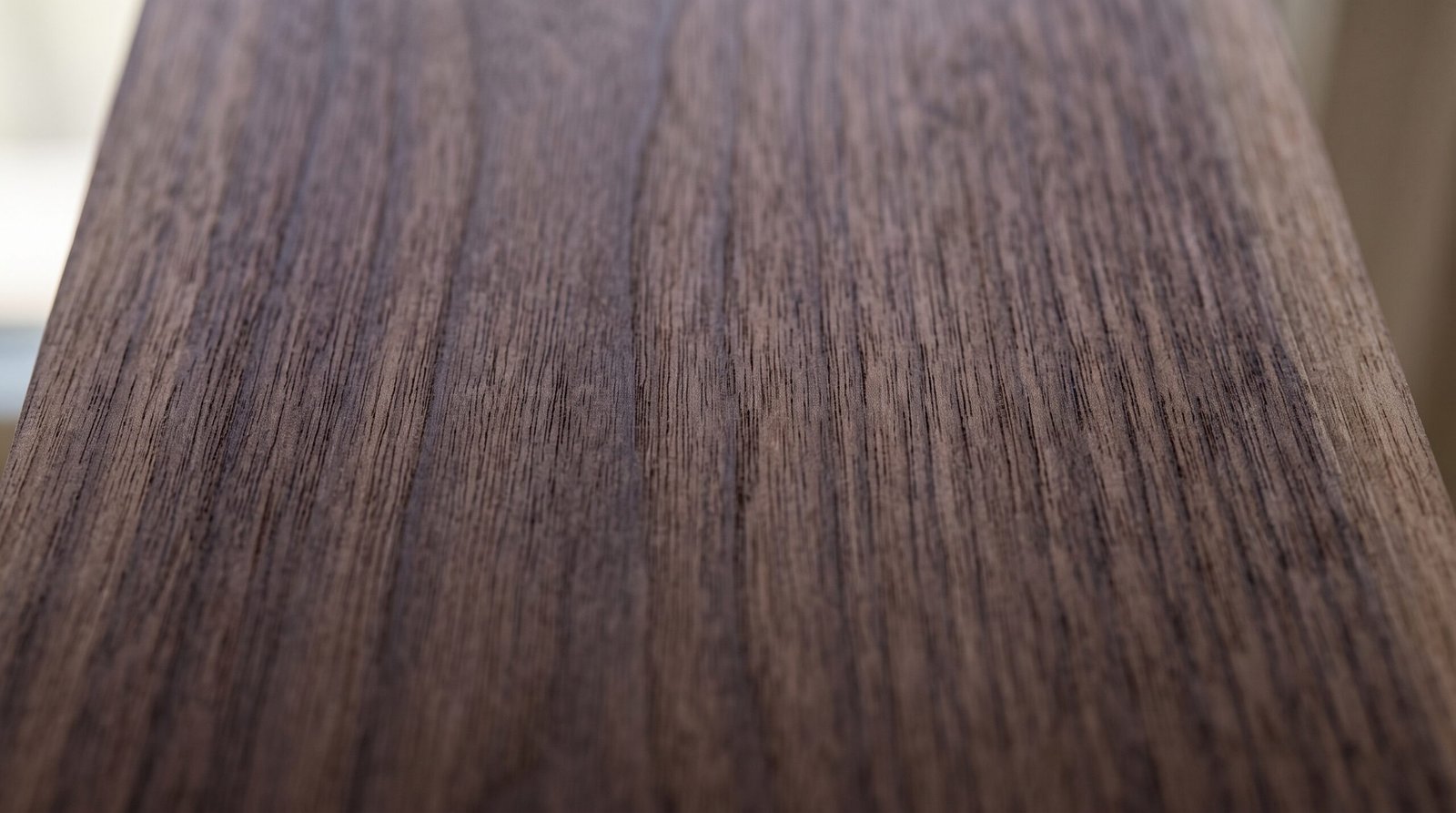
One of Black Walnut’s most recognizable characteristics is its deep chocolate-brown to dark purplish-brown heartwood.
Unlike many lighter-colored tonewoods, Black Walnut can provide a naturally dark and sophisticated appearance without requiring heavy staining.
The grain is generally fine and relatively even, with straight grain being common. However, some pieces may display wavy grain, curly figure, or burl figure. These figured pieces are often selected for decorative guitar tops, veneers, headstocks, and custom instruments.
As Black Walnut ages and is exposed to light and air, its color can gradually become somewhat lighter and warmer, developing a softer brown appearance over time.
Density and Physical Properties
Black Walnut has an air-dry density of approximately 0.55–0.64 g/cm³, placing it in the medium-density hardwood range.
It is generally lighter than Maple and falls within a similar overall density range to many Mahogany species.
One of its major advantages is workability. Its relatively straight grain makes Black Walnut suitable for planing, carving, routing, drilling, and sanding.
When properly dried and stored, Black Walnut also offers good dimensional stability and relatively low shrinkage. These characteristics make it practical for both furniture and musical instrument construction.
For guitar builders, however, the quality of the individual piece remains important. Grain orientation, moisture content, drying history, and internal defects should all be considered when selecting tonewood.
Tonal Characteristics
Black Walnut is often described as having a tonal character somewhere between Mahogany and Maple.
Its sound is generally associated with a full midrange, controlled bass response, and smooth high frequencies.
Full, Warm Midrange
Black Walnut can produce a strong and substantial midrange without sounding overly heavy. This makes it particularly attractive for guitar bodies where a balanced and expressive tonal response is desired.
Controlled Low End
Compared with some warmer Mahogany-based designs, Black Walnut can provide a slightly tighter and more controlled low end.
This can help maintain definition when playing chords, riffs, and lower-register passages.
Smooth High Frequencies
Black Walnut generally has a less aggressive high-end character than Maple. The result can be a smoother and rounder overall response while still retaining useful clarity and articulation.
Because of this balance, Black Walnut is often considered an all-around body wood for a wide range of guitar designs.
Common Applications
Black Walnut is versatile enough to be used in several areas of guitar construction.
Guitar Bodies
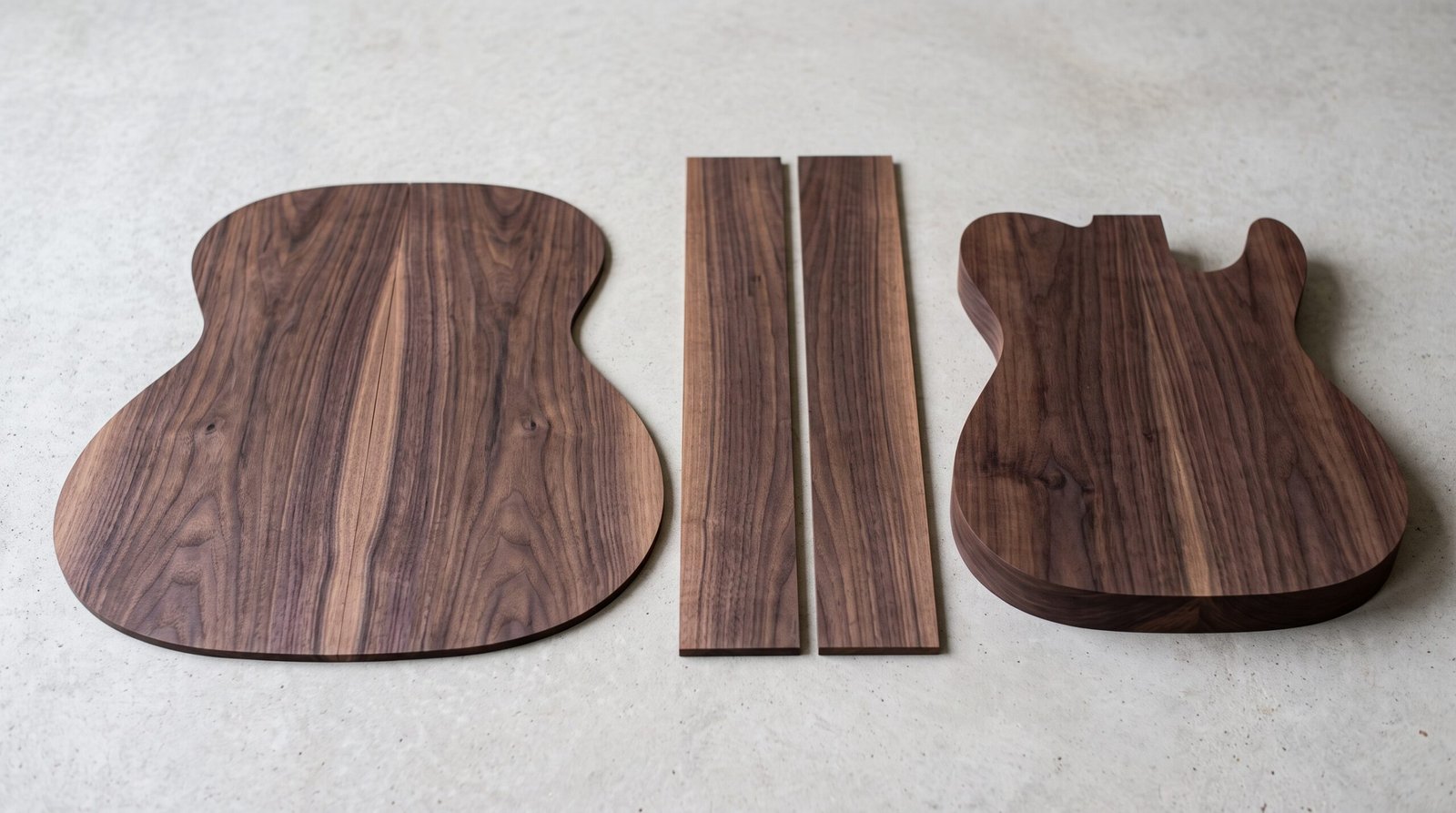
Black Walnut is particularly popular for solid electric guitar bodies. Its combination of moderate weight, attractive appearance, workability, and balanced tonal character makes it a strong choice for custom and boutique instruments.
Guitar Tops
Black Walnut can also be used as a decorative or structural top material, particularly when a darker visual appearance and strong low-mid character are desired.
Acoustic Guitar Back & Sides
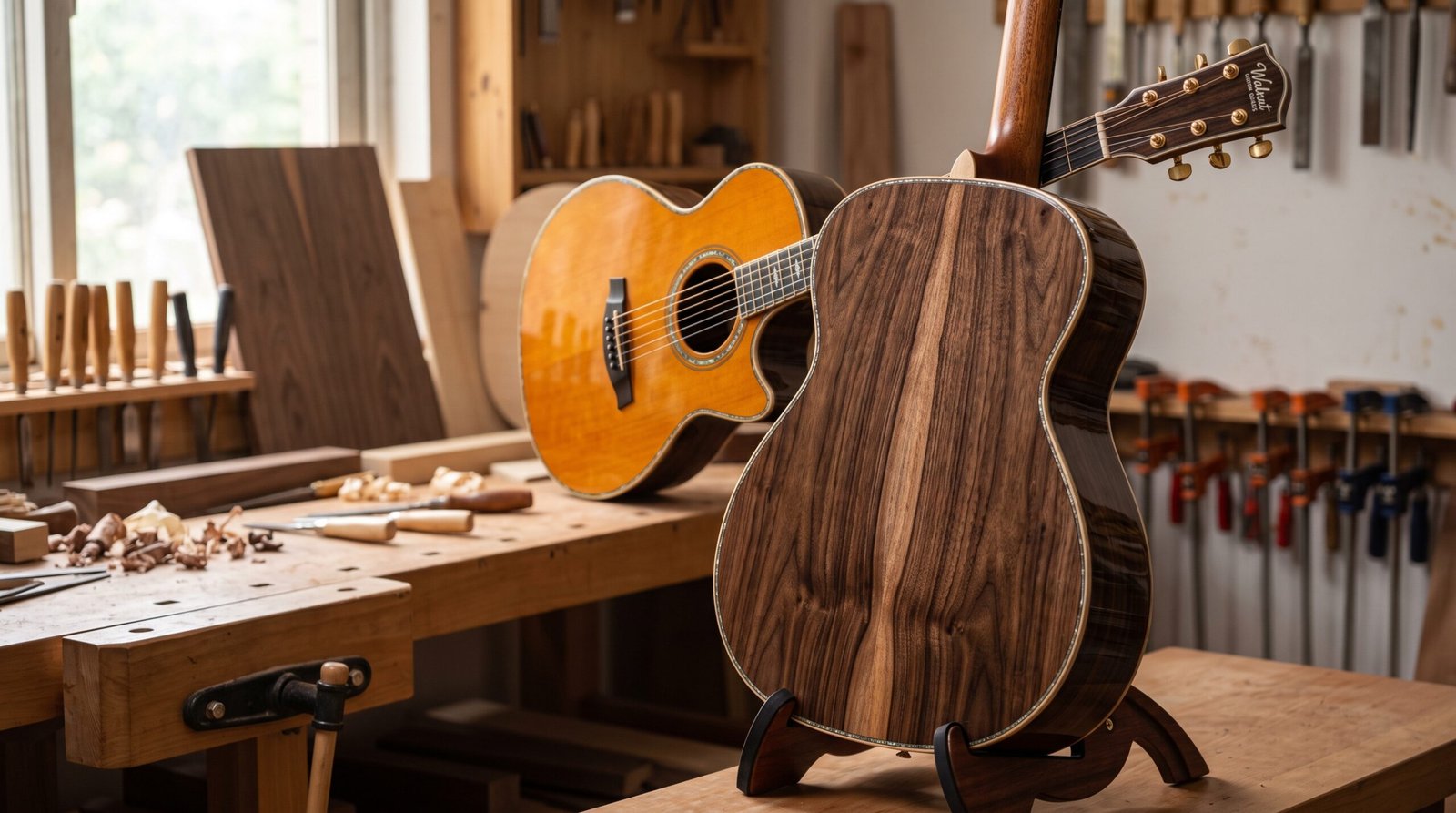
Black Walnut is also used for acoustic guitar back and sides. It can serve as an alternative to more traditional tonewoods such as Mahogany and Rosewood.
Burl and Figured Accents
Highly figured Walnut, including Walnut Burl, can be used for decorative guitar tops, veneers, headstocks, and other visual accents.
Black Walnut vs. Maple: Which Should You Choose?
Black Walnut and Maple offer noticeably different characteristics, making the choice largely dependent on the desired appearance, weight, tonal balance, and playing style.
Choose Maple if you want:
- A brighter and more pronounced attack
- Strong articulation and clarity
- A harder, denser wood character
- A visually lighter and more figured appearance
Choose Black Walnut if you want:
- A warmer and fuller midrange
- A more controlled low end
- Smooth, less aggressive highs
- A naturally dark and sophisticated appearance
For builders looking for a balanced alternative between the tonal characteristics commonly associated with Maple and Mahogany, Black Walnut is worth considering.
Maple Wood Guide / Flame Maple vs. Birdseye Maple
Buying Tips for Black Walnut Tonewood
When selecting Black Walnut tonewood, several factors deserve attention.
1. Heartwood-to-Sapwood Ratio
If you are looking for a consistent dark appearance, choose pieces with a higher proportion of heartwood.
A small amount of sapwood can create attractive contrast, but excessive sapwood may not match the desired appearance of a finished instrument.
2. Moisture Content
Proper moisture content is essential when purchasing and storing tonewood.
For properly dried indoor guitar-making stock, a moisture content of approximately 8–12% is commonly targeted, depending on the storage environment and intended application.
3. Grain Straightness
For standard guitar construction, relatively straight and consistent grain is generally easier to process.
If you specifically want a highly figured appearance, however, wavy, curly, or burl grain can provide a more distinctive visual effect.
4. Mineral Streaks and Natural Marks
Black Walnut can naturally contain mineral streaks, small knots, or old insect marks.
These features do not necessarily make the wood unsuitable for guitar making, but they should be evaluated carefully because they can affect the appearance, machining process, and structural integrity of the finished piece.
Final Thoughts
Black Walnut has earned its place among popular tonewoods through a combination of balanced tone, attractive appearance, good workability, and reliable stability.
Its full and warm midrange, controlled low end, and smooth high frequencies give it a character that sits comfortably between the tonal profiles commonly associated with Mahogany and Maple.
For guitar builders looking for a naturally dark hardwood with a balanced tonal character, Black Walnut deserves serious consideration.
Whether used for electric guitar bodies, acoustic guitar back and sides, decorative tops, or figured accents, Black Walnut offers a distinctive combination of visual character and practical performance.
Looking for Black Walnut Tonewood?
Looking for Black Walnut stock for your next guitar build?
Explore our Black Walnut tonewood collection to find available wood selections across different grades, dimensions, grain patterns, and applications.