
Choosing the right wood for a guitar fingerboard is important for luthiers, guitar makers and musical instrument manufacturers.
Pau Ferro and Ebony are both popular hardwoods for guitar fingerboards. They are durable, dense and attractive, but they have very different appearances and characteristics.
So, which is better for a guitar fingerboard?
The answer depends on the guitar design, appearance, workability and the preferences of the builder.
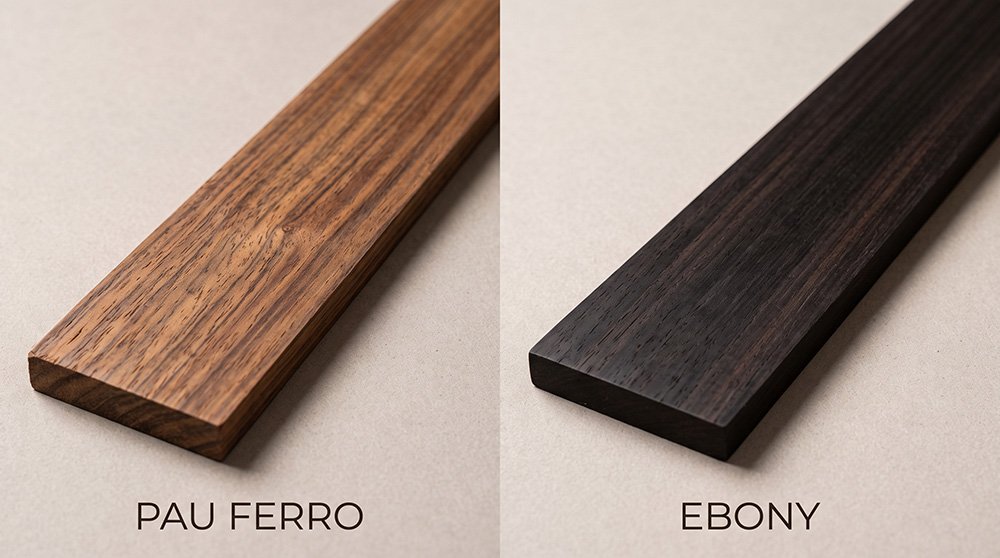
What Is Pau Ferro?
Pau Ferro is a commercial name associated with hardwoods in the Machaerium genus.
One important species associated with the Pau Ferro trade is Machaerium scleroxylum.
It may also be sold under commercial names such as:
- Santos Rosewood
- Morado
- Bolivian Rosewood
Because commercial names can vary between markets, professional buyers should confirm the botanical species when purchasing guitar wood.
Pau Ferro is known for attractive:
- Brown colors
- Reddish-brown tones
- Golden-brown appearance
- Contrasting grain patterns
It is widely used for:
- Guitar fingerboards
- Guitar backs and sides
- Custom guitar projects
→ Guitar Fingerboard Wood
→ Pau Ferro Guitar Tonewood
What Is Ebony?
Ebony is a commercial name used for several hardwood species, especially species in the Diospyros genus.
Ebony is traditionally associated with:
- Dark brown color
- Black appearance
- Fine grain structure
It has been widely used for guitar fingerboards because of its:
- High density
- Smooth surface
- Excellent wear resistance
Depending on species and grade, Ebony can also show:
- Brown areas
- Gray tones
- Natural stripes
For professional purchasing, buyers should confirm the actual species and grade.
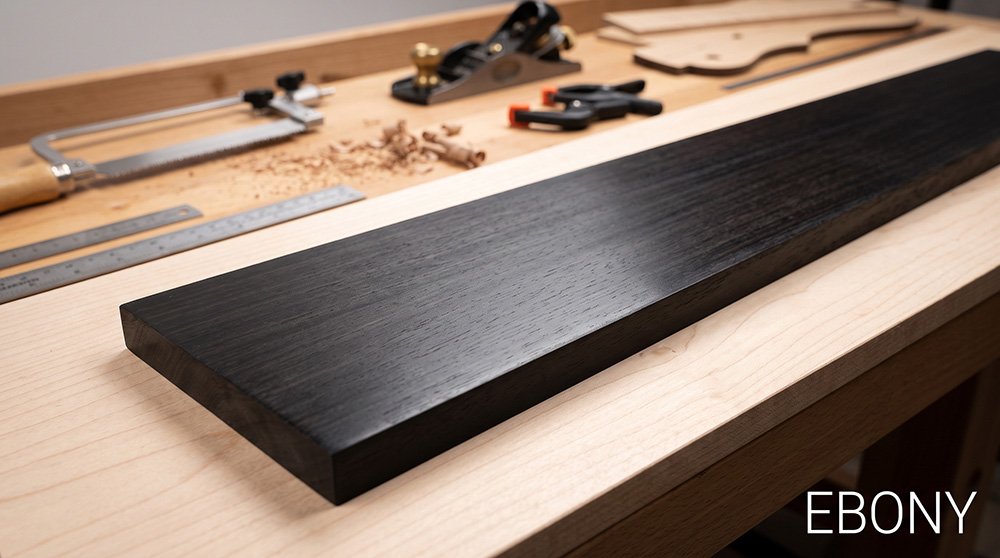
Pau Ferro vs Ebony: Quick Comparison
Pau Ferro
- Brown to reddish-brown appearance
- Strong grain variation
- Dense and hard
- Excellent for guitar fingerboards
- Attractive for boutique guitars
- Distinctive natural appearance
Ebony
- Usually dark brown to black
- Fine and relatively uniform grain
- Extremely hard and dense
- Excellent wear resistance
- Traditional premium appearance
- Long history in guitar making
Both can be excellent fingerboard materials when properly selected and prepared.
Pau Ferro vs Ebony for Guitar Fingerboards
A guitar fingerboard needs to withstand:
- Repeated playing
- String contact
- Fret installation
- Surface wear
Important characteristics include:
- Hardness
- Durability
- Dimensional stability
- Workability
- Surface smoothness
- Appearance
Pau Ferro and Ebony can both meet these requirements.
The main difference is often the visual style and characteristics preferred by the guitar maker.
Appearance: Pau Ferro vs Ebony
Pau Ferro Appearance
Pau Ferro can display:
- Medium brown
- Chocolate brown
- Reddish brown
- Golden brown
- Dark contrasting lines
The grain may be:
- Straight
- Irregular
- Figured
This makes Pau Ferro especially suitable for:
- Custom guitars
- Boutique instruments
- Modern guitar designs
Ebony Appearance
Ebony is often selected for its:
- Dark appearance
- Refined surface
- Traditional premium style
It creates strong contrast with lighter woods such as:
- Maple
- Roasted Maple
- Ash
- Walnut
- Mahogany
For guitar makers looking for a classic dark fingerboard, Ebony remains a popular choice.
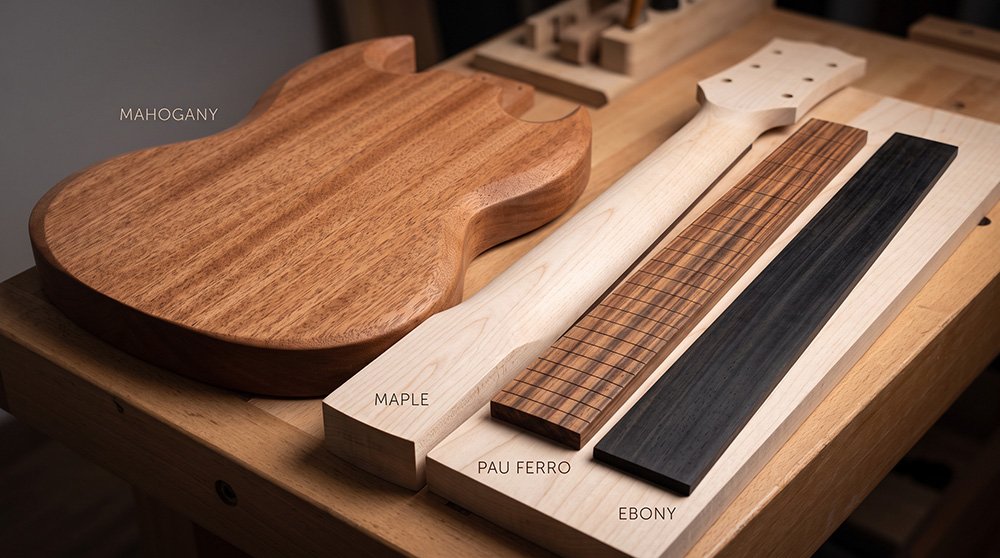
Which Is Better for Guitar Fingerboards?
There is no universal winner.
Pau Ferro may be the better choice if you want:
- Natural brown or reddish-brown color
- Strong grain variation
- Unique custom appearance
- Alternative to traditional Ebony
- Boutique or modern guitar design
Ebony may be the better choice if you want:
- Dark or black fingerboard
- Traditional premium appearance
- Fine uniform grain
- Classic guitar design
The quality of the individual piece is also extremely important.
A properly dried, straight and well-selected fingerboard blank can perform better than a poorly prepared piece of another species.
Which Is Harder?
Ebony is generally considered one of the hardest and densest hardwoods used in guitar manufacturing.
Pau Ferro is also:
- Hard
- Dense
- Durable
- Suitable for demanding guitar applications
However, maximum hardness is not the only important factor.
A good fingerboard should also have:
- Proper stability
- Good machining characteristics
- Correct moisture content
- Suitable grain orientation
- Consistent thickness
Pau Ferro vs Ebony: Stability
Dimensional stability is important for guitar fingerboards.
However, it is difficult to say that one species is always more stable than another.
Performance depends on:
- Wood species
- Individual board quality
- Grain orientation
- Moisture content
- Drying process
- Storage conditions
- Environmental changes
- Fingerboard thickness
For this reason, luthiers should purchase properly dried and conditioned guitar wood instead of selecting material only by species name.
Pau Ferro vs Ebony for Modern Guitars
Pau Ferro is especially attractive for modern and boutique guitar designs.
It works well with:
- Roasted Maple necks
- Maple necks
- Black Limba bodies
- Ash bodies
- Alder bodies
- Figured Maple tops
- Burl wood tops
Its natural brown tones and grain variation create a unique visual identity.
Ebony provides stronger contrast and works well with both:
- Traditional guitar designs
- Modern guitar designs
How to Choose Pau Ferro or Ebony
Before purchasing guitar fingerboard wood, consider:
1. Species
Confirm the botanical name.
2. Thickness
Ensure the material matches production requirements.
3. Moisture Content
Properly dried wood is essential.
4. Grain Orientation
Correct grain improves stability and workability.
5. Grade
Check:
- Color
- Grain
- Defects
- Overall quality
6. Dimensions
Confirm:
- Length
- Width
- Thickness
7. Supplier Consistency
Manufacturers should consider whether suppliers can provide repeatable grades.
Pau Ferro vs Ebony: Which Should You Choose?
Pau Ferro and Ebony are both excellent choices for guitar fingerboards.
Choose Pau Ferro if you want:
- Natural brown colors
- Contrasting grain
- Distinctive custom appearance
Choose Ebony if you prefer:
- Dark refined appearance
- Traditional fingerboard style
- Classic guitar aesthetics
There is no single best guitar fingerboard wood.
The right choice depends on:
- Guitar design
- Appearance requirements
- Construction method
- Material quality
Looking for Pau Ferro Guitar Fingerboard Wood?
Tonewood Global supplies guitar tonewood and instrument wood for:
- Luthiers
- Guitar makers
- Musical instrument manufacturers
We provide guitar wood according to:
- Species
- Grade
- Dimensions
- Production requirements
Conclusion
Pau Ferro and Ebony both offer excellent characteristics for guitar fingerboards.
Pau Ferro provides:
- Natural brown tones
- Attractive grain variation
- Custom guitar appearance
Ebony offers:
- Classic dark appearance
- Premium traditional style
- Long history in guitar making
The best choice depends on:
- Guitar design
- Desired appearance
- Material specifications
- Individual wood quality
Looking for Pau Ferro fingerboard blanks or other guitar tonewoods?
Contact Tonewood Global to discuss available sizes, grades and wholesale supply.