
Sapele Wood Guide: The High-Value Alternative to Mahogany
If you’ve spent any time browsing guitar forums or talking with luthiers, the name Sapele comes up again and again. It is constantly compared to genuine Mahogany, yet it often costs less while still delivering a distinctive tonal character of its own.
Sapele has become an important tonewood across the guitar industry, from large manufacturers to independent custom guitar shops. Its combination of attractive grain, good stability, workability, and balanced tonal properties makes it a practical choice for many guitar builders.
This guide covers everything you need to know about Sapele wood, including its origin, appearance, physical properties, tonal characteristics, common guitar applications, and buying considerations.
What Is Sapele Wood?
Sapele, scientifically known as Entandrophragma cylindricum, is a hardwood species in the Meliaceae family. It is native to tropical regions of West and Central Africa, including Cameroon, Gabon, and the Congo Basin.
Sapele is not botanically related to true Mahogany, which belongs to the Swietenia genus. However, its color, grain structure, density, and working characteristics are similar enough that it has often been marketed as African Mahogany. The term is commonly used in the timber trade, although it should not be confused with true Mahogany species.
Sapele trees can grow to impressive sizes, often reaching approximately 30 to 45 meters in height, with large trunk diameters. This allows the production of relatively wide and long boards, which can be particularly useful for guitar bodies, acoustic guitar back and side sets, and other larger components.
Appearance and Grain Characteristics
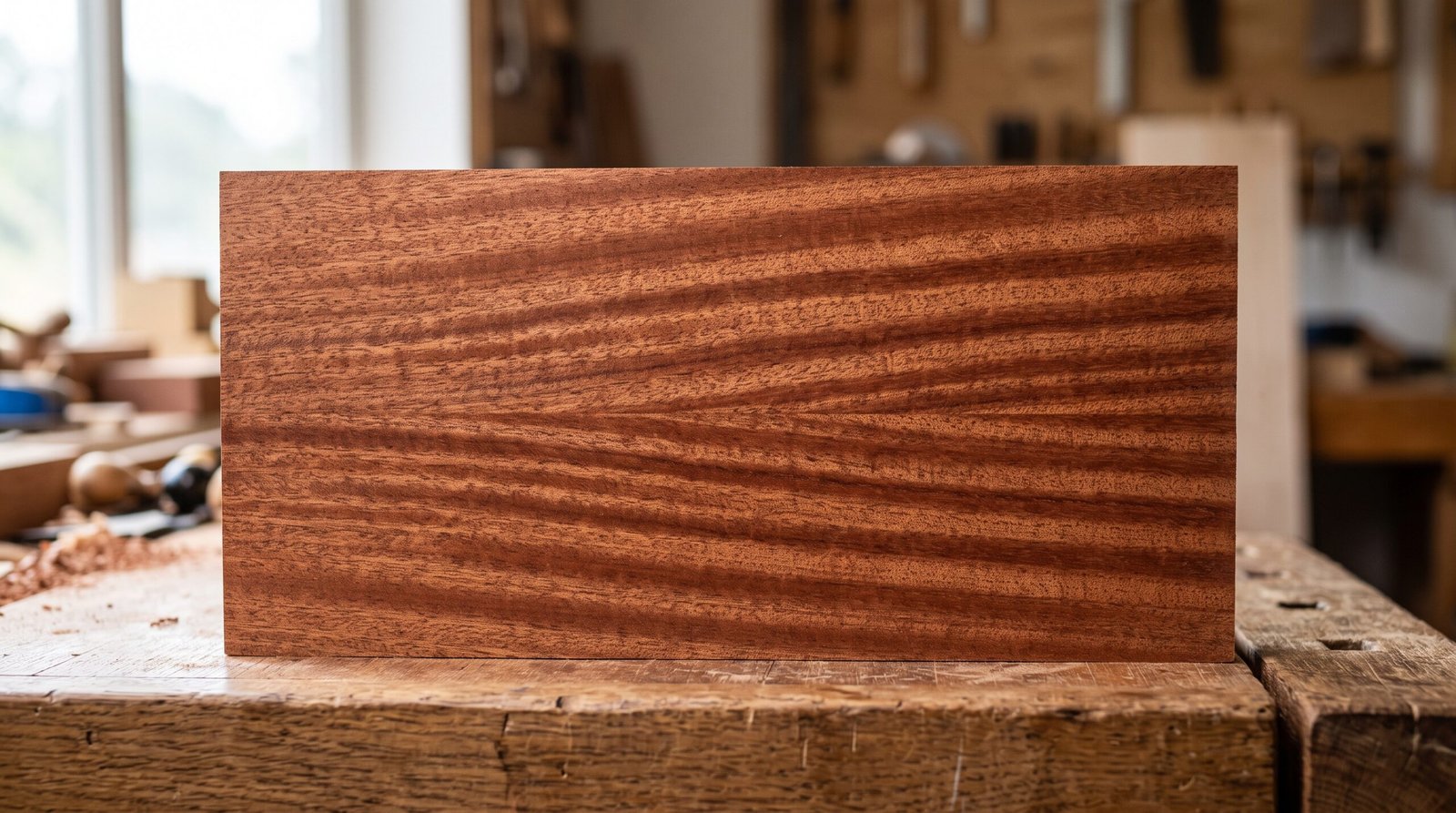
One of Sapele’s most recognizable characteristics is its interlocked grain.
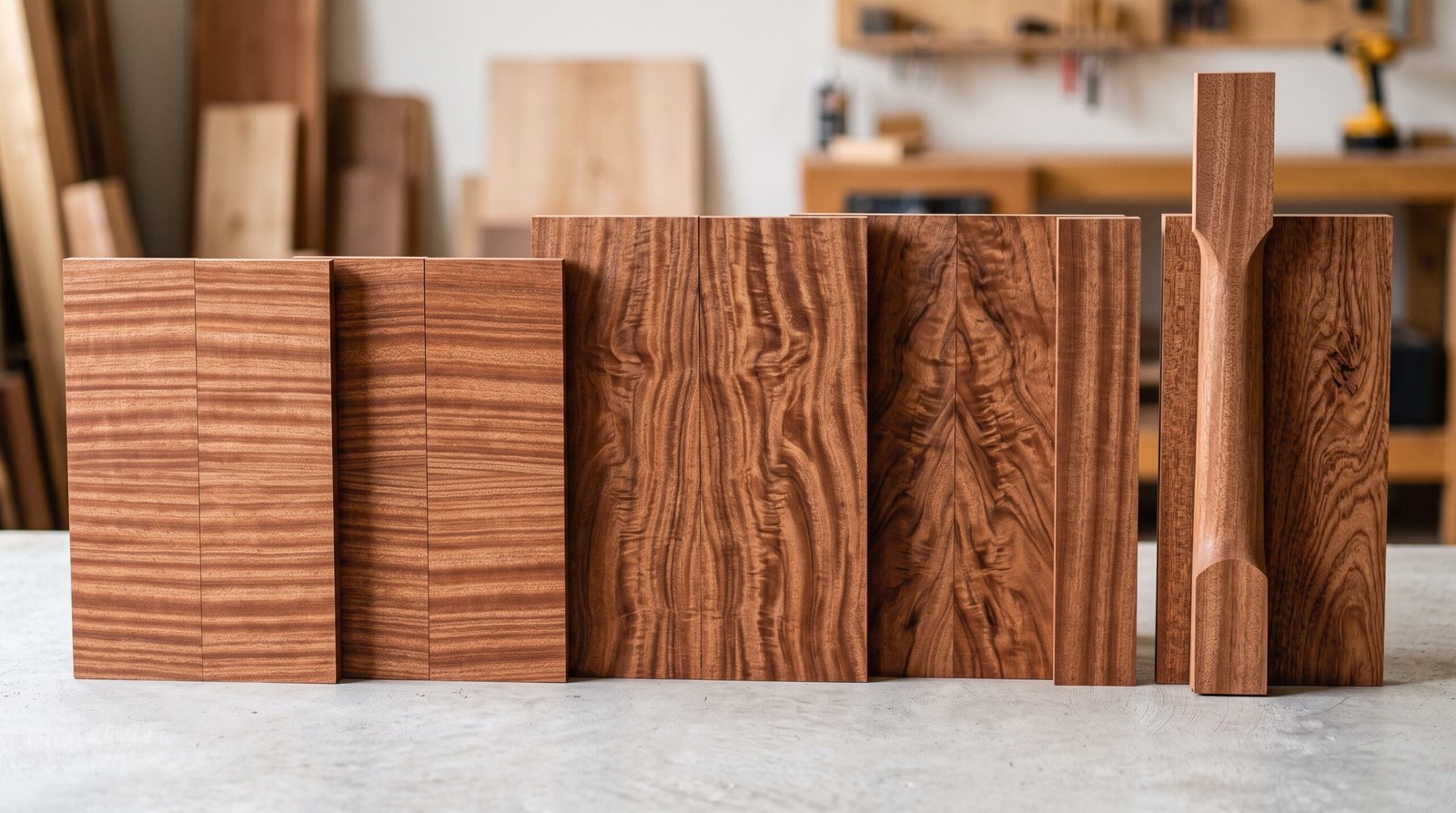
When Sapele is quarter-sawn or cut along the grain, the interlocked structure can create a distinctive ribbon-like appearance. This pattern is sometimes described as a striped or zebra-like figure in the wood trade.
Sapele can also display noticeable chatoyance. When the wood is moved under changing light, its surface may show a subtle shimmering effect as the grain reflects light from different angles.
Freshly cut Sapele typically ranges from pinkish-brown to reddish-brown. With exposure to light and air, the color generally becomes deeper and richer over time.
Compared with many traditional Mahogany varieties, Sapele often has a more visually active grain pattern. This makes it particularly attractive for guitar builders who want the warm appearance associated with Mahogany but prefer a more distinctive natural figure.
Pommele Sapele
Some Sapele develops a special figure known as Pommele figure. This creates a rounded, bubble-like or swirling appearance across the surface of the wood.
Pommele Sapele is less common than standard Sapele and is often selected for decorative guitar tops, veneers, and high-end custom instruments.
Pommele Sapele: Grain, Figure and Guitar Applications
Density and Physical Properties
Sapele is generally considered a moderately dense to relatively hard hardwood. Its air-dry density is commonly around 0.62 to 0.68 g/cm³, although actual density can vary depending on the individual tree, growing conditions, moisture content, and specific piece of wood.
Compared with many Mahogany species used in guitar making, Sapele can be slightly heavier and harder. It also offers good dimensional stability when properly dried and stored.
These properties make Sapele suitable for a variety of guitar components. It can be machined, planed, carved, sanded, and finished effectively when appropriate tools and techniques are used.
However, its interlocked grain requires some care during machining. Cutting against the grain direction can sometimes cause tear-out, especially when using a planer or other aggressive cutting process.
Sharp tools, appropriate cutting angles, and careful machining can significantly reduce this problem.
Tonal Characteristics of Sapele
In guitar making, Sapele is generally associated with a balanced and slightly warm tonal character.
Solid Midrange
Sapele can provide a strong and well-defined midrange with a warmth that is often compared with Mahogany.
Compared with some lighter Mahogany varieties, its slightly higher density can contribute to a tighter and more controlled low-frequency response.
High-Frequency Clarity
Sapele can also provide good high-frequency definition. Compared with traditional Mahogany, some builders may perceive Sapele as having slightly more clarity and a more pronounced sense of detail.
The exact tonal result, however, depends on many factors, including the individual piece of wood, body design, thickness, bracing, construction method, finish, strings, and overall guitar setup.
Sustain
Its relatively good density and hardness can contribute to solid sustain, which is one reason Sapele is also used for guitar necks and electric guitar bodies.
Overall, Sapele can be viewed as a versatile tonewood that sits between the warmer character of Mahogany and the brighter response associated with harder woods such as Maple.
For example, pairing a Maple top with a Sapele body can provide a combination of visual contrast and tonal balance, allowing builders to combine some of Maple’s clarity with the fuller character of Sapele.
Common Applications of Sapele in Guitar Making
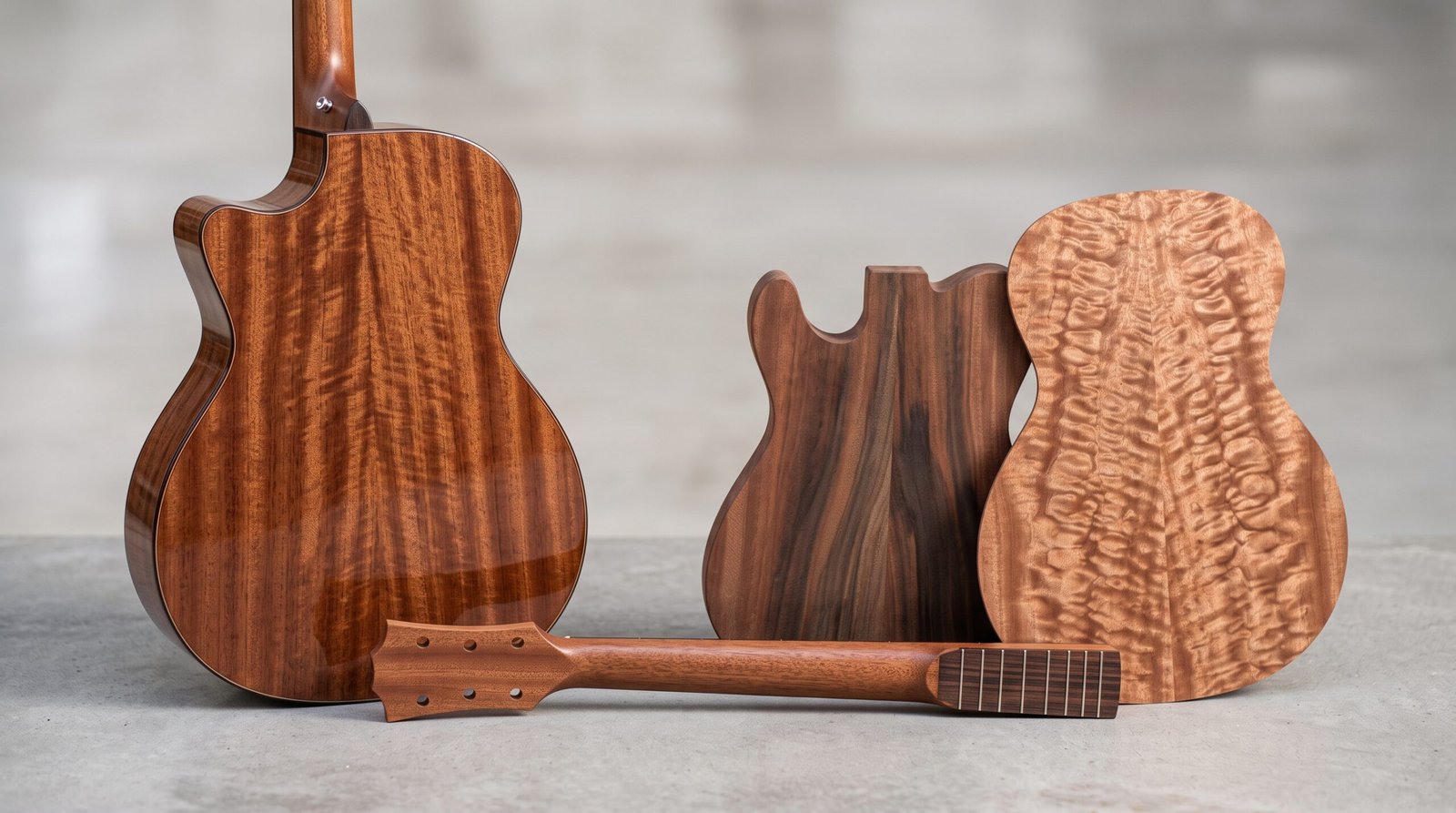
Sapele is used in several areas of guitar construction.
Acoustic Guitar Back and Sides
Sapele is widely used for acoustic guitar back and side sets. Its availability in larger dimensions, attractive grain, stability, and balanced tonal properties make it a practical alternative to traditional Mahogany.
Electric Guitar Bodies
Sapele can also be used for electric guitar bodies. Its moderate-to-high density provides a solid foundation for body construction while its natural reddish-brown appearance can create an attractive finished instrument.
Guitar Necks
Sapele is commonly used as a Mahogany alternative for guitar necks. Its combination of strength, stability, workability, and moderate weight makes it suitable for many guitar designs.
Guitar Tops and Veneers
Figured Sapele, especially Pommele Sapele, is often selected for decorative guitar tops and veneers. The figure can create a highly distinctive appearance under a clear or transparent finish.
Fingerboards
Sapele is less common as a guitar fingerboard material than Ebony, Rosewood, or Maple. However, it can still be used in certain instrument designs, particularly where appearance, availability, and cost are important considerations.
Sapele vs. Mahogany: Which Should You Choose?
Sapele and Mahogany are frequently compared because they share several visual and functional characteristics.
Both can provide warm, balanced tonal qualities and are widely used for guitar bodies and necks. However, Sapele typically has a more pronounced interlocked grain and can be slightly denser and harder than many commonly used Mahogany varieties.
The better choice depends on the specific guitar design, desired appearance, tonal goals, available dimensions, and budget.
For builders looking for a wood with a Mahogany-like character but a more pronounced grain pattern, Sapele can be an excellent option.
Sapele vs. Mahogany for Guitar: Which Is Better?
Buying Tips for Sapele Tonewood
When selecting Sapele tonewood for guitar making, several factors are worth considering.
- Grain Consistency
Look for straight or evenly interlocked grain when stability and predictable machining are important. Highly figured pieces can be visually impressive but may require more careful processing.
- Moisture Content
Properly dried tonewood is essential for guitar construction. For many indoor guitar-making environments, wood is commonly conditioned to approximately 8 to 12 percent moisture content before use.
The ideal moisture level can vary depending on the local climate and workshop conditions, so the wood should be acclimated to the environment where the instrument will be built.
- Insect Damage and Defects
Inspect the wood carefully for insect damage, cracks, excessive resin pockets, large knots, or other defects that could affect structural integrity or appearance.
- Figure and Grade
Standard Sapele and figured Sapele can differ significantly in price. If appearance is a priority, figured grades such as Pommele Sapele may be worth considering. For structural components where appearance is less important, straight-grained standard Sapele may provide better value.
- Dimensions
Always check the actual dimensions of the wood before purchasing. Acoustic guitar back and side sets, electric guitar body blanks, neck blanks, and other components require different thicknesses, widths, and lengths.
Final Thoughts
Sapele’s popularity in guitar making is not based simply on its lower cost compared with some traditional Mahogany options.
Its real value comes from the combination of tonal balance, attractive grain, good stability, workability, and wide availability.
Whether you are building an acoustic guitar, an electric guitar, a custom neck, or a visually distinctive figured instrument, Sapele offers a versatile material that deserves consideration.
For builders who want a warm and balanced tonal foundation with more pronounced natural grain, Sapele can be an excellent choice.
If you are interested in figured Sapele, you can also explore Pommele Sapele and compare its appearance and characteristics with standard Sapele.
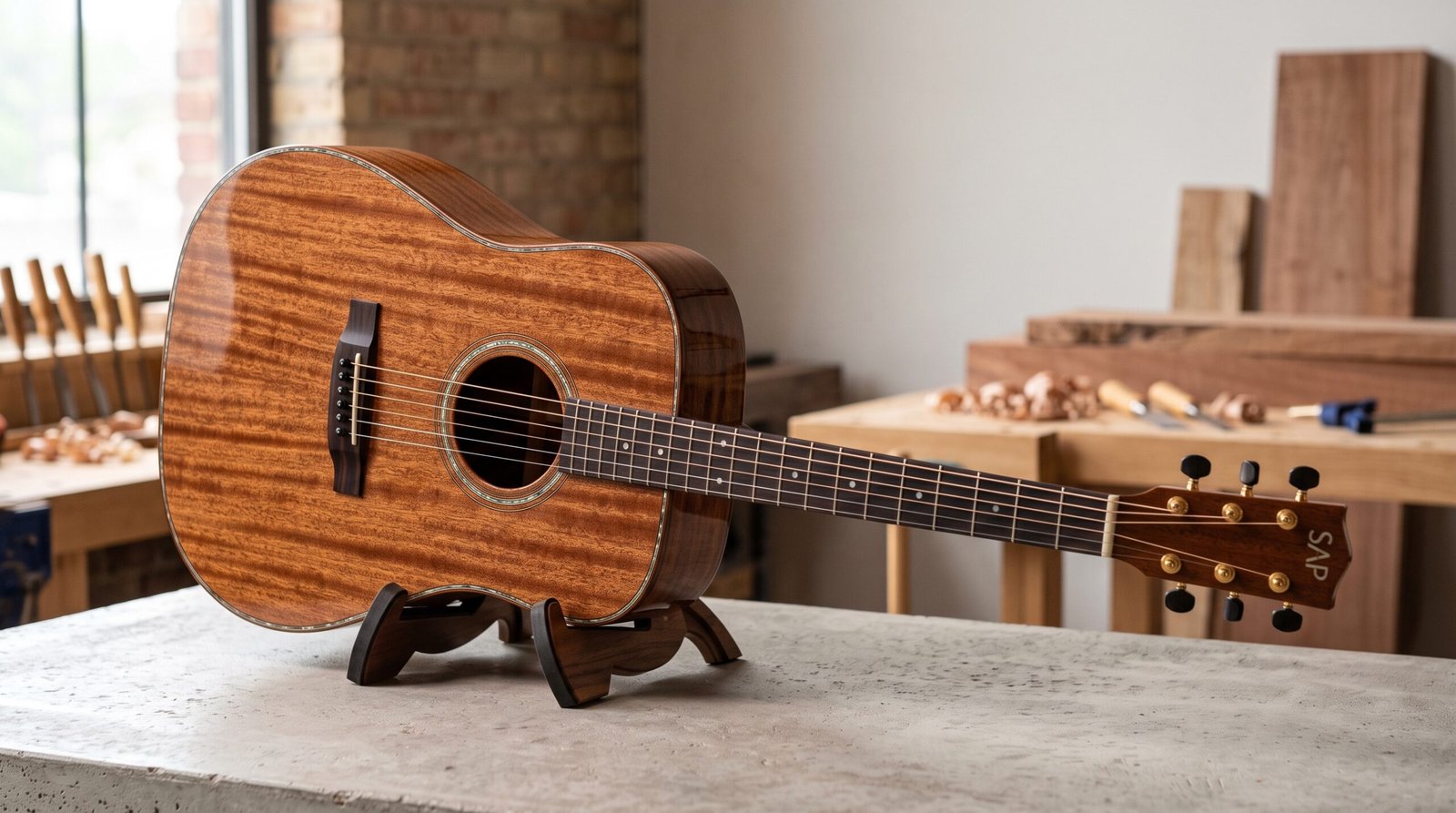
Looking for Sapele tonewood for your next guitar project?