
Ziricote is one of the most visually distinctive hardwoods used in modern guitar making.
Known for its dramatic dark lines, rich brown color, and highly figured grain patterns, Ziricote is especially popular for acoustic guitar back and sides, custom guitars, and boutique instruments.
For luthiers looking for a guitar wood with a strong visual identity, Ziricote can be an excellent choice.
What Is Ziricote?
Ziricote is the common trade name for Cordia dodecandra, a hardwood species native to parts of Mexico and Central America.
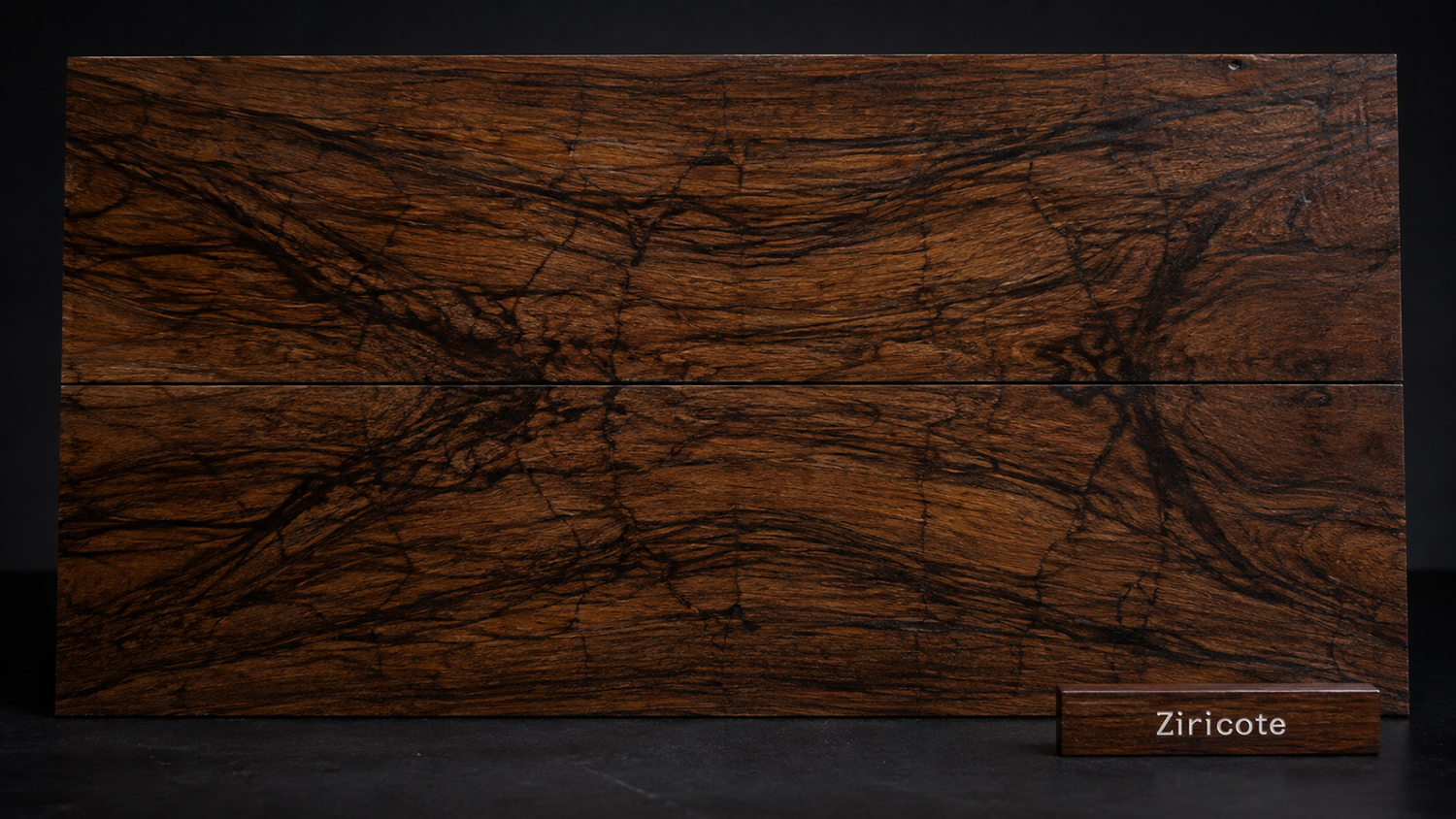
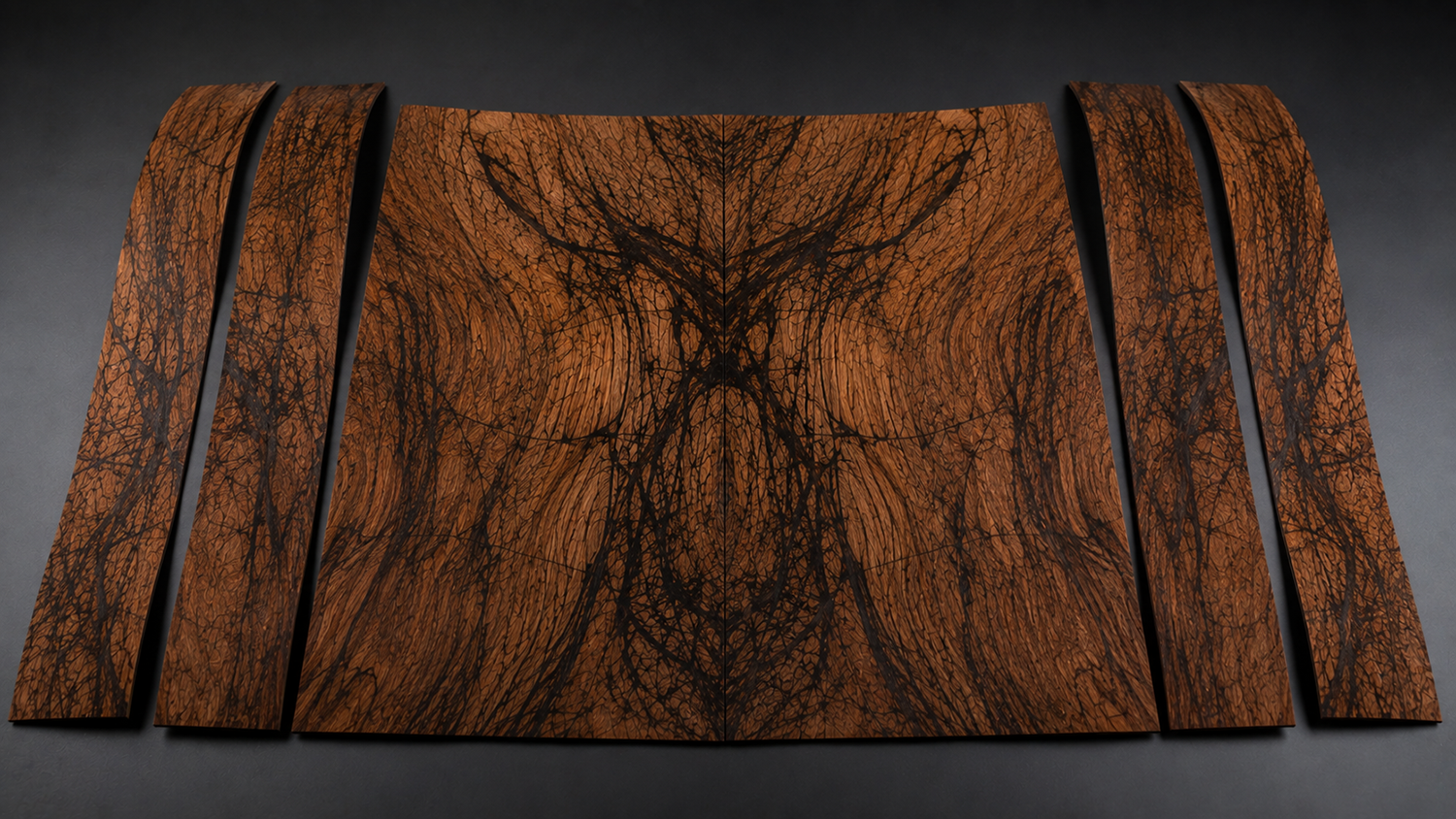
The wood is well known for its attractive natural figure and contrasting dark grain. Depending on the individual piece, Ziricote can display a range of colors and patterns, including:
-
Dark brown
-
Chocolate brown
-
Gray-brown
-
Black lines
-
Spider-web-like grain
-
Highly figured patterns
Every Ziricote set can look different, which makes the wood particularly attractive for custom guitar making.
Why Is Ziricote Popular for Guitars?
The biggest attraction of Ziricote is its distinctive natural appearance.
Many guitar makers choose Ziricote because its dramatic grain can create a premium and highly individual look without requiring additional coloring.
Depending on the grade, dimensions, and application, Ziricote can be used for:
-
Acoustic guitar back and sides
-
Electric guitar bodies
-
Guitar tops and decorative panels
-
Guitar fingerboards
-
Custom instrument components
-
Boutique guitar projects
Ziricote is particularly suitable for instruments where the natural appearance of the wood is an important part of the overall design.
Ziricote for Acoustic Guitar Back and Sides
Ziricote is particularly well known as an acoustic guitar tonewood.
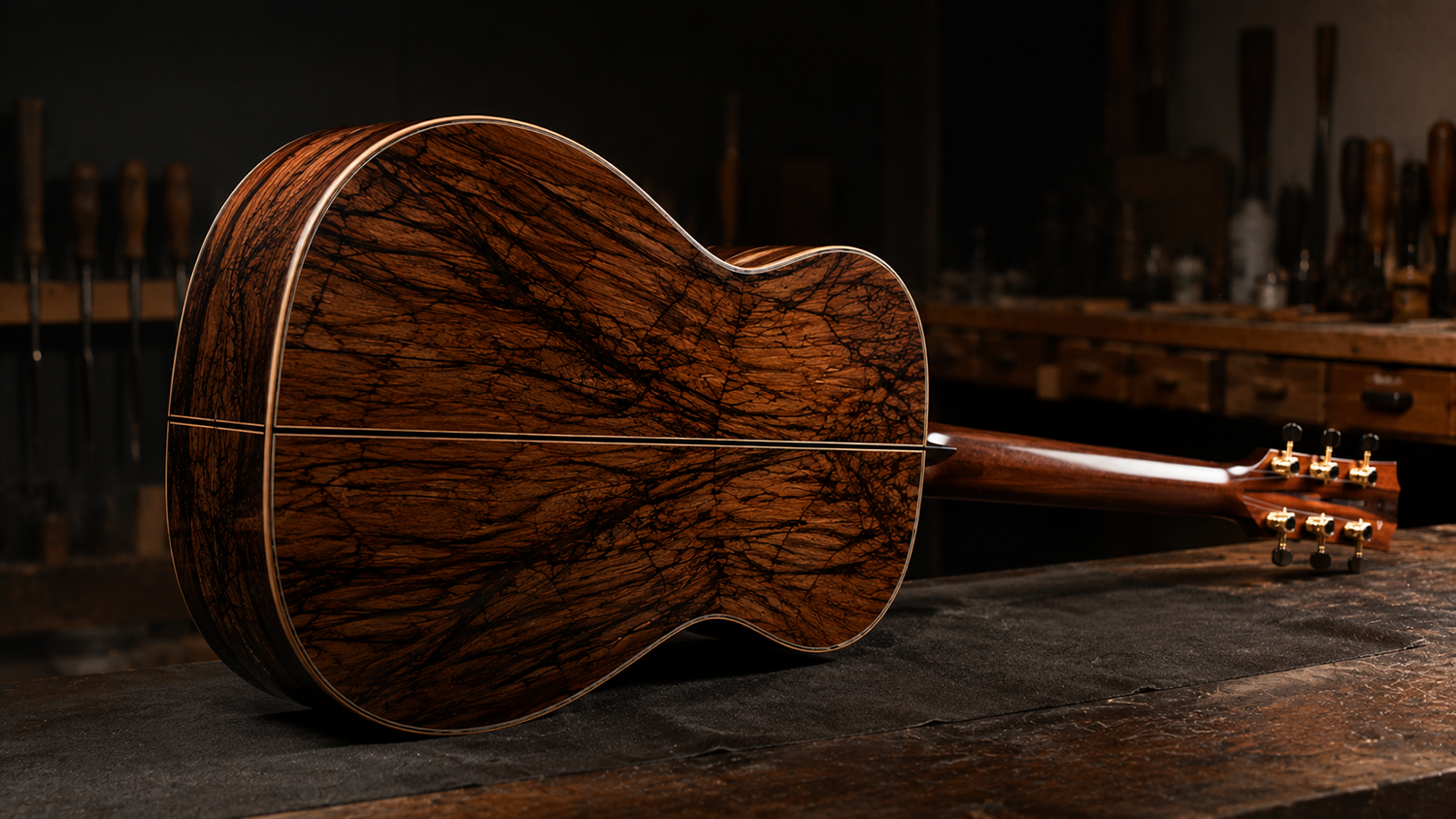
A carefully selected Ziricote back and sides set can provide a distinctive visual character, attractive natural contrast, and a premium appearance.
For acoustic guitar construction, luthiers should evaluate the individual set rather than relying only on the species name.
Important factors include:
-
Density
-
Stiffness
-
Grain orientation
-
Thickness
-
Moisture content
-
Weight
-
Set matching
A well-matched back and sides set can make a significant difference to the final instrument.
Ziricote Guitar Tonewood Appearance
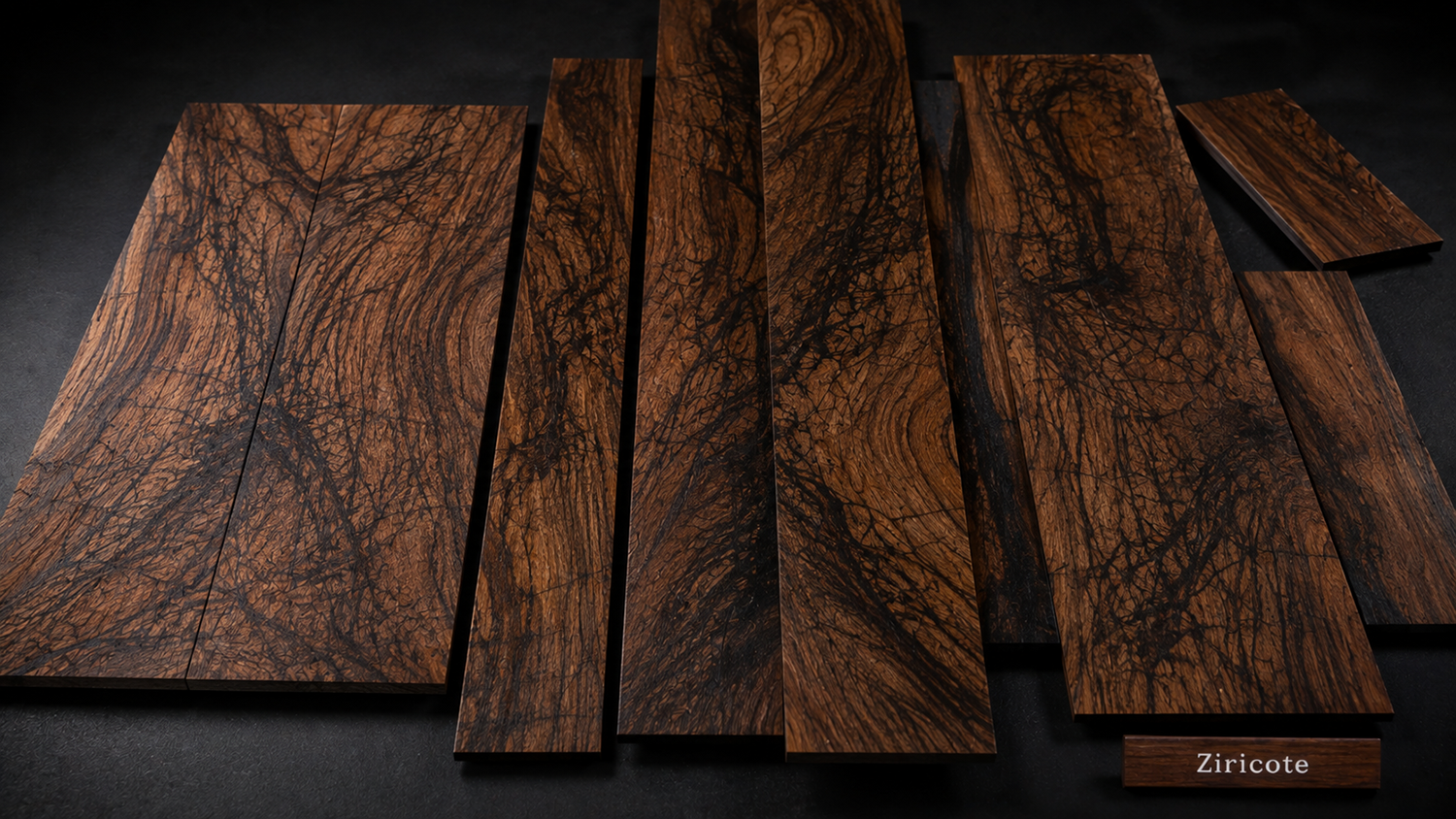
Ziricote is famous for its highly figured appearance.
Some boards have relatively straight grain, while others show dramatic dark lines and complex patterns.
High-grade Ziricote can feature a distinctive spider-web or landscape-like appearance, making individual pieces highly recognizable.
This makes Ziricote particularly attractive for:
-
High-end acoustic guitars
-
Custom guitars
-
Boutique instruments
-
Limited-edition guitars
For guitar makers who want every instrument to have a unique appearance, Ziricote is an interesting material.
Is Ziricote Good for Guitar?
Yes, Ziricote can be an excellent guitar wood when properly selected, dried, and prepared.
Its most attractive applications include acoustic guitar back and sides and other decorative instrument components.
However, individual pieces can vary considerably in density, stiffness, weight, grain structure, and appearance.
When purchasing Ziricote tonewood, guitar makers should pay attention to:
-
Grain quality
-
Weight
-
Stiffness
-
Cracks
-
Knots
-
Moisture condition
-
Thickness
-
Overall set quality
Proper drying and storage are also important for successful guitar construction.
For professional guitar makers, selecting the right individual set is often more important than simply choosing a particular species.
Ziricote vs Rosewood
Ziricote is sometimes compared with Rosewood because both can be used for acoustic guitar back and sides.
However, they are different wood species and can have different visual and working characteristics.
Rosewood is often selected for its traditional appearance and established use in acoustic guitar construction.
Ziricote is often selected for its dramatic natural figure and distinctive visual character.
For a custom guitar, the choice may ultimately depend on the builder’s desired appearance, material availability, construction requirements, and the characteristics of the individual set.
Ziricote vs Ebony
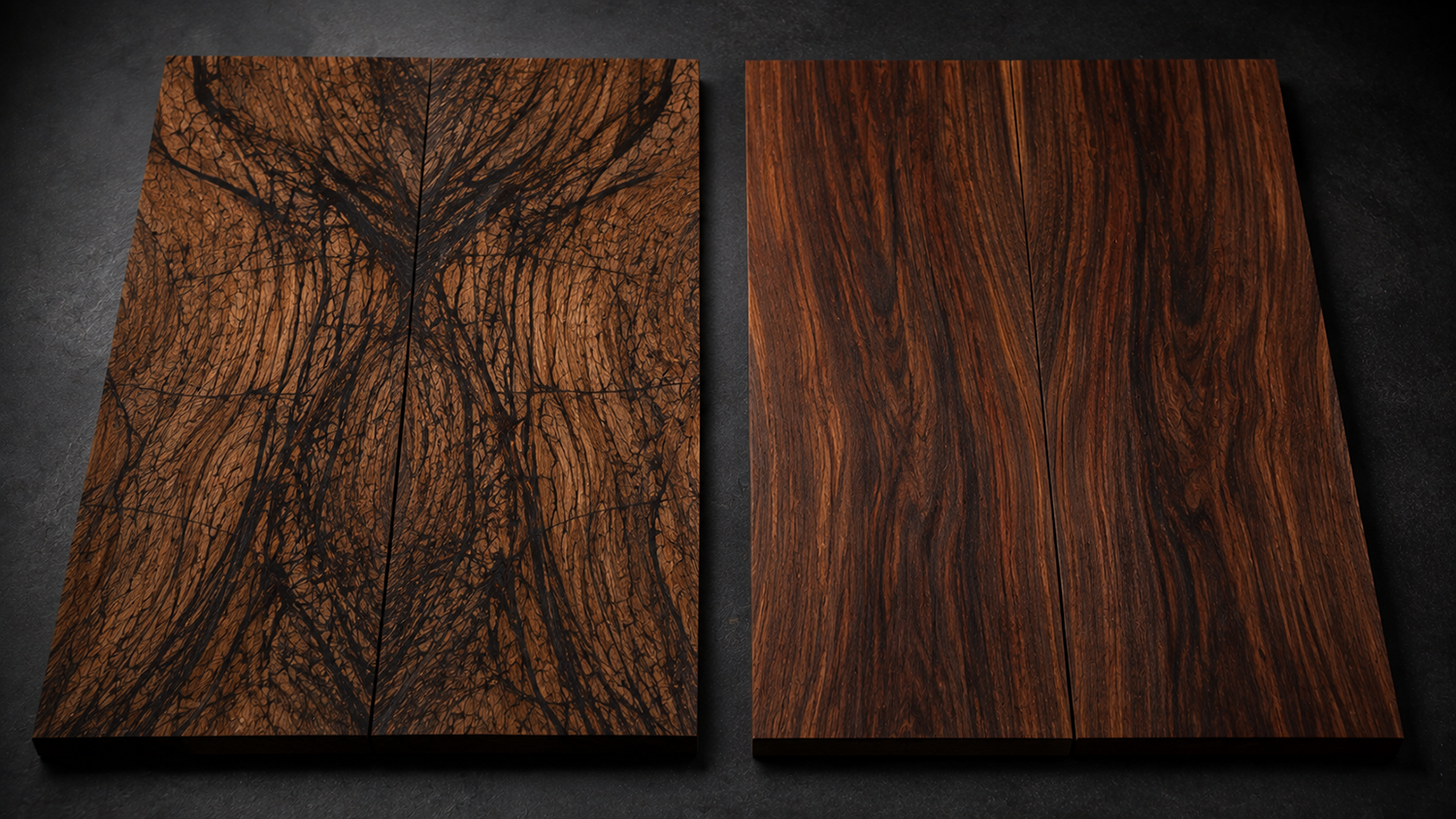
Ziricote and Ebony can both feature dark colors and contrasting grain, but their appearance is quite different.
Ebony is usually associated with a dark, refined, and relatively uniform appearance.
Ziricote is better known for its contrasting brown and black grain patterns and highly figured appearance.
For guitar makers looking for a highly distinctive natural appearance, Ziricote can offer something very different from traditional Ebony.
The best choice ultimately depends on the intended application, design, and preferences of the guitar maker.
How to Choose Quality Ziricote Tonewood
When buying Ziricote guitar wood, professional buyers should check several important factors.
1. Species
Confirm the botanical name and make sure the material is correctly identified as Cordia dodecandra.
2. Dimensions
Confirm the length, width, and thickness before purchasing.
For guitar manufacturing, dimensions should be suitable for the intended application and allow sufficient material for machining and finishing.
3. Moisture Condition
Properly dried and stored wood is important for guitar construction.
Buyers should ask the supplier about moisture condition, drying method, and storage conditions when purchasing tonewood internationally.
4. Grain
Look for attractive grain and suitable grain orientation for the intended application.
For acoustic guitar back and sides, matching the two halves of a set is particularly important.
5. Defects
Carefully check for:
-
Cracks
-
Knots
-
Splits
-
Insect damage
-
Unwanted defects
-
Excessive warping
6. Set Matching
For acoustic guitar back and sides, a well-matched set is important.
The two pieces should have compatible color, grain direction, figure, dimensions, and overall appearance.
7. Grade
Higher-grade Ziricote generally offers more attractive figure and stronger visual consistency.
However, grade should always be evaluated according to the actual piece rather than relying only on a grade name.
Ziricote Tonewood for Luthiers
Ziricote is particularly suitable for luthiers and guitar manufacturers who want a distinctive alternative to more traditional tonewoods.
Its dramatic natural figure can work well with many guitar designs and can create strong visual contrast with other woods, including:
-
Maple
-
Mahogany
-
Ebony
-
Walnut
-
Black Limba
-
Roasted Maple
Its natural figure can make each finished guitar visually unique.
For boutique guitar builders and custom instrument manufacturers, this distinctive appearance can be an important part of the instrument’s overall design.
Buying Ziricote Guitar Wood
When purchasing Ziricote tonewood from an international supplier, buyers should confirm:
-
Botanical species
-
Origin
-
Grade
-
Dimensions
-
Thickness
-
Moisture condition
-
Available quantity
-
Packaging
-
Shipping options
For guitar manufacturers, consistent quality and repeat availability are also important.
When purchasing for production, it can be useful to discuss specifications with the supplier in advance, especially when ordering matched acoustic guitar back and sides sets.
Ziricote Guitar Tonewood from Tonewood Global
Tonewood Global supplies guitar tonewood for luthiers, guitar makers, and musical instrument manufacturers.
Our Ziricote guitar wood can be supplied for acoustic guitar back and sides and other instrument applications, depending on available grades, dimensions, and specifications.
Conclusion
Ziricote is an excellent choice for guitar makers who want a distinctive and highly figured tonewood.
Its dramatic brown and dark grain patterns make it particularly attractive for acoustic guitar back and sides, custom guitars, and boutique instruments.
When selecting Ziricote, pay attention to the species, grain, moisture condition, dimensions, defects, and overall set quality.
For luthiers looking for a visually distinctive alternative to traditional guitar woods, Ziricote is well worth considering.
Looking for Ziricote guitar tonewood? Contact Tonewood Global to discuss available sizes, grades, and wholesale supply.