
If standard Sapele has already earned its reputation as a high-value Mahogany alternative, Pommele Sapele is the showstopper variant that makes people stop and stare.
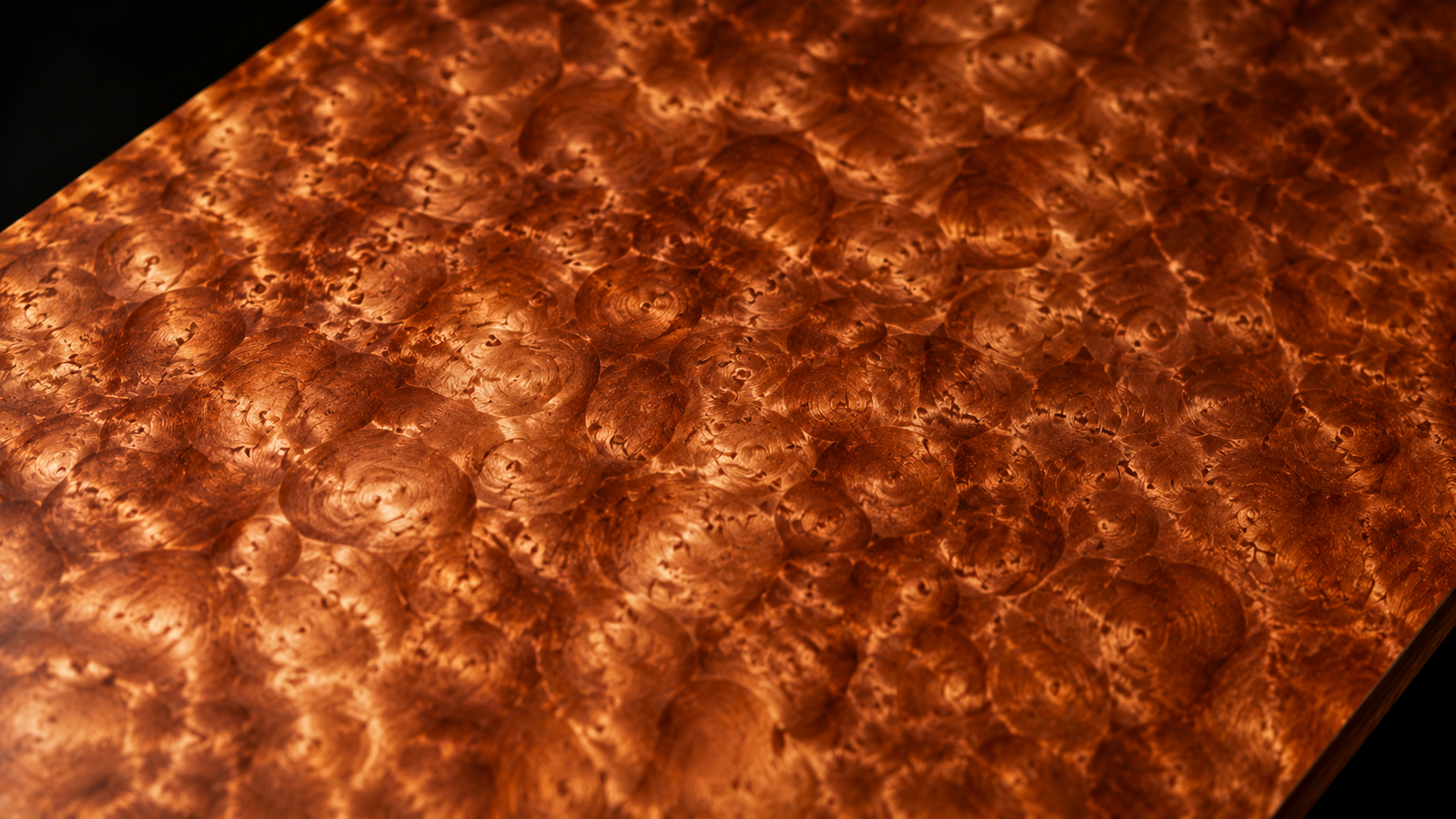
Bubble-like, swirling figure ripples across the surface under light, almost like a wave frozen in motion. Many builders seeing a finished Pommele Sapele top for the first time ask the same question: Is that figure natural, or is it dyed?
In this article, we’ll explore what makes Pommele Sapele so special, its physical and tonal characteristics, common applications, and how to choose the right stock for your next guitar project.
What Is Pommele Sapele?
Pommele Sapele is still fundamentally Sapele (Entandrophragma cylindricum). However, during the tree’s growth, localized variations in the wood’s fiber structure can produce a distinctive bubble-like, scale-like, or cloud-like figure.
This characteristic is commonly described in the wood trade as pommele figure. The figure is a natural feature of the wood and does not occur in every Sapele tree, which makes highly figured Pommele Sapele considerably rarer than standard Sapele.
The name “Pommele” comes from the French word pomme, meaning apple. The term refers to the rounded, clustered appearance of the figure, which resembles overlapping apple-like or bubble-like shapes.
For builders looking for a more visually distinctive alternative to standard Sapele, Pommele Sapele offers the same basic species characteristics with a much more dramatic appearance.
Why Is Pommele Sapele So Eye-Catching?
The biggest attraction of Pommele Sapele is its three-dimensional visual depth.
Standard wood grain often appears as relatively flat light-and-dark lines. Pommele figure behaves differently. As the viewing angle or light direction changes, different parts of the figure become brighter or darker, creating a strong sense of movement across the surface.
This optical effect is commonly described as chatoyance.
When the wood is rotated under light, areas that initially appear darker can suddenly become bright, while other areas seem to recede into the surface. The result is a dynamic appearance that can make the wood look almost three-dimensional.
This effect is particularly attractive on guitar tops, decorative back panels, headstock veneers, and heel caps, where the figure can become a major visual feature of the instrument.
Density and Physical Properties
Pommele Sapele shares the basic physical characteristics of standard Sapele because both come from the same species, Entandrophragma cylindricum.
Sapele typically has an air-dry density in the approximate range of 0.62–0.68 g/cm³, with moderate hardness and generally good workability.
However, highly figured Pommele Sapele can require more attention during machining.
The irregular and interlocked nature of the figure can increase the risk of tear-out, especially when planing, routing, or working across the grain. Sharp cutting tools, lighter passes, and careful sanding can help produce a cleaner surface.
When Pommele Sapele is used as a thin veneer, additional care is also recommended during cutting, bending, and bonding. The irregular fiber structure can make highly figured pieces more sensitive to mechanical stress than straight-grained Sapele.
Tonal Characteristics of Pommele Sapele
From a species perspective, Pommele Sapele does not have a fundamentally different acoustic identity from standard Sapele. The pommele figure is primarily a visual characteristic rather than a separate wood species.
Sapele is generally valued for its balanced tonal response, clear high frequencies, strong midrange presence, and good sustain.
However, the actual tonal result of a guitar depends on many factors, including the thickness of the wood, construction method, bracing, body design, scale length, finish, and the other materials used in the instrument.
For this reason, Pommele Sapele is often selected primarily for its appearance, especially when used as a decorative veneer or visual-grade back and side material.
If your main priority is a consistent structural tonewood at a practical price, standard Sapele can be an excellent choice.
If you want to combine Sapele’s familiar characteristics with a much more distinctive visual appearance, highly figured Pommele Sapele can be an attractive upgrade.
Common Applications of Pommele Sapele
1. Guitar Top Veneers
Pommele Sapele is frequently used as a decorative veneer where its dramatic figure can immediately become a visual focal point.
It works particularly well with modern guitar designs, custom instruments, headless guitars, and other builds where appearance is an important part of the overall design.
2. Guitar Back and Sides
Highly figured Pommele Sapele can also be used for acoustic guitar backs and sides.
The flowing figure can create a striking contrast with a simpler soundboard, allowing the back of the instrument to become a major visual feature.
3. Neck Heel Caps and Headstock Details
Smaller pieces of Pommele Sapele can be used for decorative details such as neck heel caps, headstock veneers, bindings, and other accent components.
These applications are especially useful when a builder wants to introduce figured Sapele without using a large quantity of premium material.
4. Cabinets and Instrument Accessories
Outside guitar making, figured Sapele is also valued for decorative woodworking applications, including premium cabinets, speaker enclosures, instrument cases, and other projects where natural wood figure is important.

Pommele Sapele vs. Flame Maple: Which Should You Choose?
Pommele Sapele and Flame Maple are both popular choices for figured wood applications, but their visual characteristics are quite different.
Pommele Sapele generally has a softer, more flowing visual appearance. Its rounded bubble-like figure creates a sense of depth and movement, while its warm brown color gives the wood a naturally rich appearance.
Flame Maple, by comparison, typically has a more regular striped or ribbon-like figure. Its appearance can be brighter, sharper, and more graphic.
The better choice depends on the design of the instrument.
Choose Pommele Sapele if you want:
-
- A warm brown natural appearance
-
- Rounded and three-dimensional figure
-
- A flowing, organic visual effect
-
- A distinctive alternative to traditional figured woods
Choose Flame Maple if you prefer:
-
- More regular striped figure
-
- A brighter and sharper appearance
-
- Strong visual contrast
-
- A more traditional figured-maple aesthetic
Pommele Sapele vs. Flame Maple
How to Choose Pommele Sapele
When selecting Pommele Sapele stock, several factors should be considered.
1. Figure Density and Consistency
The density and consistency of the pommele figure have a major influence on the visual grade of the wood.
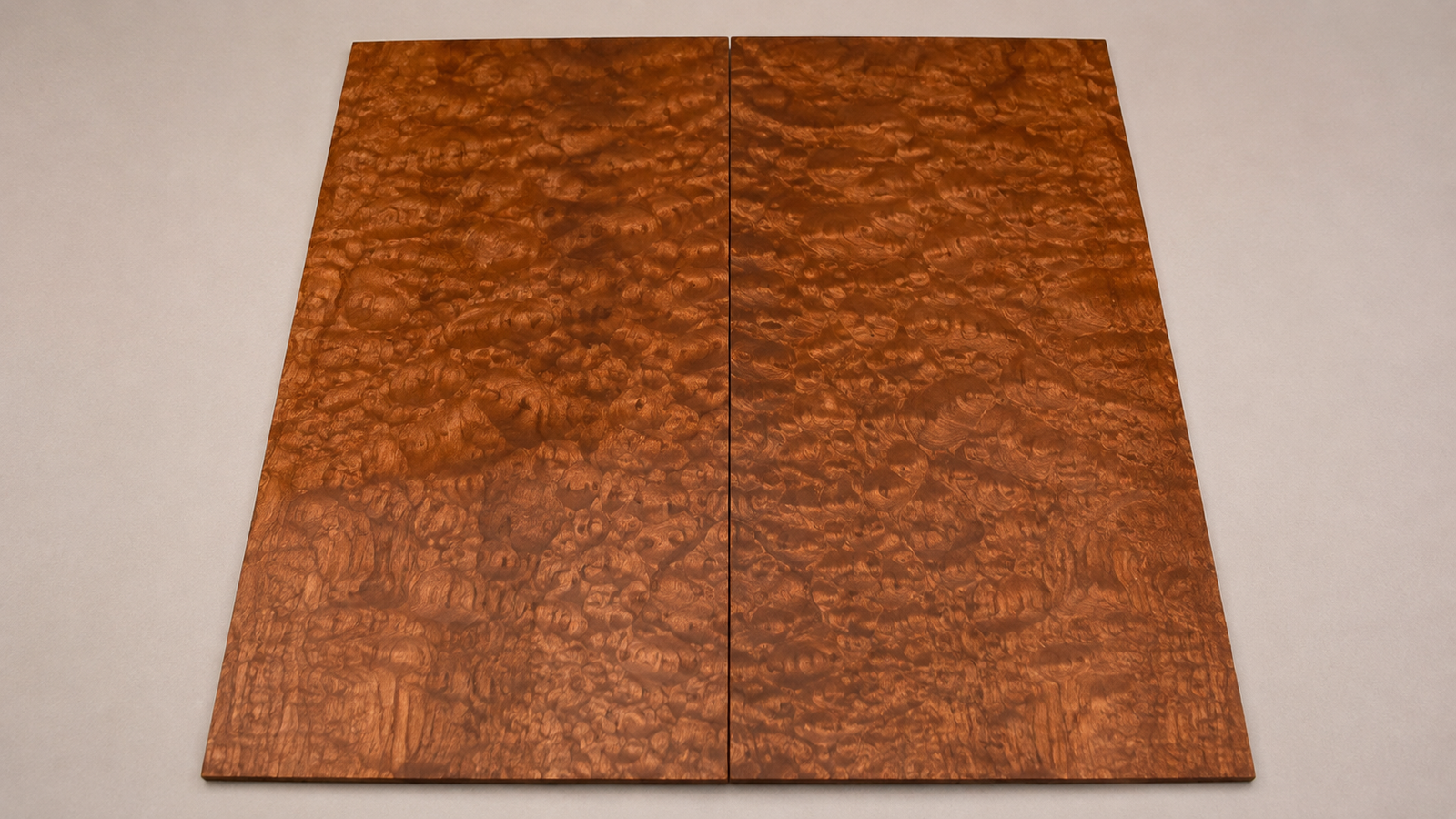
Look for pieces where the figure is clearly visible and reasonably consistent across the usable surface, especially when selecting material for a guitar back, side set, or large decorative panel.
2. Strength of Chatoyance
Strong chatoyance can significantly improve the visual impact of figured Sapele.
Whenever possible, view the wood under changing light angles or rotate the piece to see how the figure reacts to light.
A high-quality piece should show noticeable changes in light and shadow as the viewing angle changes.
3. Check for Cracks and Resin Pockets
Highly figured wood can sometimes make surface defects more difficult to notice.
Before purchasing, carefully inspect the entire piece for cracks, resin pockets, checks, splits, or other defects.
For larger guitar back and side sets, inspect both the surface and the edges of the boards.
4. Match the Wood to Your Intended Application
The required dimensions depend heavily on how the wood will be used.
For small decorative details or veneers, smaller pieces may be perfectly suitable.
For guitar back and sides, larger panels require careful consideration of board dimensions, thickness, figure consistency, and visual matching.
If you are purchasing a matched set, pay particular attention to figure continuity between the two halves.
Final Thoughts
What makes Pommele Sapele so attractive to guitar builders is the combination of familiar Sapele characteristics and an unusually dramatic natural figure.
Unlike printed or artificially patterned surfaces, genuine pommele figure comes from the natural structure and growth characteristics of the tree. Each piece can therefore have its own unique pattern, depth, and visual movement.
For builders looking for a practical and visually distinctive tonewood, Pommele Sapele can be an excellent choice for decorative guitar tops, back and side sets, veneers, headstock details, and other premium applications.
If you’re looking for a visual-grade material for a custom guitar project, the most important factors are figure consistency, chatoyance, dimensions, defects, and suitability for the intended application.
If you want to compare Pommele Sapele with other figured woods, our upcoming comparison guides can help you choose the right material for your next build.
Looking for Pommele Sapele Tonewood?
If you’re looking for Pommele Sapele stock for your next guitar project, you can browse our current selection of figured Sapele tonewood, including available grades, dimensions, and matching sets.
Pommele Sapele Product Collection
Browse our available Pommele Sapele tonewood and choose the material that best fits your next instrument project.