
Pau Ferro is a popular hardwood choice for guitar fingerboards, especially among custom guitar builders, luthiers, and boutique instrument manufacturers.
With its attractive brown and reddish-brown colors, contrasting grain, and high hardness, Pau Ferro offers a distinctive alternative to traditional fingerboard woods such as Ebony and Rosewood.
But what should you consider when choosing Pau Ferro for a guitar fingerboard?
This guide covers the main characteristics of Pau Ferro guitar fingerboards, including properties, thickness, grain orientation, workability, quality, and buying considerations.
What Is Pau Ferro?
Pau Ferro is a commercial name used for hardwoods associated with the Machaerium genus.
One important species associated with the Pau Ferro trade is Machaerium scleroxylum. Depending on the market and supplier, Pau Ferro may also be sold under commercial names such as Santos Rosewood or Morado.
Because commercial names can vary between markets, professional guitar makers should confirm the botanical species and material specifications when purchasing tonewood.
Pau Ferro is not a true Dalbergia rosewood, although some commercial names can cause confusion. For production purchasing, confirming the scientific name is therefore an important part of material selection.
Buying Tip: When purchasing Pau Ferro fingerboards, ask the supplier for the botanical name, dimensions, moisture condition, grade, and intended application.
Why Is Pau Ferro Good for Guitar Fingerboards?
A guitar fingerboard must withstand years of playing, string contact, fret installation, repeated sanding, and surface wear.
Pau Ferro is suitable for this application because of its combination of:
- High hardness
- Good durability
- Dense structure
- Attractive natural grain
- Good wear resistance
- Smooth surface after proper finishing
These characteristics make Pau Ferro suitable for a variety of guitar and bass applications, including:
- Electric guitar fingerboards
- Acoustic guitar fingerboards
- Bass guitar fingerboards
- Custom guitars
- Boutique guitars
- Multiscale guitars
- Replacement fingerboards
For builders looking for a fingerboard wood with more natural color variation than traditional dark Ebony, Pau Ferro can be an attractive option.
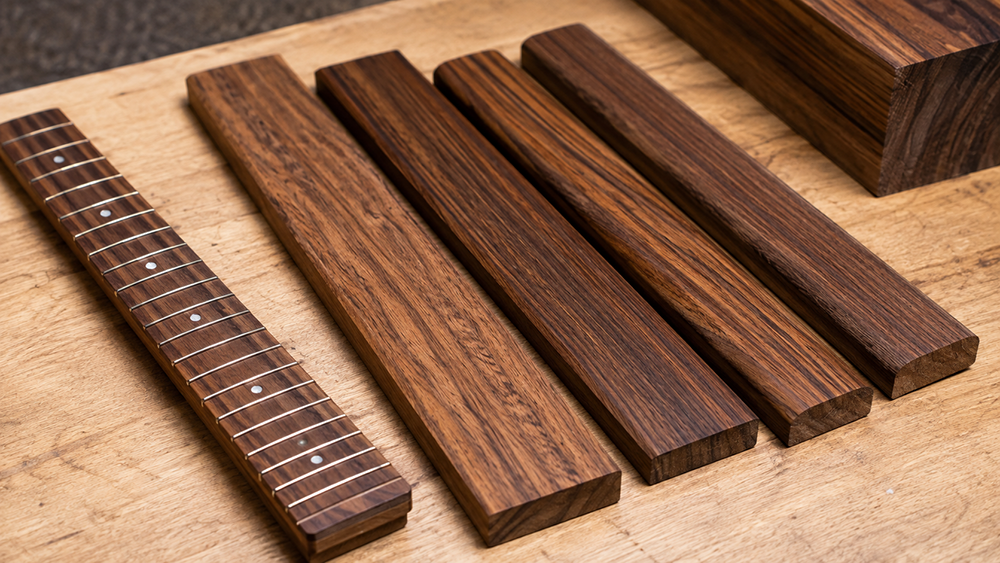
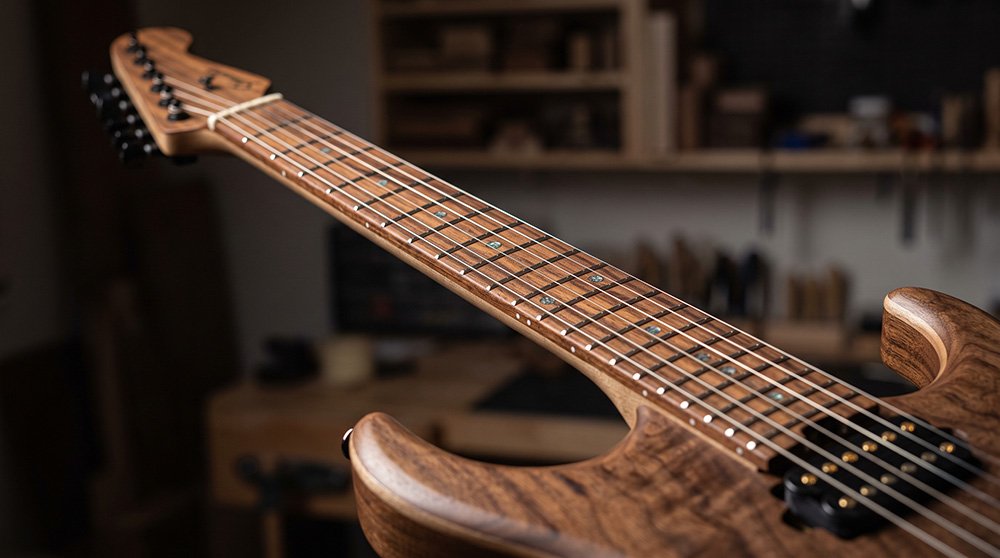
Pau Ferro Fingerboard Appearance
One of the biggest advantages of Pau Ferro is its natural appearance.
Depending on the individual piece and species, Pau Ferro can display a range of colors, including:
- Medium brown
- Chocolate brown
- Reddish brown
- Golden brown
- Dark brown
- Contrasting dark lines
The grain may be straight, slightly irregular, or figured.
This natural variation makes Pau Ferro particularly attractive for custom guitars and boutique instruments, where the fingerboard is an important part of the instrument’s overall visual design.
Unlike very dark Ebony, Pau Ferro generally provides more visible natural grain and color variation.
This allows guitar makers to create a warmer and more natural visual contrast with neck woods such as Maple, Roasted Maple, Walnut, and Mahogany.
Pau Ferro Fingerboard Thickness
The required thickness of a Pau Ferro fingerboard depends on the guitar design and construction method.
There is no single thickness that is suitable for every instrument. Requirements can vary according to:
- Guitar type
- Scale length
- Neck construction
- Fingerboard radius
- Fret installation method
- Final sanding allowance
- Neck profile
- Manufacturing process
For professional production, buyers should specify the required thickness before ordering.
It is also important to allow sufficient material for final machining, radiusing, fret-slotting, and sanding.
When purchasing Pau Ferro fingerboard blanks, buyers should clearly specify:
- Length
- Width
- Thickness
- Grain orientation
- Grade
- Quantity
- Moisture condition
Providing these specifications helps suppliers prepare material that is more consistent for repeat production.
Important: The final fingerboard thickness should always be determined by the guitar design and manufacturing process rather than by a generic standard.
Pau Ferro Fingerboard Grain Orientation
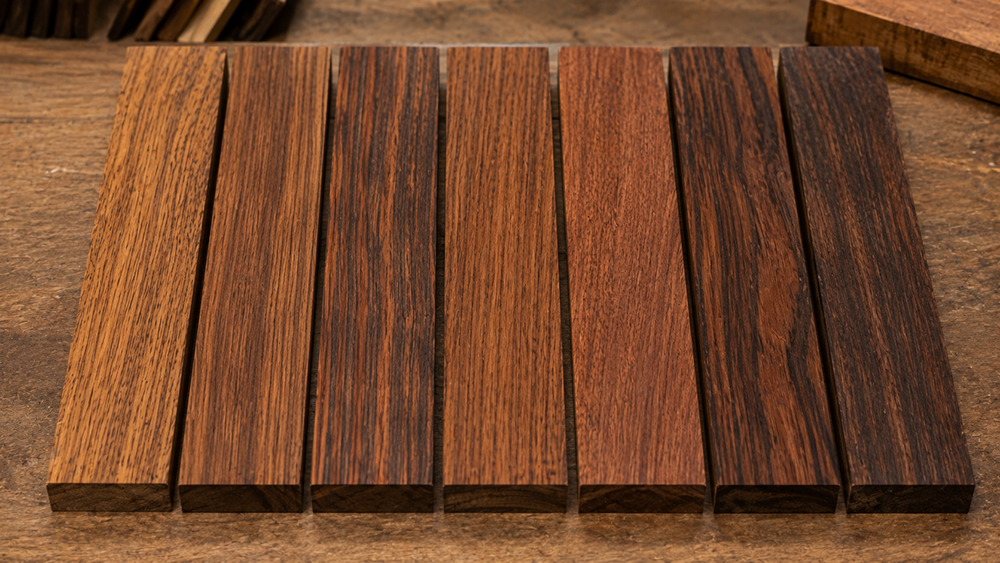
Grain orientation is an important consideration when selecting fingerboard blanks.
Straight and relatively consistent grain is generally easier to machine and finish.
Highly figured Pau Ferro can provide a more distinctive appearance, but figured or irregular grain may require more careful machining and sanding.
Before purchasing, professional buyers should inspect or discuss:
- Grain direction
- Grain runout
- Cracks
- Knots
- Mineral streaks
- Surface defects
- Machining allowance
- Overall surface quality
For production guitar makers, consistency between multiple fingerboards can be just as important as the appearance of an individual piece.
Is Pau Ferro Easy to Work With?
Pau Ferro is a dense and hard hardwood.
Because of its hardness and density, it generally requires more careful machining than softer woods such as Basswood or Alder.
When working with Pau Ferro, guitar makers should use:
- Sharp cutting tools
- Appropriate cutting speeds
- Proper sanding techniques
- Effective dust extraction
- Careful fret-slotting
- Appropriate machining allowances
Grain direction should also be considered during machining.
Sharp tools and controlled machining can help reduce tear-out and improve the final surface quality.
For production environments, properly dried and accurately dimensioned fingerboard blanks can make the machining process more efficient and consistent.
Pau Ferro vs Ebony for Fingerboards
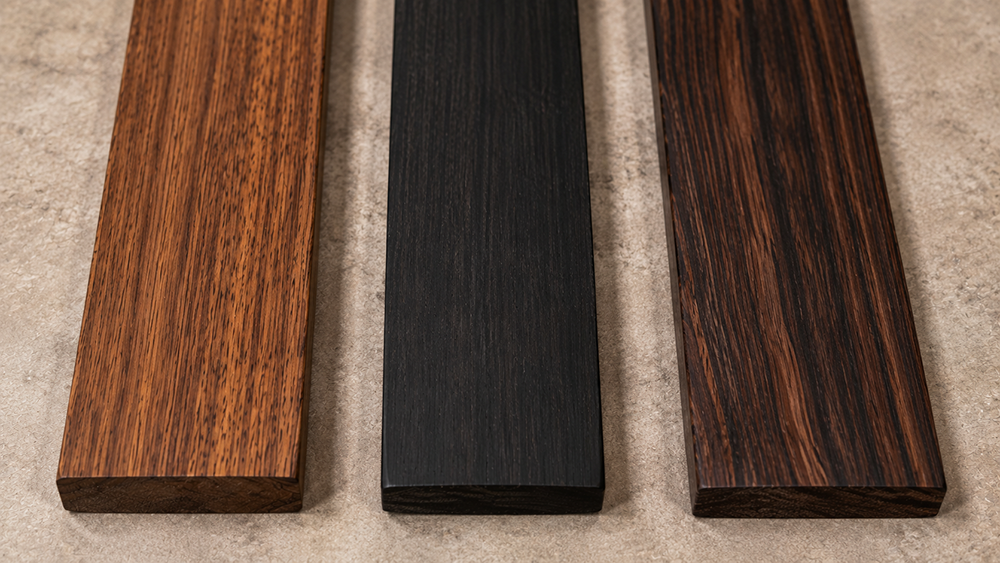
Pau Ferro and Ebony are both excellent choices for guitar fingerboards, but they offer different visual characteristics.
Choose Pau Ferro if you prefer:
- Brown or reddish-brown colors
- Visible natural grain
- Strong natural color variation
- A distinctive custom appearance
- An alternative to very dark fingerboards
Choose Ebony if you prefer:
- Very dark colors
- Fine and relatively uniform grain
- A traditional premium appearance
- Strong contrast with lighter neck woods
The best choice depends on the guitar design, desired appearance, material availability, and builder preference.
Internal Link:
Pau Ferro vs Ebony for Guitar Fingerboards
Pau Ferro vs Rosewood for Fingerboards
Pau Ferro is also commonly compared with Rosewood.
Both materials can provide attractive and durable fingerboards, but they are botanically different materials.
Pau Ferro is associated with the Machaerium genus, while many true Rosewoods belong to the Dalbergia genus.
For guitar makers, the choice should be based on the specific species, grade, appearance, dimensions, workability, and intended application.
If you are comparing these two materials specifically for guitar construction, see our detailed guide:
Internal Link:
Pau Ferro vs Rosewood: Which Is Better for Guitar?
How to Choose Quality Pau Ferro Fingerboards
When buying Pau Ferro guitar fingerboards, appearance is only one part of the selection process.
Professional buyers should consider the following factors.
1. Botanical Species
Confirm the scientific name as well as the commercial name.
Commercial names can vary between markets, so botanical identification is important for professional purchasing and material documentation.
2. Moisture Condition
Properly dried and appropriately stored wood is important for guitar manufacturing.
Buyers should discuss moisture condition and storage practices with their supplier, particularly when purchasing material for production.
3. Dimensions
Confirm the required:
- Length
- Width
- Thickness
Sufficient machining allowance should be considered when ordering unfinished blanks.
4. Grain Orientation
Select grain that is appropriate for the intended fingerboard application.
Straight and consistent grain can be beneficial for production machining, while figured material may be selected when appearance is a higher priority.
5. Grade
Grade should take into account:
- Color
- Grain
- Cracks
- Knots
- Surface defects
- Overall appearance
6. Consistency
For guitar manufacturers purchasing multiple fingerboards, consistency is extremely important.
A supplier should ideally be able to discuss specifications and provide material with relatively consistent:
- Species
- Color
- Grade
- Dimensions
- Moisture condition
- Grain characteristics
Pau Ferro Fingerboards for Custom Guitar Makers
Pau Ferro is particularly attractive for boutique and custom guitar makers.
Its natural grain and brown-to-reddish color range can complement many neck and body woods, including:
- Maple
- Roasted Maple
- Walnut
- Mahogany
- Black Limba
- Ash
- Alder
- Figured Maple
For modern guitar designs, Pau Ferro can provide a distinctive alternative to traditional dark fingerboards.
Its natural variation also means that each fingerboard can have a slightly different visual character, which can be especially desirable for custom instruments.
Buying Pau Ferro Guitar Fingerboards in Bulk
For guitar manufacturers purchasing multiple fingerboards, consistency is often more important than selecting individual premium pieces.
Before placing a production order, buyers should clearly define:
- Botanical species
- Grade
- Length
- Width
- Thickness
- Moisture condition
- Grain orientation
- Quantity
- Packaging requirements
It is also useful to discuss whether the supplier can provide repeat orders with similar specifications.
For production guitar manufacturers, establishing a clear material specification can help reduce variation between batches and make manufacturing more predictable.
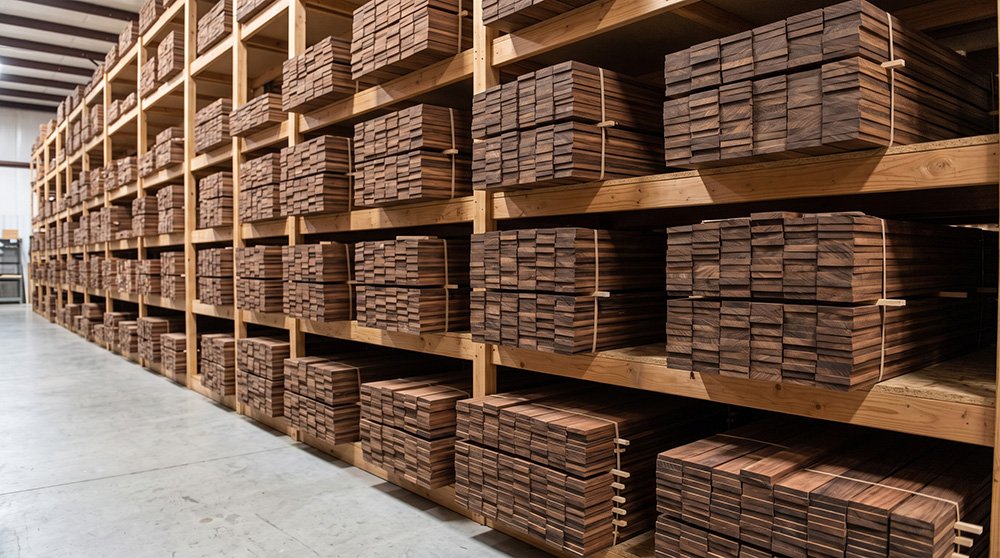
Pau Ferro Guitar Fingerboards from Tonewood Global
Tonewood Global supplies guitar tonewood and instrument wood for luthiers, guitar makers, and musical instrument manufacturers.
Our Pau Ferro materials can be supplied for guitar fingerboards and other instrument applications, depending on available grades, dimensions, species, and specifications.
For professional buyers, we can discuss material requirements such as:
- Fingerboard dimensions
- Thickness
- Grade
- Grain characteristics
- Quantity
- Production requirements
- Wholesale supply
Internal Link 1:
View Pau Ferro Guitar Tonewood
Internal Link 2:
Explore Guitar Fingerboard Wood
Internal Link 3:
Internal Link 4:
Contact Tonewood Global for Wholesale Tonewood
Conclusion
Pau Ferro is a durable and visually distinctive hardwood for guitar fingerboards.
Its combination of hardness, density, natural grain, and brown-to-reddish colors makes it particularly attractive for custom, boutique, and production guitars.
When purchasing Pau Ferro fingerboards, buyers should pay attention to:
- Botanical species
- Moisture condition
- Thickness
- Dimensions
- Grain orientation
- Grade
- Overall consistency
The right material specification can help guitar makers achieve both reliable performance and a distinctive appearance.
If you are looking for Pau Ferro guitar fingerboards for custom guitars, production instruments, or wholesale applications, contact Tonewood Global to discuss available sizes, grades, and supply options.
SEO Settings
SEO Title:
Pau Ferro Guitar Fingerboards: Properties, Thickness & Buying Guide
URL Slug:pau-ferro-guitar-fingerboard
Primary Keyword:
Pau Ferro guitar fingerboard
Secondary Keywords:
- Pau Ferro fingerboard
- Pau Ferro fretboard
- Pau Ferro guitar wood
- Pau Ferro fingerboard blank
- Pau Ferro guitar neck
- guitar fingerboard wood
- Pau Ferro tonewood
Meta Description:
Learn about Pau Ferro guitar fingerboards, including properties, thickness, grain, workability, quality and buying tips for luthiers and guitar makers.
Recommended Internal Link Structure
1. Pau Ferro vs Ebony
Anchor Text: Pau Ferro vs Ebony for Guitar Fingerboards
2. Pau Ferro vs Rosewood
Anchor Text: Pau Ferro vs Rosewood: Which Is Better for Guitar?
3. Pau Ferro Product Page
Anchor Text: View Pau Ferro Guitar Tonewood
4. Guitar Fingerboard Category
Anchor Text: Explore Guitar Fingerboard Wood
5. Guitar Tonewood Category
Anchor Text: Explore Guitar Tonewoods
6. Contact / Wholesale
Anchor Text: Contact Tonewood Global for Wholesale Tonewood