
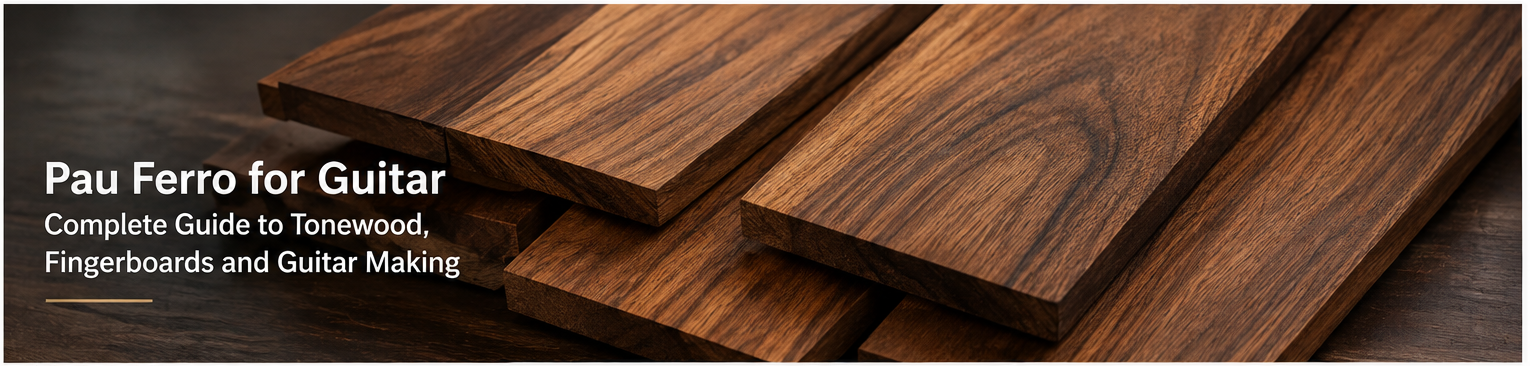
Pau Ferro for Guitar: Complete Guide to Tonewood, Fingerboards and Guitar Making
Pau Ferro is a dense, attractive hardwood that has become a popular choice among guitar makers and luthiers looking for an alternative to traditional rosewood and ebony.
Known in the timber trade by names such as Pau Ferro, Santos Rosewood, Morado and Bolivian Rosewood, the name can refer to woods in the Machaerium genus. For guitar applications, Machaerium scleroxylum is one of the important species associated with the Pau Ferro trade. Kew’s Plants of the World Online recognizes Machaerium scleroxylum Tul. as an accepted species, with a native range from Bolivia to Brazil and Paraguay. (Plants of the World Online)
For luthiers, Pau Ferro is particularly interesting because it combines attractive appearance, hardness, stability and good workability with a visual character that can resemble some rosewoods.
What Is Pau Ferro?
Pau Ferro is a hardwood from the Machaerium genus in the legume family, Fabaceae.
The name “Pau Ferro” is used commercially for several Machaerium species, so buyers should always confirm the botanical species when purchasing tonewood.
Machaerium scleroxylum is native to parts of South America, including Bolivia, Brazil and Paraguay. It is a tree adapted to seasonally dry tropical environments. (Plants of the World Online)
Pau Ferro is not a true rosewood of the Dalbergia genus. However, the trade name “Santos Rosewood” is widely used for some Pau Ferro materials, which can sometimes cause confusion when comparing different tonewoods.
For professional guitar makers, the botanical name and exact source of the wood are therefore important when specifying material.
What Does Pau Ferro Look Like?
One of the biggest advantages of Pau Ferro is its appearance.
The wood can display combinations of:
- Brown
- Chocolate brown
- Golden brown
- Reddish brown
- Black or dark contrasting lines
- Fine straight grain
- Attractive figured grain in selected pieces
The color can vary significantly between individual boards and sets.
This variation makes Pau Ferro particularly attractive for visible guitar components such as:
- Fingerboards
- Bridge components
- Acoustic guitar back and sides
- Electric guitar bodies
- Decorative components
- Laminated guitar parts
For guitar makers who want a dark, exotic-looking hardwood without using traditional rosewood, Pau Ferro can be an interesting option.
Is Pau Ferro Good for Guitar?
Yes. Pau Ferro is widely used for guitar-related applications because of its combination of hardness, density, appearance and workability.
Its properties make it particularly suitable for components that require a durable hardwood surface.
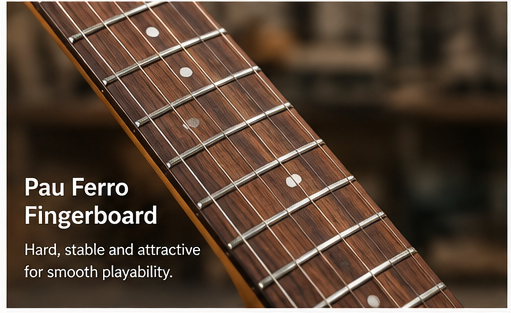
Pau Ferro for Guitar Fingerboards
Pau Ferro is especially well known as a fingerboard material.
A guitar fingerboard needs to withstand:
- Constant contact with strings
- Fretting pressure
- Repeated playing
- Sanding and shaping
- Finishing and polishing
Pau Ferro’s hardness makes it suitable for this type of application.
It can also provide a visually distinctive alternative to traditional ebony, maple or rosewood fingerboards.
For builders producing custom guitars, Pau Ferro can be particularly attractive when the goal is to combine a dark exotic appearance with a different visual character from conventional fingerboard woods.
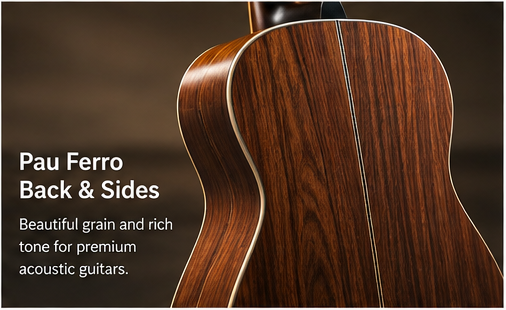
Pau Ferro for Acoustic Guitar Back and Sides
Pau Ferro can also be used for acoustic guitar back and sides.
Its dense hardwood structure and attractive grain make it suitable for high-end and custom instruments where appearance is an important consideration.
When selecting Pau Ferro for acoustic guitar sets, luthiers should pay attention to:
- Quarter-sawn or appropriate grain orientation
- Consistent thickness
- Moisture content
- Stability
- Grain continuity between back and sides
- Defects, checks and knots
- Matching color and figure
For a premium guitar set, matching the two sides of the back and obtaining visually compatible side pieces can be just as important as the species itself.
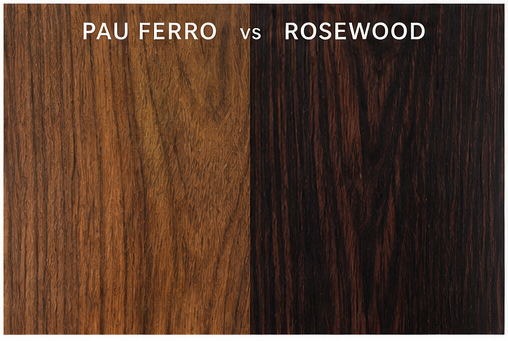
Pau Ferro vs Rosewood
One of the most common questions from guitar makers is:
Is Pau Ferro a good alternative to rosewood?
The answer depends on the specific application and the characteristics the builder wants.
Pau Ferro is not a true rosewood botanically. However, some of its visual and physical characteristics make it attractive as an alternative to traditional rosewood materials.
The comparison should consider more than appearance.
| Feature | Pau Ferro | Traditional Rosewood |
|---|---|---|
| Botanical genus | Machaerium | Dalbergia or other genera depending on species |
| Appearance | Brown, golden, reddish and dark contrasting grain | Usually brown, reddish, purple or dark tones depending on species |
| Hardness | High | Generally high |
| Density | High | Generally high |
| Fingerboards | Excellent application | Excellent application |
| Acoustic guitar back & sides | Suitable for selected sets | Widely used |
Visual character Often highly figured and contrasting Species-dependent
Species identification Important Very important
There is no universal “best” tonewood. The right choice depends on the guitar design, construction method, desired appearance, available dimensions and the preferences of the builder.
Pau Ferro vs Ebony for Guitar Fingerboards
Ebony remains one of the most established choices for guitar fingerboards, but Pau Ferro offers a different appearance.
Ebony is often selected for its very dark color and fine texture.
Pau Ferro can provide more natural variation, with brown, golden and darker contrasting grain.
For a modern custom guitar, this difference can be an advantage.
If you are comparing the two materials, consider:
- Color
- Grain pattern
- Density
- Hardness
- Thickness availability
- Machining characteristics
- Finishing requirements
- Visual matching
The best choice ultimately depends on the design of the instrument.
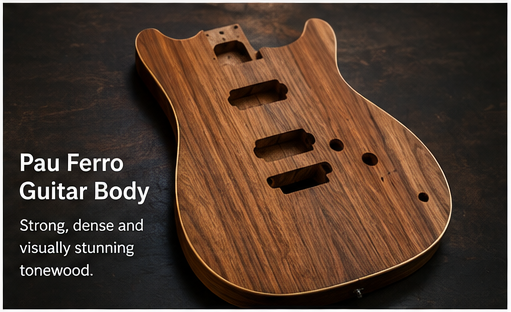
Is Pau Ferro Good for Guitar Bodies?
Pau Ferro can be used for guitar bodies, although its high density means that weight should be considered carefully.
For an electric guitar body, builders often balance several factors:
- Wood density
- Finished body weight
- Structural requirements
- Appearance
- Machining characteristics
- Desired instrument design
For this reason, Pau Ferro may be more attractive for selected components or specialty guitar designs than for every type of electric guitar body.
Is Pau Ferro Easy to Work With?
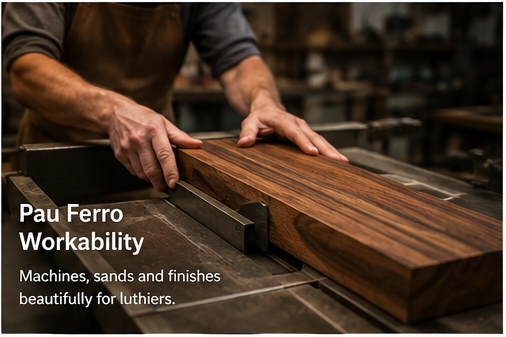
Pau Ferro is a hard, dense hardwood, so appropriate tooling and machining techniques are important.
When machining dense tonewoods, guitar makers should consider:
- Sharp cutting tools
- Appropriate feed rates
- Dust extraction
- Pre-drilling where appropriate
- Careful sanding
- Moisture control
The exact machining behavior can vary according to the individual board, grain direction and moisture condition.
For professional production, consistent drying and careful material selection are important before machining.
Pau Ferro for Modern Guitar Making
Modern guitar makers are increasingly interested in tonewood options beyond the traditional species.
Pau Ferro fits this trend because it offers:
- A distinctive appearance
- High hardness
- Good durability
- Versatile guitar applications
- An alternative visual style to traditional rosewood
- Compatibility with custom and boutique guitar designs
It can be particularly interesting for builders producing:
- Custom acoustic guitars
- Boutique electric guitars
- Custom bass guitars
- Guitar fingerboards
- Replacement fingerboards
- Specialty instrument components
How to Choose Pau Ferro Guitar Wood
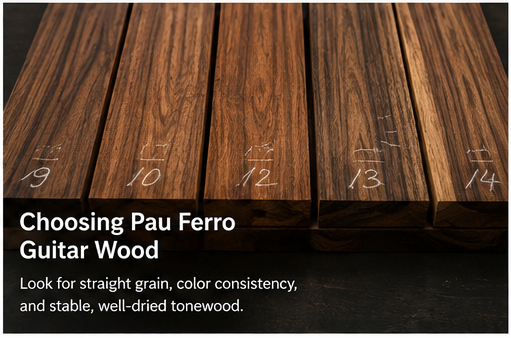
When purchasing Pau Ferro tonewood, species name alone is not enough.
Professional buyers should ask about:
- Botanical identification
Confirm the scientific name of the material.
For example:
Machaerium scleroxylum
This avoids confusion caused by commercial names such as “Santos Rosewood.”
- Moisture content
Tonewood should be properly dried and stored before use.
- Dimensions
For guitar production, dimensions should be specified according to the application.
For example:
- Fingerboard blanks
- Back and side sets
- Body blanks
- Bridge blanks
- Veneer
- Laminated components
- Grain orientation
Quarter-sawn and appropriately oriented material can be especially important for components where dimensional stability matters.
- Visual matching
For premium instruments, matching color, grain and figure can significantly improve the finished appearance.
Where to Buy Pau Ferro Guitar Wood
If you are a guitar maker, luthier or musical instrument manufacturer looking for Pau Ferro, it is important to work with a supplier that can provide clear information about:
- Wood species
- Dimensions
- Moisture condition
- Available thicknesses
- Grain orientation
- Grade
- Quantity
- Packaging
- Shipping options
For small custom projects, individual guitar sets or fingerboard blanks may be appropriate.
For production guitar manufacturers, consistent specifications and repeatable supply are more important.
Tonewood Global supplies guitar tonewoods and instrument wood for luthiers, guitar makers and musical instrument manufacturers.
Contact Tonewood Global for Wholesale Tonewood →
Final Thoughts
Pau Ferro is a versatile hardwood with a distinctive appearance and a wide range of potential applications in guitar making.
It can be considered for guitar fingerboards, acoustic guitar back and sides, specialty guitar components and selected electric guitar applications.
For builders comparing Pau Ferro with rosewood, ebony, maple or other tonewoods, the most important factors are not simply the species name or appearance. Wood quality, grain orientation, moisture condition, dimensions and the intended application all matter.
If you are selecting Pau Ferro for a guitar project, compare the material based on the specific component you are building and the specifications required for your instrument.
Looking for Pau Ferro guitar wood for your next project? Contact Tonewood Global for available sizes, specifications and wholesale options.