
When you order a custom guitar, the hardest part is often not “what do I want” but “with so many woods, how do I combine them without a misstep?” The body, top, neck, fingerboard, and back and sides each come with a long list of candidates, and look, tone, and budget constantly pull against each other: you want striking figure but the budget won’t stretch, or you want the crispest tone but don’t love the look.
This article doesn’t repeat the details of each wood, which are covered in our species articles. Instead, it gives you a step-by-step process and checklist you can follow directly, built for independent luthiers, small-batch brands, and DIY builders in North America, Europe, Australia, and East Asia.
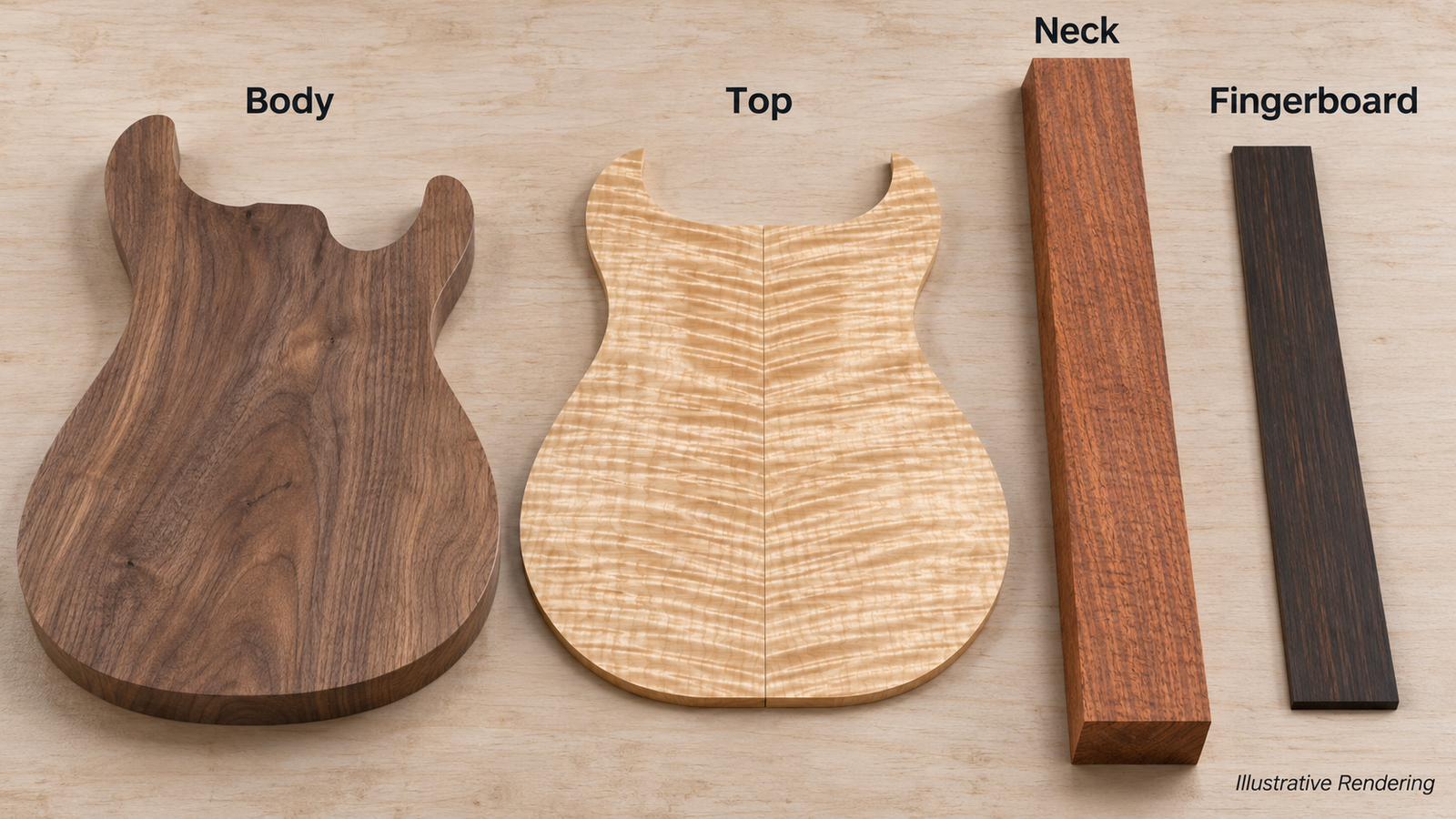
Step 1: Settle Three Things First
Before picking any wood, answer three questions. The answers will narrow your candidates directly.
1. What is this guitar for?
- The main playing style (metal/rock, blues/jazz, fingerstyle, pop, etc.)
- Whether it will be played standing or seated, and how sensitive you are to weight
- Whether it’s for personal use, commercial production, or a limited run
2. What do you want it to look like?
- Showing natural grain (clear finish), or using color (dye, burst, opaque finish)
- Classic and understated, or bold and dramatic
- Overall warm, cool, or high-contrast color
3. How will you allocate the budget?
- The total budget, and how much goes to wood
- Whether to spend on the most visible parts (top, fingerboard) or the parts that most affect feel and stability (neck)
Step 2: Choose by Part, Not by Single Wood
Different parts ask different things of the wood. A practical priority order:
- Neck: stability first
- Fingerboard: wear resistance and feel first, while also a visual focal point
- Body: weight, tonal lean, and appearance
- Top: appearance first, with tonal effect only when thick
- Back and sides (acoustic): acoustic lean, bendability, and appearance
Neck
- Hard Maple: classic, stable, bright
- Roasted Maple: even more stable, with a vintage color
- Sapele: warmer, good value
Fingerboard
- Ebony: solid black, maximum clarity, with higher price and compliance pressure
- Pau Ferro: balanced, compliance-friendly, relatively accessible price
- Congo Rosewood: rare African wood with weighty low-mids
- Ziricote: ink-wash spiderweb figure, clear with warmth
- Pale Moon Ebony: bold black-and-white contrast with strong personality
Body
- Maple: bright, heavier
- Black Walnut: warm and full, moderate weight
- Sapele: solid mids, slightly warm
- Yellow Heart Nanmu: balanced and smooth, lighter, with a golden look
Top
- Maple (incl. Flame, Birdseye): bright, best dye response
- Yellow Heart Nanmu: soft, natural gold
- Pommele Sapele: warm-toned dimensional figure
Back and Sides
- Pau Ferro: balanced, compliance-friendly
- Ziricote: the visual star, bend with care
- Congo Rosewood: niche, test a small sample first
- Sapele, Black Walnut: friendlier reference choices
Step 3: Compare Candidates With a Three-Dimension Score
Give each candidate combination a rough score (say 1–5) for look, tone, and budget, then weight them by your priorities. It’s far more reliable than going by feel.
| Dimension | Questions to Ask |
|---|---|
| Look | Does the appearance fit the design? Is the figure distinctive? Do the colors work with the other parts? |
| Tone | Does the tonal lean fit the style? Do the body, neck, and fingerboard complement rather than clash? |
| Budget | Is the total cost within range? Is the expensive wood concentrated where it shows the most value? |
A common approach is “one highlight, the rest restrained”: choose one part (such as the top or fingerboard) as the visual highlight and pair it with dependable, good-value woods elsewhere.
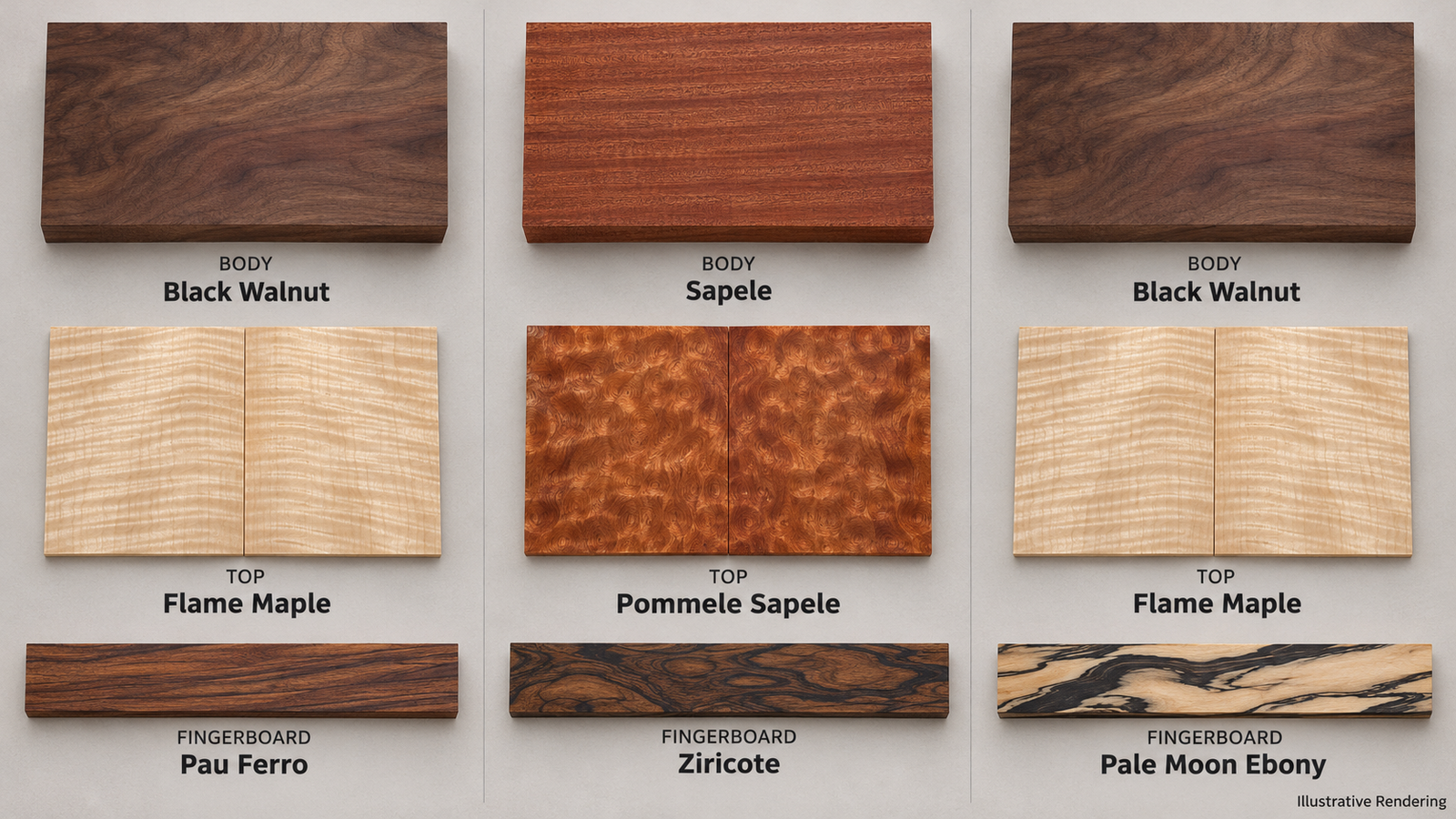
Step 4: Common Pairing References
Here are a few clearly reasoned combinations, not the only answers:
Bright and Crisp
- Maple neck + Pau Ferro or Ebony fingerboard + Maple top (or a lighter body)
- Suited to metal, progressive rock, and styles needing clear attack
Warm and Full
- Black Walnut or Sapele body + Maple neck + Pau Ferro fingerboard
- A warm body with a bright neck for overall balance, suited to blues, jazz, and pop
Visual Flagship
- Pommele Sapele or Flame Maple top + Ziricote or Pale Moon Ebony fingerboard + a more restrained body
- Concentrates visual resources on the top and fingerboard, suited to showpiece custom guitars
Stability First
- Roasted Maple neck and fingerboard + Sapele or Black Walnut body
- Suited to shipping to regions with very different climates, or projects needing long-term stability
Lightweight
- Yellow Heart Nanmu or another lighter body + Maple top + Maple or Roasted Maple neck
- Suited to players who perform standing for long sets
Step 5: Pre-Purchase Checklist
Confirm each item before ordering:
The Wood Itself
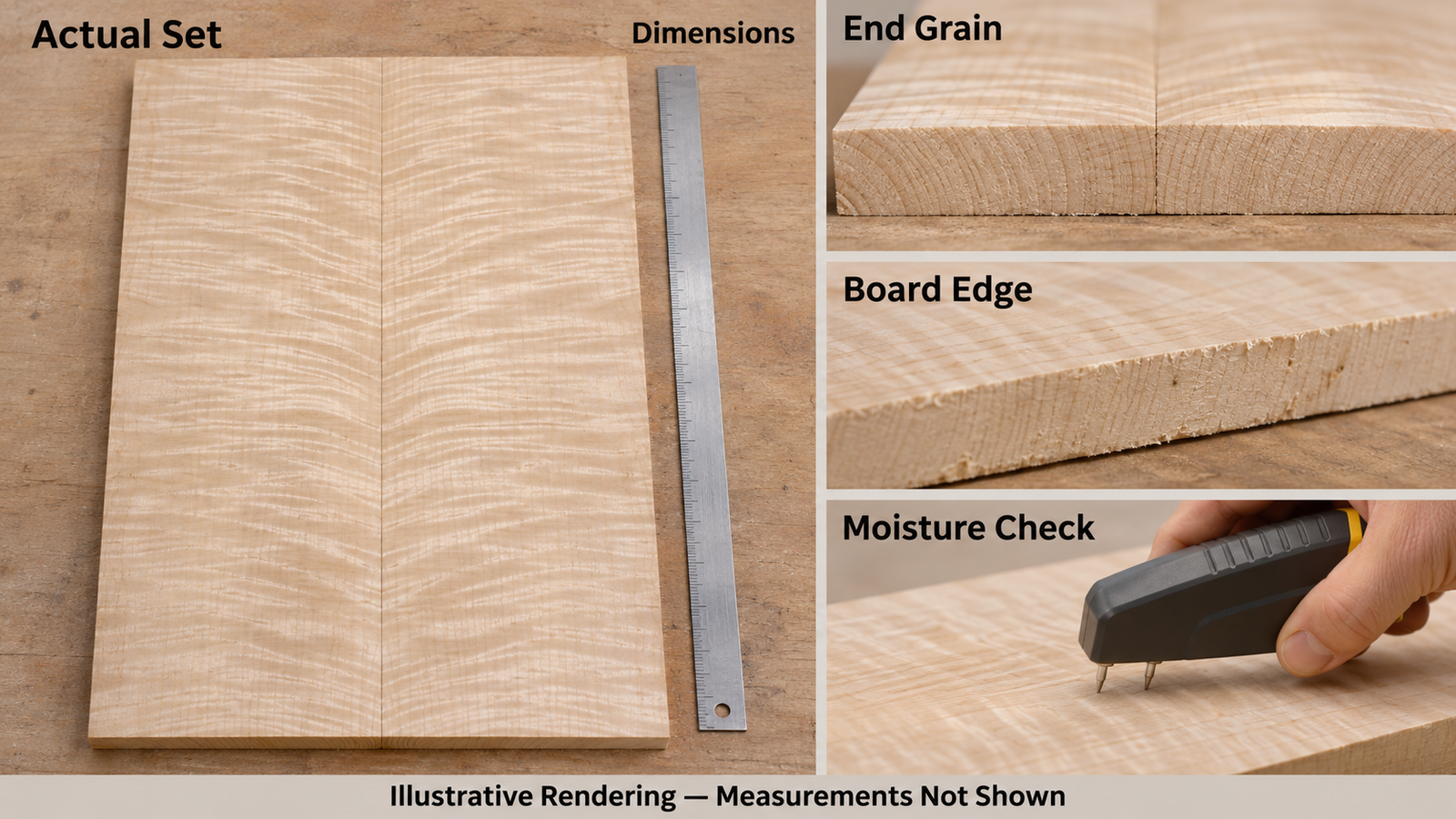
- Request photos of the actual board, not illustrative images
- Confirm how the figure grade is defined (standards vary by supplier)
- Confirm moisture content (generally 8%–12% for tonewood)
- Confirm cut type (quartersawn or near-quartersawn is especially advisable for necks)
- Check for cracks, insect damage, resin pockets, and color variation
- Confirm board dimensions leave enough machining allowance
Compliance and Logistics
- Confirm the botanical name and origin to avoid same-name, different-species confusion (such as the different “Pau Ferro” woods)
- For the EU (EUDR), the US (Lacey Act), and Australia (Illegal Logging Prohibition Act), confirm legal harvest and origin documents
- For CITES-regulated species, confirm the required permits
- Confirm shipping method, packaging, and an acclimation period after delivery
Design and Craft
- Do the tonal leans of each part complement each other?
- Is the weight within an acceptable range?
- Do oily woods (like Pau Ferro) need degreasing before gluing?
- Are you confident in the machining of figured woods (like Ziricote or Pommele Sapele)?
Common Pitfalls
- Going by grade labels without real photos: grades have no universal standard, and the real board can differ greatly.
- Putting the whole budget into one visual part and neglecting neck stability: if the neck fails, even the prettiest top can’t save the guitar.
- Ignoring moisture content and acclimation: machining wood right after it arrives invites warping or cracking later.
- Ignoring compliance: missing documents for rare or regulated species can get a shipment held or make it unsellable.
- Expecting a single wood to decide the tone: pickups, electronics, and construction matter just as much.
Final Thoughts
There’s no standard answer to wood selection, but there is a clear process: settle purpose, look, and budget first, then choose by part, compare candidates with scoring, and finally use the checklist to guard the purchase. Follow these steps and your decisions move from “going by feel” to “having a basis.”
To learn more about each wood, read our species articles, along with our series on fingerboard, neck, body, top, and back and sides woods.
Looking for custom guitar stock? Visit our full product overview to browse current inventory by part and species, with worldwide shipping available.