
Many people assume a limited budget means settling for ordinary woods and compromising on both tone and looks. Careful material selection can help you get more from your budget.
Experienced builders make deliberate trade-offs. They spend on reliable neck stock, comfortable weight, and a few visual highlights while keeping decorative costs under control.
This article explains how to approach wood selection on a tight budget and presents three combinations for small-batch brands, independent luthiers, and DIY builders. The tiers describe relative costs. Actual prices depend on dimensions, preparation, grade, and the supplier’s current inventory.
Spend Where It Counts
Start by identifying the requirements of your build. For a solid-body electric guitar, consider the following priorities.
- Neck suitability and stability
Choose properly dried stock with suitable grain orientation and enough machining allowance. Reliable neck construction deserves a protected share of the budget. - Fingerboard condition and feel
Check that the material suits your fretwork, finishing method, and preferred playing surface. - Body weight and construction
Consider the finished instrument’s weight, balance, hardware layout, and routing requirements. - Visual impact
Tops, veneers, and other visible surfaces offer room to adjust costs while creating a distinctive appearance. - Decorative details
A small amount of figured wood can provide an attractive accent on a headstock, pickup cover, or control knob.
For acoustic builds, back and side selection also needs to account for bending, thicknessing, and the instrument’s overall design.
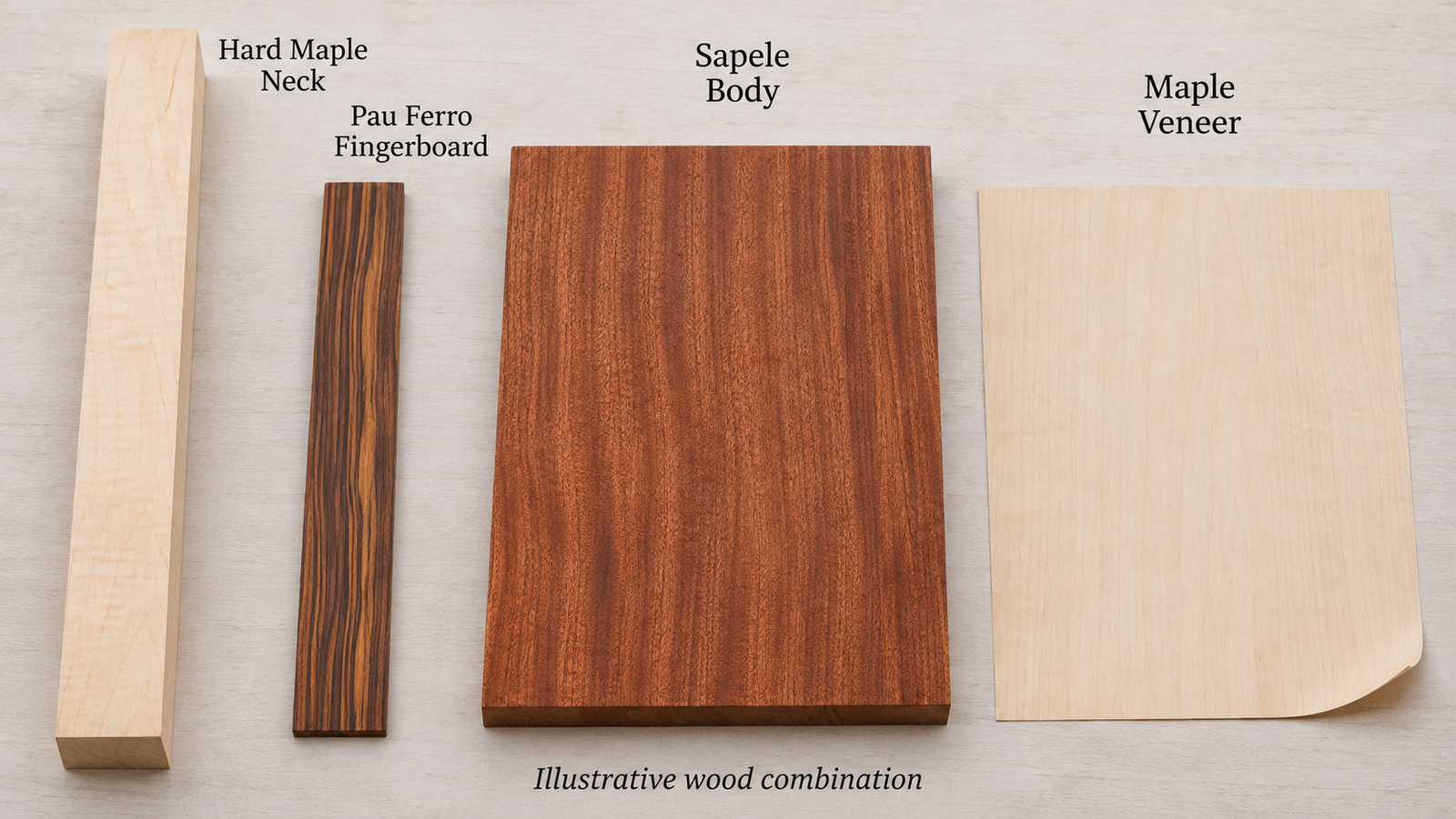
Woods to Consider for a Value-Focused Build
The following woods are worth comparing when planning a budget. Their relative value depends on local availability, dimensions, grade, and shipping costs.
| Part | Choices to Compare | What to Evaluate |
|---|---|---|
| Neck | Hard Maple | Drying, grain orientation, straightness, and usable dimensions |
| Fingerboard | Pau Ferro | Surface condition, grain, dimensions, and suitability for your finishing method |
| Body | Sapele or Black Walnut | Weight, defects, joint layout, and machining allowance |
| Top | Plain or moderately figured Maple | Required thickness, usable area, and visual appearance |
| Acoustic back and sides | Sapele or Black Walnut | Matched dimensions, thickness, cut, and bending suitability |
A familiar species can still produce a distinctive instrument. The quality of the individual boards and the execution of the build deserve as much attention as the species name.
Ways to Control Material Costs
Choose a Moderate Figure Grade
Compare several boards within a supplier’s range. A moderately figured set may provide the appearance you want at a more manageable price.
Ask how the supplier defines its grades and examine photos of the actual set. Figure coverage and pattern placement can matter more to your design than the number of A’s in the listing.
Use Premium Wood in Small Areas
A figured headstock veneer, pickup cover, or control plate can create a visual highlight with relatively little material.
Plan these accents alongside the main components so their colors and patterns work together.
Evaluate Cosmetic Variations Carefully
Some boards have color variation or marks that fall outside your cutting layout. These may offer value if the usable area meets your needs.
Ask the supplier to identify each defect and show its location. Check whether it affects structure, machining, finishing, or the final appearance.
Consider a Veneer for a Decorative Surface
If your goal is visual, compare a thin veneer with a thicker top. Allow for the preparation, adhesive, pressing, and finishing work required by each option.
Choose the construction method before ordering so the material thickness suits the design.
Buy Close to Your Required Size
Prepare a cutting layout and order dimensions that leave sufficient machining allowance.
An oversized blank can increase purchase and shipping costs. A blank that is too small can leave no room to correct movement, flatten the surface, or adjust a joint.
Include Documentation and Shipping in the Comparison
Ask what documentation accompanies the material and what your shipment requires. Freight, duties, and any applicable documentation costs contribute to the landed price.
Coordinate Materials Before Ordering
If matching color is important, request photos of the selected pieces together. This can help you assess the combination before paying for separate shipments.
Three Budget Tiers to Consider
These examples focus on solid-body electric guitar builds. Each tier offers a different way to distribute the material budget.
Economy Balanced — Dependable and Practical
- Neck — Hard Maple
- Fingerboard — Pau Ferro
- Body — Sapele or Black Walnut
- Top — None, or a thin Maple veneer
- Visual direction — Natural wood colors with restrained decoration
- Budget approach — Prioritize suitable stock, accurate preparation, and usable dimensions
This combination keeps the material list straightforward. Select the body blank with finished weight and balance in mind, and use a simple finish to highlight the wood.
Focused Investment — One Visual Highlight
- Neck — Hard Maple
- Fingerboard — Pau Ferro
- Body — Black Walnut or Sapele
- Top — Moderately figured Flame Maple or Pommele Sapele
- Visual direction — A figured top supported by a quieter body and fingerboard
- Budget approach — Concentrate the decorative spending on the top
Choose a top with figure placed where it will remain visible after shaping and routing. Check the book-match and cutting layout before ordering.
Selective Upgrade — Spend on a Specific Requirement
- Neck — Carefully selected Hard Maple or appropriately processed Roasted Maple
- Fingerboard — Pau Ferro, Ziricote, or Pale Moon Ebony
- Body — Black Walnut, Sapele, or Puwen Phoebe
- Top — None, or a moderately figured top
- Visual direction — A distinctive fingerboard or a coordinated natural finish
- Budget approach — Upgrade a component when it serves a clear construction, playing, or appearance goal
Compare the actual blanks before treating a higher price as an improvement. Species, processing, and visual rarity each affect price in different ways.

Which Part Should You Upgrade First?
Base the decision on what the current material is missing.
- Address unsuitable neck stock first.
If the blank has questionable drying, grain, or usable dimensions, replace it with stock that meets the build’s requirements. - Choose the fingerboard for your intended surface and appearance.
Compare preparation, condition, and finishing needs. A more expensive species may offer a different look without solving a practical problem. - Add a figured top when appearance is the priority.
Decide on thickness and construction before buying. Include the additional preparation and finishing work in the budget. - Consider body upgrades against a defined goal.
Weight, balance, dimensions, and the desired appearance provide clearer buying criteria than rarity alone.
Wood selection is one part of the instrument. Construction, hardware, electronics, fretwork, and setup also need room in the overall budget.
Common Budget Mistakes
Buying Without Knowing the Wood’s Condition
Ask about drying and storage, inspect the stock after delivery, and allow time for it to acclimate before machining.
Comparing Price Without Comparing Specifications
Check thickness, dimensions, preparation, defects, and the usable cutting area. Two similarly named products may provide very different amounts of usable material.
Choosing a Species Because It Is Rare
Start with the requirements of the part. Availability and replacement options also matter if you plan to repeat the build.
Leaving Out Landed Costs
Include freight, duties, documentation where applicable, and any additional preparation needed after delivery.
Skipping Photos of the Actual Wood
Request images that show the whole board, edges, end grain, and any disclosed defects. For matched sets, check both pieces together.
Quick Pre-Purchase Check
- Have you confirmed the neck stock’s drying condition, grain orientation, and usable dimensions?
- Have you requested photos of the actual boards or matched set?
- Have you checked how the supplier defines the figure grade?
- Have you confirmed the botanical name and stated origin?
- Have you checked the documentation required for the species and destination?
- Have you included freight, duties, and preparation costs?
- Have you allowed enough material for flattening, jointing, shaping, and routing?
- Have you planned an acclimation period after delivery?

Build Around Your Priorities
Choose suitable structural stock first, then decide where a visual upgrade will have the most impact. A familiar body wood, a well-prepared fingerboard, and one carefully selected figured surface can form an attractive combination within a controlled budget.
To explore individual materials, read our species guides and our Custom Guitar Wood Selection Checklist, along with articles on fingerboard, neck, body, top, and back and side woods.
Looking for a wood combination that fits your budget? Browse the Tonewood Global product range to compare available species, dimensions, and photos of individual sets. Shipping availability and costs depend on the destination.