
In the American custom guitar scene, a familiar question when choosing body wood is whether to go with bright, articulate Maple or warm, full Black Walnut. Both are North American native hardwoods, but their contrasting colors and commonly described tonal characteristics give builders different options.
In this article, we compare their appearance, density, tonal reputation, and practical uses to help you choose the right material for your next build.
Basic Comparison
| Dimension | Maple | Black Walnut |
|---|---|---|
| Botanical Name | Acer saccharum (Hard Maple) | Juglans nigra |
| Family | Sapindaceae | Juglandaceae |
| Primary Origin | North America, particularly Canada and the northeastern US | North America, particularly the eastern and midwestern US |
| Air-Dry Density | Approximately 0.63–0.75 g/cm³ for Hard Maple | Approximately 0.55–0.64 g/cm³ |
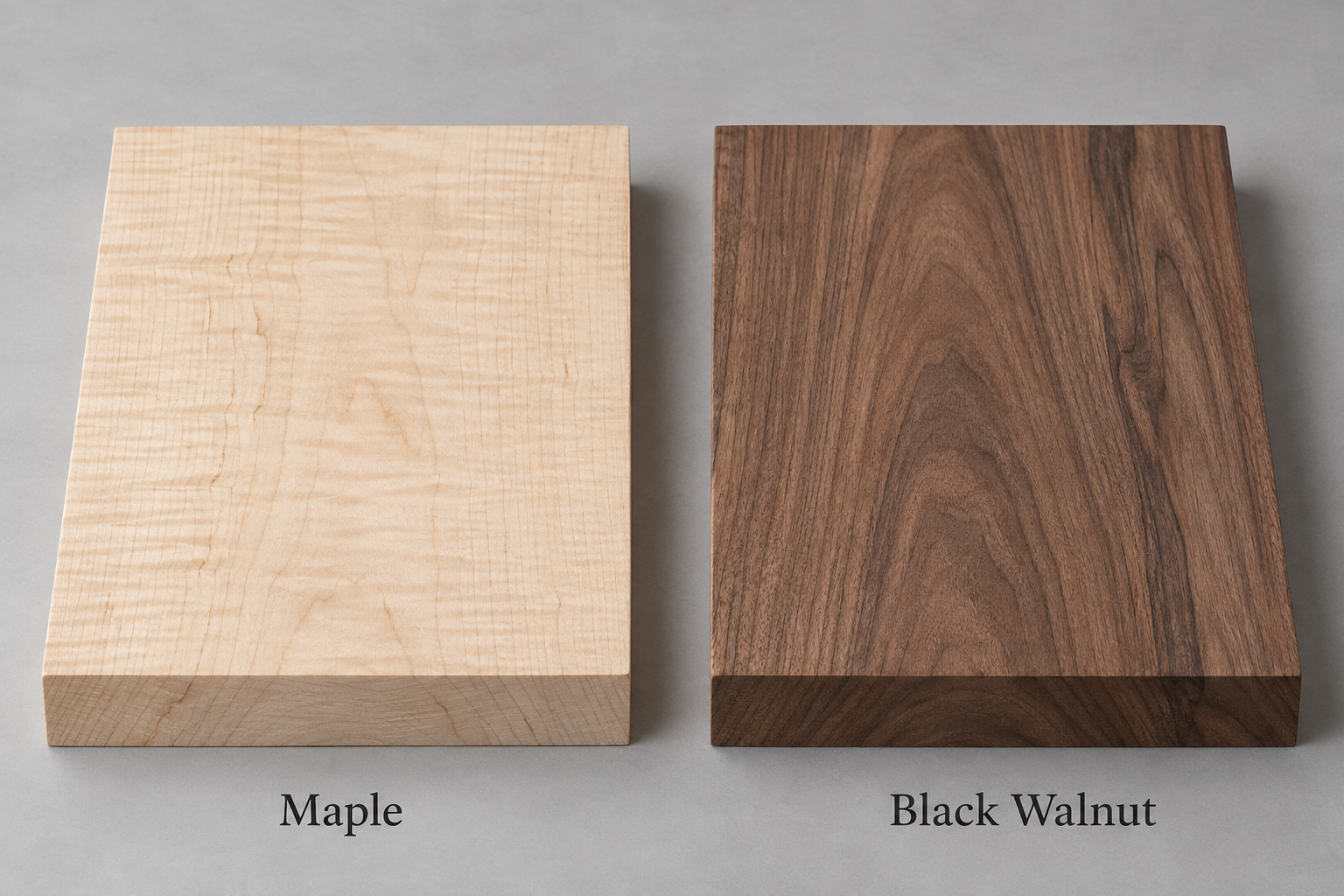
| Typical Color | Pale cream to yellowish-white, especially in sapwood | Chocolate brown to purplish-brown heartwood |
Both woods are available through established North American lumber supply chains. For instrument builders, the practical considerations include species identification, drying quality, dimensions, and the consistency of each individual blank.
The Maple figures in this comparison refer to Hard Maple. Other Maple species can differ in density and working properties.
Appearance Comparison
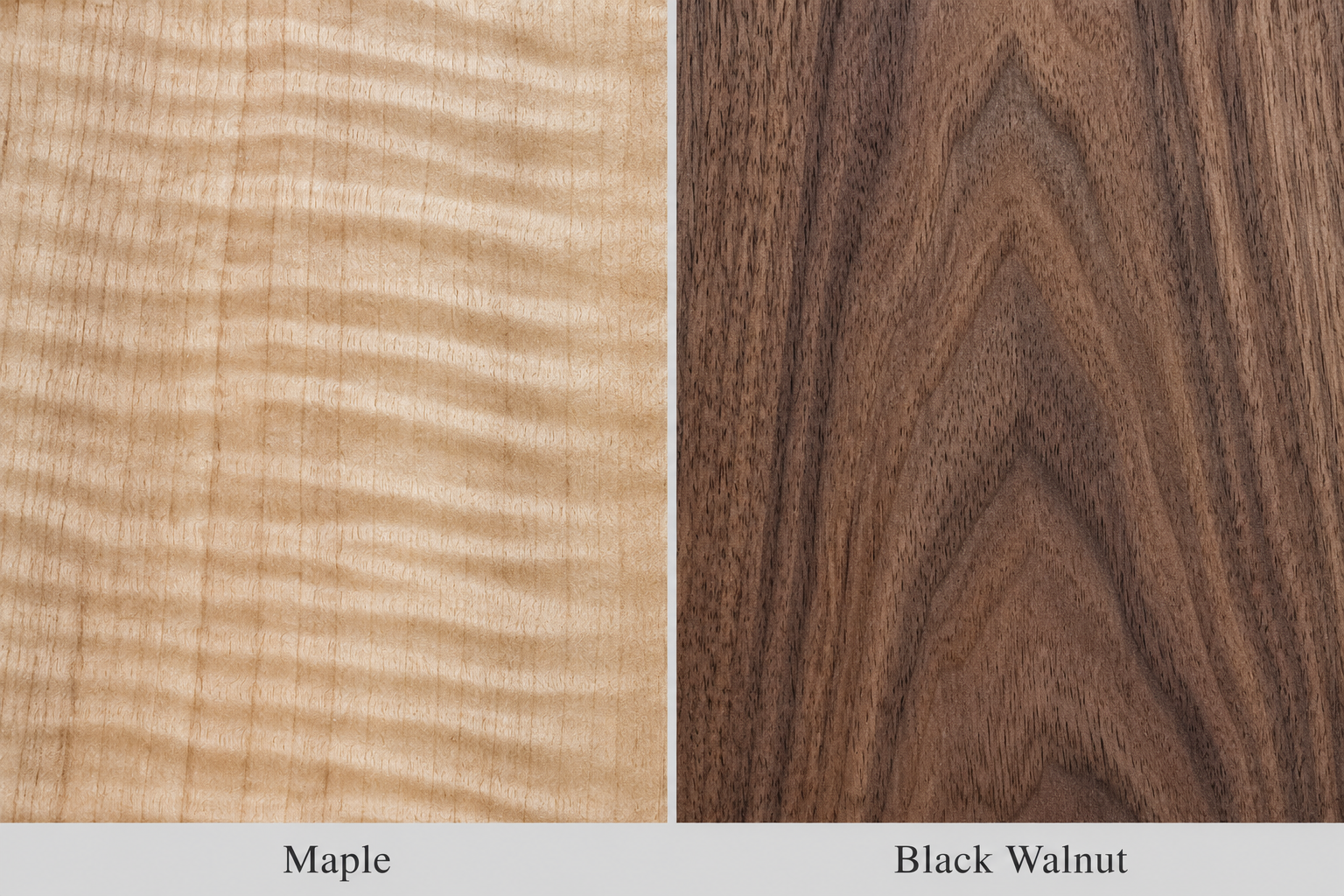
Maple offers a clean, pale appearance that works well with natural finishes and transparent stains. Flame and Birdseye figure can add striking visual detail, making figured Maple a familiar choice for electric guitar tops.
Black Walnut has a naturally darker appearance, with chocolate-brown heartwood and occasional purplish tones. Its grain can produce an attractive finished surface without a dark stain, making it well suited to builds that emphasize the wood’s natural color.
If you prefer a light appearance or want to highlight figured grain with a transparent finish, Maple is an appealing choice. If you prefer natural brown tones and a more understated look, Black Walnut offers a different visual direction.
Density and Weight Comparison
Hard Maple is generally denser than Black Walnut. With the same body dimensions and construction, an all-Hard-Maple body will typically be heavier than an all-Black-Walnut body.
For players who perform standing for long sets, this difference can influence comfort. However, density varies between individual boards, so weighing the actual body blank is more useful than relying on the species name alone.
Construction also matters. A thin Maple top over another body wood does not carry the same weight implications as a solid Maple body. Chambering, body thickness, and hardware further affect the finished instrument’s weight.
Tonal Comparison
Maple and Black Walnut are often described differently in tonewood discussions:
- Maple: Commonly associated with brightness, a clear attack, and a crisp, articulate character.
- Black Walnut: Commonly associated with a warm midrange, a rounded character, and balanced clarity.
These descriptions are useful as traditional reference points, but they should not be treated as guaranteed results.
For a solid-body electric guitar, pickups, electronics, pickup placement, strings, setup, and overall construction all influence the amplified sound. Body wood alone cannot reliably predict whether a finished guitar will sound bright or warm.
It is also helpful to distinguish between a solid body and a decorative top. A thin Maple or Walnut top should not be assumed to produce the same result as a body made entirely from that species.
Suited Musical Styles
The traditional tonal descriptions can provide a starting point when planning a build:
- Maple: Often considered for builds intended to emphasize definition and articulation, including rock, metal, progressive music, and country.
- Black Walnut: Often considered for builds intended to emphasize warmth and a rounded character, including blues, jazz, and cleaner playing styles.
Neither wood restricts a guitar to a particular genre. A Walnut-bodied guitar can work well for metal, and a Maple-bodied guitar can work well for jazz. Pickup choice and the complete instrument design are more useful guides when targeting a specific sound.

Price and Supply Comparison
Both Maple and Black Walnut are available through established North American suppliers, but prices vary considerably with grade, dimensions, drying quality, and figure.
Plain stock and highly figured instrument blanks should be compared separately. Flame or Birdseye Maple can command a substantial premium, while figured or burl Walnut can also cost considerably more than plain Walnut.
For a useful price comparison, look at blanks with similar dimensions, moisture content, and quality. A lower purchase price may offer little advantage if the material requires additional drying or has defects that reduce usable yield.
Which Should You Choose?
- For a light appearance and transparent color finishes: Maple provides a versatile base.
- For natural brown color and an understated finish: Black Walnut is an attractive option.
- For a lighter body at comparable dimensions: Black Walnut generally has an advantage over Hard Maple, though individual blanks should be weighed.
- For Flame or Birdseye figure: Maple offers these distinctive visual options.
- For a particular amplified sound: Choose the wood alongside the pickups, electronics, and overall construction.
Final Thoughts
Maple and Black Walnut offer different combinations of appearance, density, and traditional tonal reputation.
Maple appeals to builders seeking a light-colored wood, distinctive figure, and the character commonly associated with a bright, articulate instrument. Black Walnut offers natural brown color, generally lower density than Hard Maple, and a reputation for warmth and balance.
The best choice depends on the complete build. Consider the actual blank’s weight, drying quality, dimensions, and appearance alongside your preferred hardware and electronics.
For a closer look at each material, explore our individual Maple and Black Walnut guides.
Looking for Maple or Black Walnut stock for your next build? Visit our Maple product collection and Black Walnut product collection to browse available grain grades and dimensions, with worldwide shipping available.