
SOURCING GUIDE · AUTHENTICITY
How to Identify Genuine Sapele: Naming Confusion and Substitutes
Sapele vs khaya and other African mahoganies, plus practical checks for density, grain and documentation.
Buyers shopping for Sapele sometimes find that boards labeled “Sapele” or “African Mahogany” differ noticeably in color, weight, and grain. Natural variation explains some differences. Broad trade names, incomplete descriptions, and occasional misidentification can also contribute.
This guide explains what to look for, which naming issues to clarify, and how to assess a listing before ordering.
Visual inspection can help you identify questions to ask, but confirming a wood’s identity may require traceable sourcing information and professional examination.
Start with the Botanical Name
Sapele’s botanical name is Entandrophragma cylindricum. When comparing suppliers, look for this name alongside the commercial description.
“African Mahogany” is a broader trade term that may refer to other woods, particularly Khaya species. A listing using that name alone leaves room for uncertainty.
Ask the supplier to state the botanical name on the product description and invoice. This gives both parties a clear record of the material being supplied.
Features Commonly Associated with Sapele
Individual boards vary, but several characteristics can help with an initial assessment.
- Color — Sapele commonly has pinkish to reddish-brown heartwood that darkens with age and exposure.
- Grain — Interlocked grain is common. Quartered surfaces often display ribbon stripes.
- Chatoyance — Figured surfaces can change in apparent brightness and depth as the viewing angle changes.
- Weight — Sapele generally feels moderately heavy, although moisture content and natural variation affect weight.
- Scent — Freshly worked material may have a cedar-like smell.
- Texture — Examine the pores and grain on a clean surface, particularly the end grain.
Evaluate these characteristics together. Lighting, surface preparation, coatings, and storage can change how a board looks and feels.
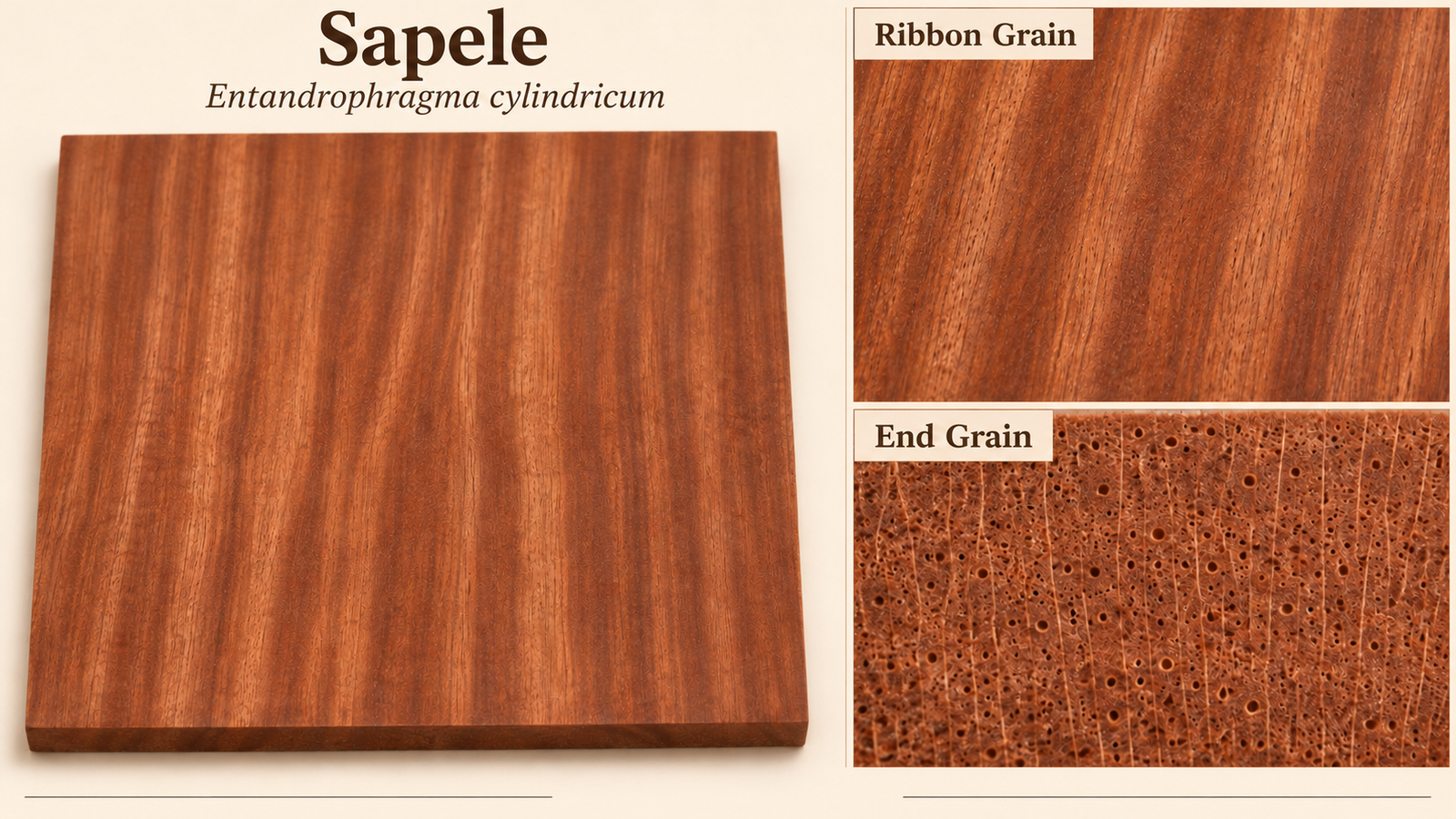
Common Sources of Confusion
Broad Trade Names
Several woods with similar appearances may be described using overlapping commercial terms.
- Sapele — Entandrophragma cylindricum
- African Mahogany — Commonly used for Khaya species, although commercial usage varies
- Utile or Sipo — Another timber within the Entandrophragma genus
- Kosipo and Tiama — Related commercial timbers that may resemble Sapele in some respects
A familiar trade name is a starting point. The botanical name and sourcing records provide more specific information.
Natural Variation Between Boards
Two genuine Sapele boards can differ in color, grain direction, figure, and weight.
The cut also matters. A quartered face may show ribbon stripes, while a differently cut surface may have a less regular pattern. A plain-looking board can still be Sapele.
Before questioning the species, compare the dimensions, cut, moisture condition, surface preparation, and photographic lighting.
Incorrect or Incomplete Descriptions
A listing may contain a mistaken species name, an ambiguous trade name, or photos that show a representative sample.
Follow up when information conflicts. For example, a supplier should be able to explain which photos show the actual set, what species is being offered, and whether the material has been treated.
Price differences also deserve context. Dimensions, figure, defects, preparation, and shipping can all affect the total.
Understanding Pommele Figure, Dye, and Veneer
Pommele Sapele is valued for its rounded, dimensional figure. When buying it, establish what the product consists of and how it has been presented.
Natural Figure and Coloring
Dye or finish can enhance existing natural figure. A treated board may still have genuine pommele grain.
Ask whether the wood has been dyed, wetted, oiled, or finished for photography. These treatments can make contrast appear stronger than it does on a dry, unfinished surface.
Solid Wood and Veneer
A genuine Pommele Sapele veneer can provide an attractive decorative surface. Check whether the listing offers solid material, a veneer sheet, or a veneered panel.
Edge and back photographs help you understand the construction. Confirm the thickness of each layer where relevant.
Photographic Presentation
Exposure, saturation, sharpening, and directional lighting can exaggerate appearance.
Request consistent photographs of the actual item, including a dry surface view. A short video can help show how the figure responds as the board is moved.
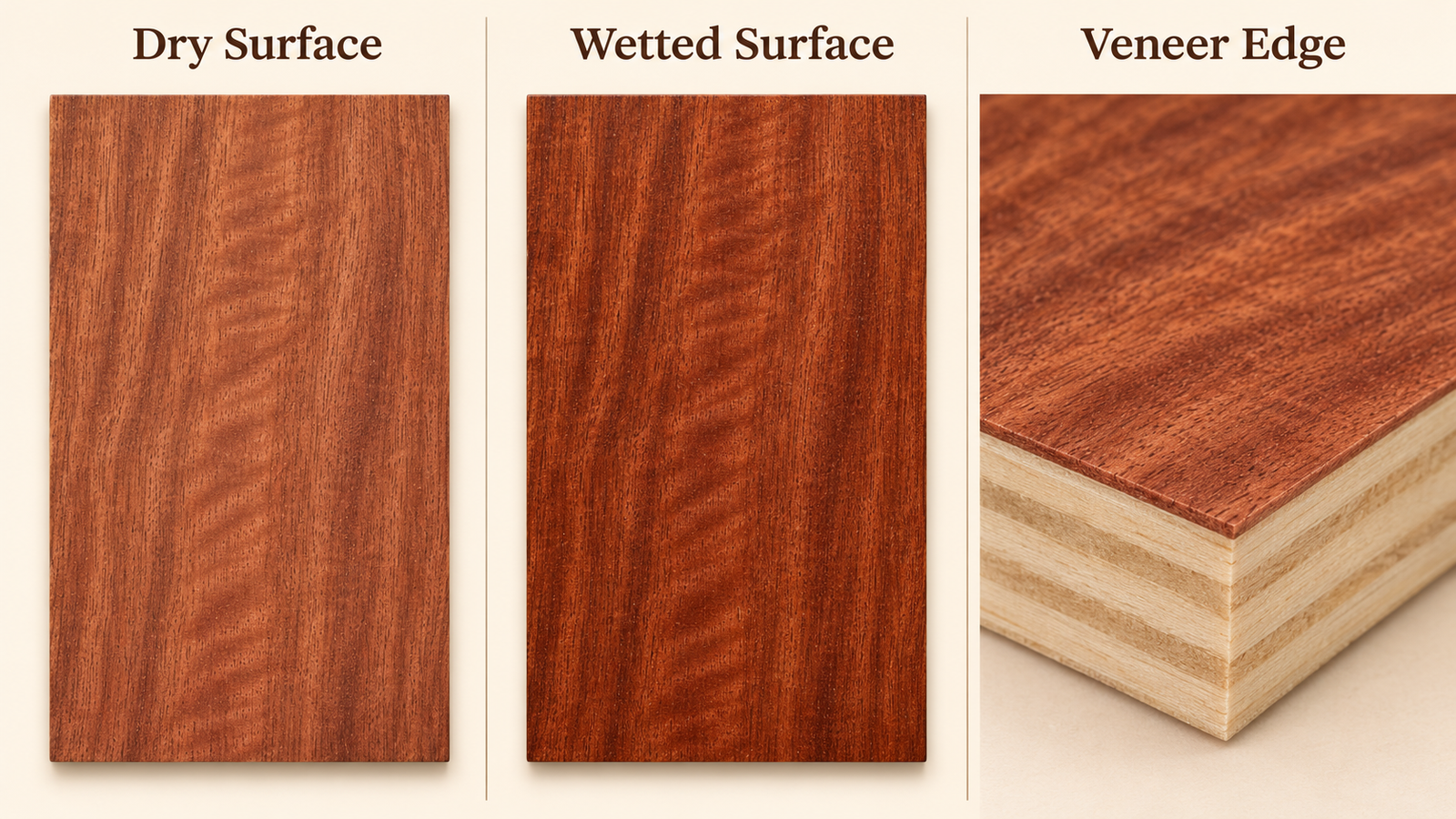
How to Assess Product Photos
Request the Actual Board or Set
Confirm whether the photographs show the item you will receive.
For a book-matched set, ask to see both halves together and separately. This helps you assess pattern placement, matching, and usable area.
Compare Several Angles
Ask for front and oblique views under consistent lighting.
Chatoyance can support your assessment of the figure, but its strength varies with cut, preparation, and lighting. Use it alongside other information.
Examine the End Grain, Edges, and Back
These views can reveal layers, cracks, checks, knots, and differences in surface treatment.
The appearance of end grain naturally differs from the face. Focus on visible structure and condition rather than expecting the same surface pattern on every side.
Confirm Dimensions
Request measurements of length, width, and thickness.
Check whether the stated dimensions describe the full blank or the clear usable area. Leave enough allowance for flattening, jointing, and shaping.
What to Check After Delivery
Record the Condition
Photograph the boards, packaging, labels, and any visible damage when the shipment arrives.
Keep the supplier’s listing and invoice so you can compare the delivered material with the agreed description.
Measure and Weigh
Density can provide a useful cross-check when the dimensions and moisture condition are understood.
For a rectangular blank:
Density in g/cm³ = weight in grams ÷ volume in cubic centimeters
Natural density variation can be substantial. An unexpected result is a reason to ask questions and check your measurements. It cannot establish species identity by itself.
Inspect All Surfaces
Look for edge checks, cracks, insect damage, knots, coatings, or visible layers.
Compare the delivered boards with the actual-item photographs supplied before purchase.
Ask Before Testing the Surface
If you suspect coloring or a coating, contact the supplier first.
A surface test may affect appearance, finishing, or return eligibility. Discuss an appropriate method with the supplier or a qualified wood specialist before proceeding.
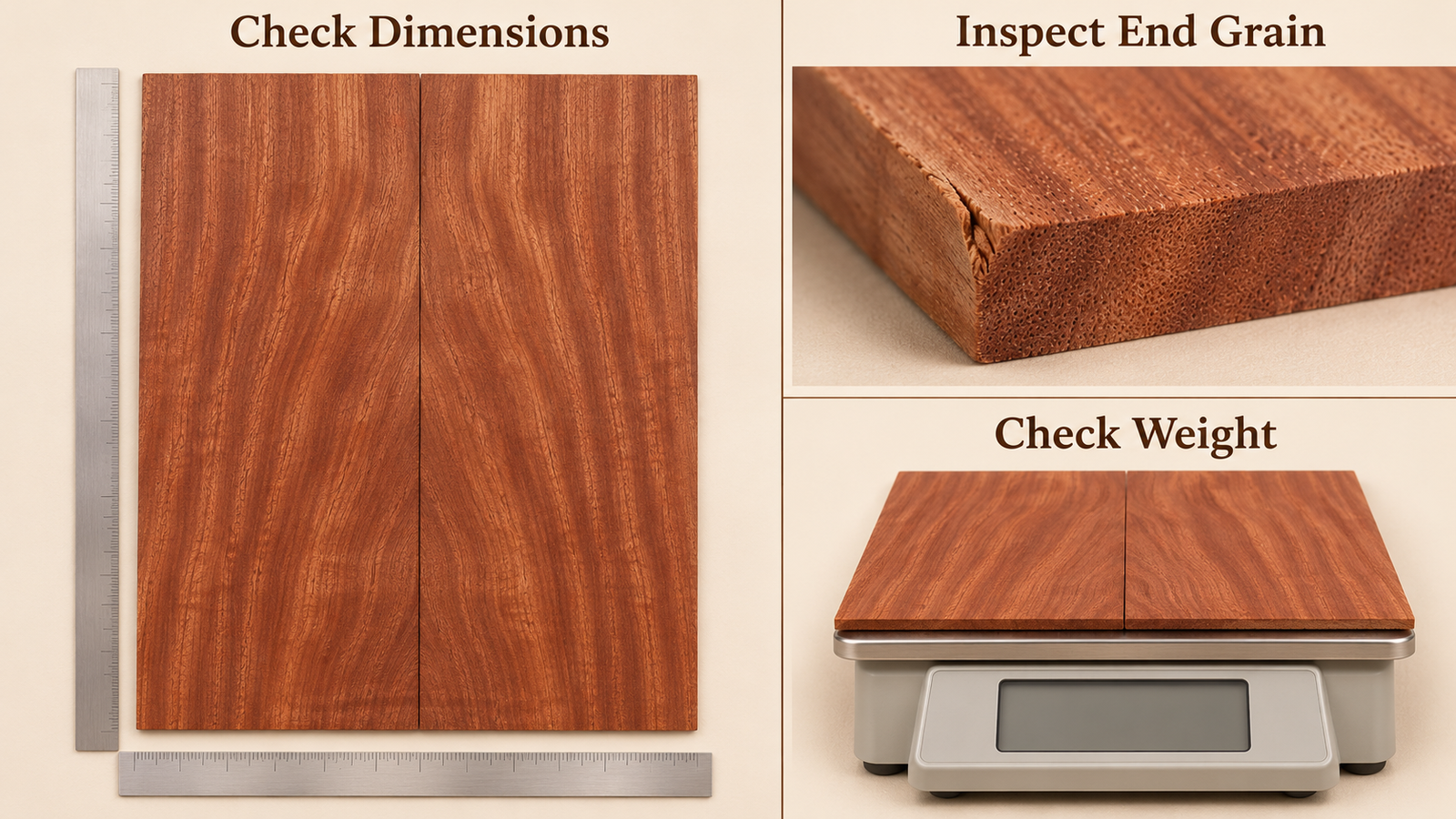
Questions to Ask the Supplier
Before placing an order, request clear answers to the following.
- What is the botanical name?
Ask for the name to appear on the invoice and product description. - What is the stated origin?
Ask what sourcing and traceability information is available. - Do the photos show the actual item?
Confirm whether you will receive the pictured board or a selected equivalent. - Has the material been treated?
Ask about dye, coatings, surface wetting, and other treatments relevant to your build. - What does the grade mean?
Request the supplier’s criteria and photographs showing any disclosed defects. - What documentation accompanies the shipment?
Confirm the requirements applicable to the species, product form, and destination. - What happens if the material differs from the description?
Understand the supplier’s inspection, return, and dispute procedures before ordering.
When Professional Identification Helps
For a high-value purchase or a dispute, consider consulting a wood identification laboratory or qualified specialist.
Microscopic examination can help identify wood anatomy. Depending on the species and sample, a laboratory may identify the material to a genus, species group, or more specific level.
Ask the laboratory what identification is possible, how to prepare a sample, and what its report will cover. Cost and turnaround depend on the service and examination required.
A Practical Buyer Checklist
Before Ordering
- Does the description state the botanical name?
- Will the invoice identify the material clearly?
- Have you received photographs of the actual board or set?
- Have you seen the end grain, edges, and back?
- Have you confirmed dimensions and usable area?
- Have you asked about treatments and photographic surface preparation?
- Have you checked available sourcing information and shipment documentation?
- Have you understood the return procedure?
After Delivery
- Have you recorded the condition on arrival?
- Do the boards match the supplied photographs and description?
- Have you checked dimensions and weight?
- Have you inspected for layers, cracks, checks, and other defects?
- Have you contacted the supplier about any discrepancies before machining?
Clear Information Helps Buyers Choose
Suppliers can make Sapele easier to assess by publishing botanical names, actual-item photographs, dimensions, treatment details, and grading criteria.
Buyers can then compare specific boards and ask informed questions before ordering. Where uncertainty remains, traceability records and professional identification can help resolve it.
To learn more about Sapele, read our species guides on Sapele and Pommele Sapele, along with our Sapele vs. Mahogany comparison.
Looking for Sapele stock? Browse the Tonewood Global collection to view product photographs, descriptions, and dimensions. Shipping availability and costs depend on the destination.