
Across the boutique guitar markets of North America, Europe, Australia, and East Asia, if there’s one tonewood whose figure looks more like fine art than lumber, it’s Ziricote. Against a deep brown-to-black background, dark spiderweb-like patterns emerge that resemble ink-wash landscape paintings — from custom shops in Texas and California, to independent luthier workshops around Osaka and Nagoya, to boutique brands in Melbourne, Ziricote is a name that keeps coming up wherever “high-end custom” is the topic.
This guide introduces a rare tonewood that’s earned a devoted following among luthiers and collectors worldwide.
What Is Ziricote?
Ziricote (Cordia dodecandra) is a hardwood in the Boraginaceae family, native primarily to Mexico’s Yucatán Peninsula and parts of Central America (also found in Belize and Guatemala). The name derives from Mayan, roughly translating to “thorny tree,” referring to the spines that appear on the trunk during the tree’s younger years.
Because its growing region is relatively concentrated and it grows slowly, Ziricote has long been a sought-after, hard-to-source material in US and European tonewood markets — top-grade webbed Ziricote sets are consistently a highlight at custom shop booths at events like NAMM.
Appearance and Grain Characteristics
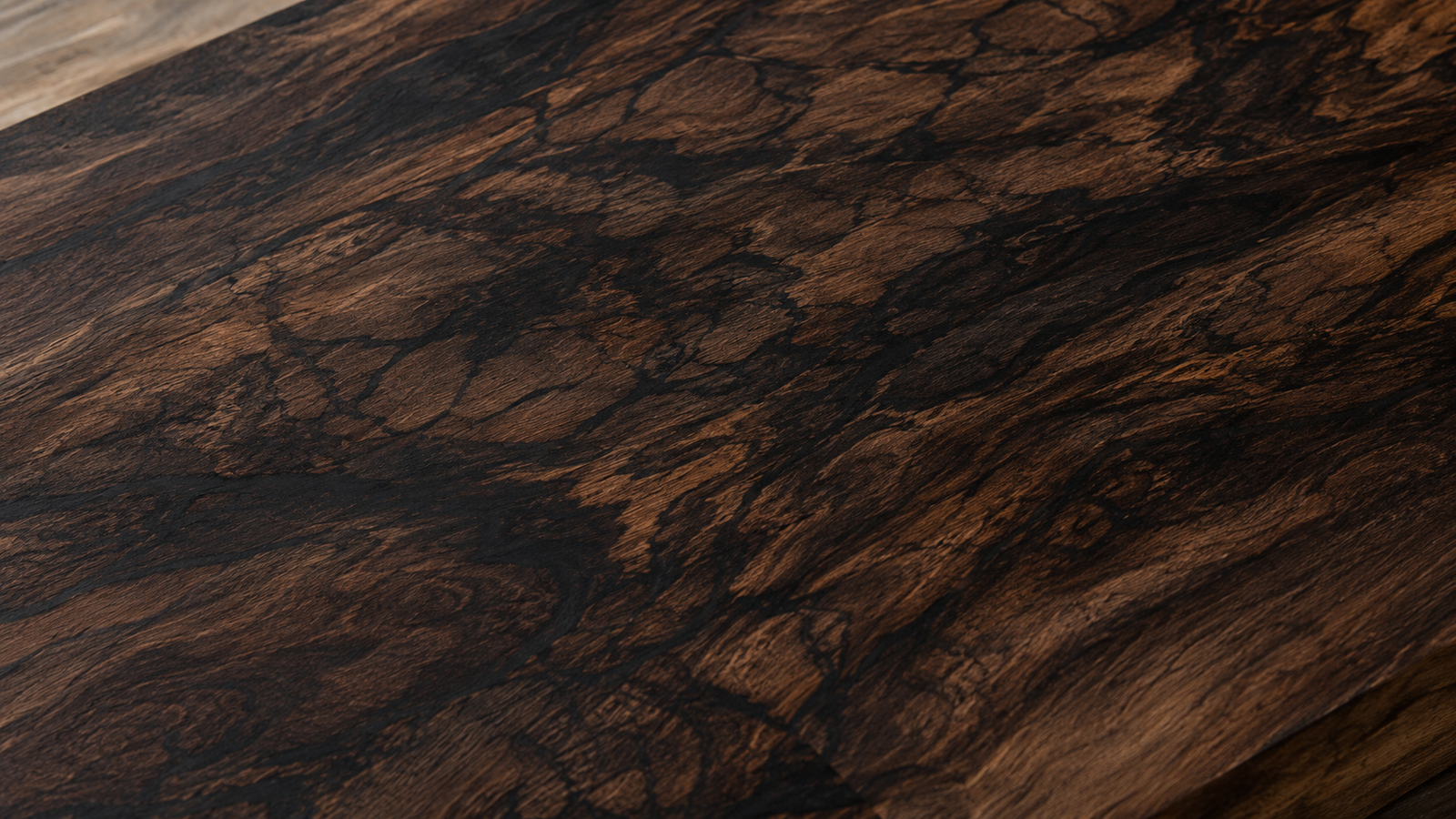
Ziricote’s most captivating feature is its spider webbing — dark, web-like or branch-like patterns spreading across a deep brown-to-near-black background, with striking depth and layering. No two pieces are ever quite alike. This “one slab, one landscape” quality is exactly why buyers across the US and Europe are willing to pay a premium for top-grade Ziricote — they’re not just buying wood, they’re buying a piece of natural art that can never be exactly replicated.
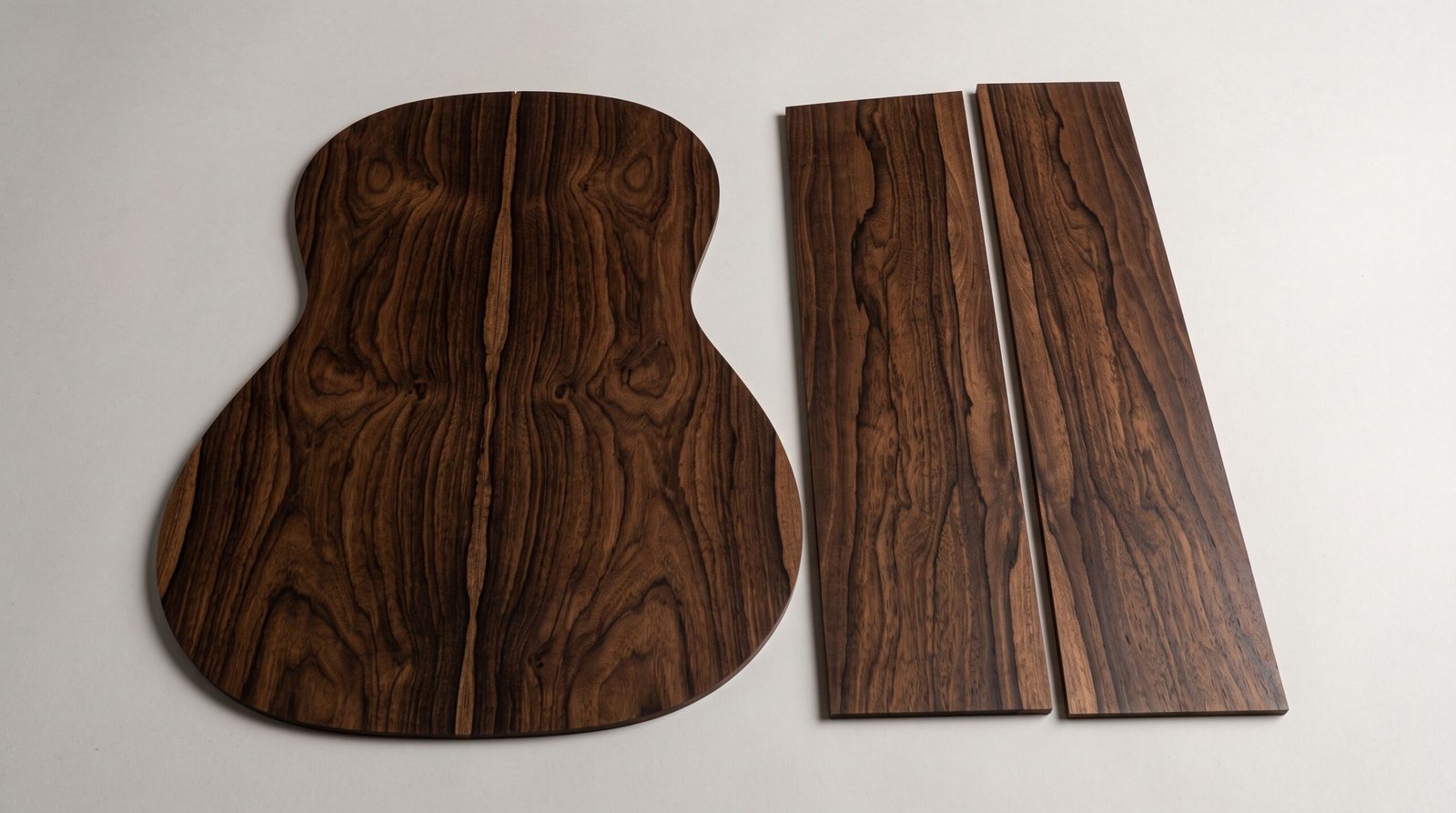
Beyond the classic spiderweb figure, some boards show a more striped, regular pattern — visually more understated and typically priced more accessibly, common on mid-tier production boutique instruments.
Density and Physical Properties
Ziricote has an air-dry density of roughly 0.75-0.80 g/cm³, placing it in the medium-to-high density hardwood range, with good hardness and wear resistance — making it an excellent fingerboard material. It naturally contains some oil content, giving it good moisture and pest resistance — a quality especially appreciated by luthiers and players in humid regions like the southeastern US and coastal Japan, where it resists cracking and warping over long-term use.
One thing to note: since Ziricote’s figure results from irregular fiber direction, it’s more prone to tear-out during machining than straight-grained woods, requiring sharper tools and more careful technique when planing or sanding — one common reason US and European custom shops charge a premium for Ziricote-equipped configurations.
Tonal Characteristics
Among luthiers in the US and Europe, Ziricote is often classified as Ebony-adjacent, with a touch of warmth:
- Clear, articulate highs: Its density delivers good high-frequency extension with crisp note definition
- Slightly warm midrange: Compared to the coldness of pure Ebony, Ziricote’s midrange is a touch softer
- Excellent sustain: The high-density structure improves overall sustain and note clarity
This “clear yet warm” tonal character has made Ziricote popular in American fingerstyle guitars and high-end Japanese acoustic back/side sets — capable of rendering clear overtone layers without pushing the overall tone into overly sharp territory. It’s a big reason you’ll find it in the work of independent American luthiers (many showcased at events like the Healdsburg Guitar Festival) as well as in the flagship lines of premium Japanese brands.
Common Applications
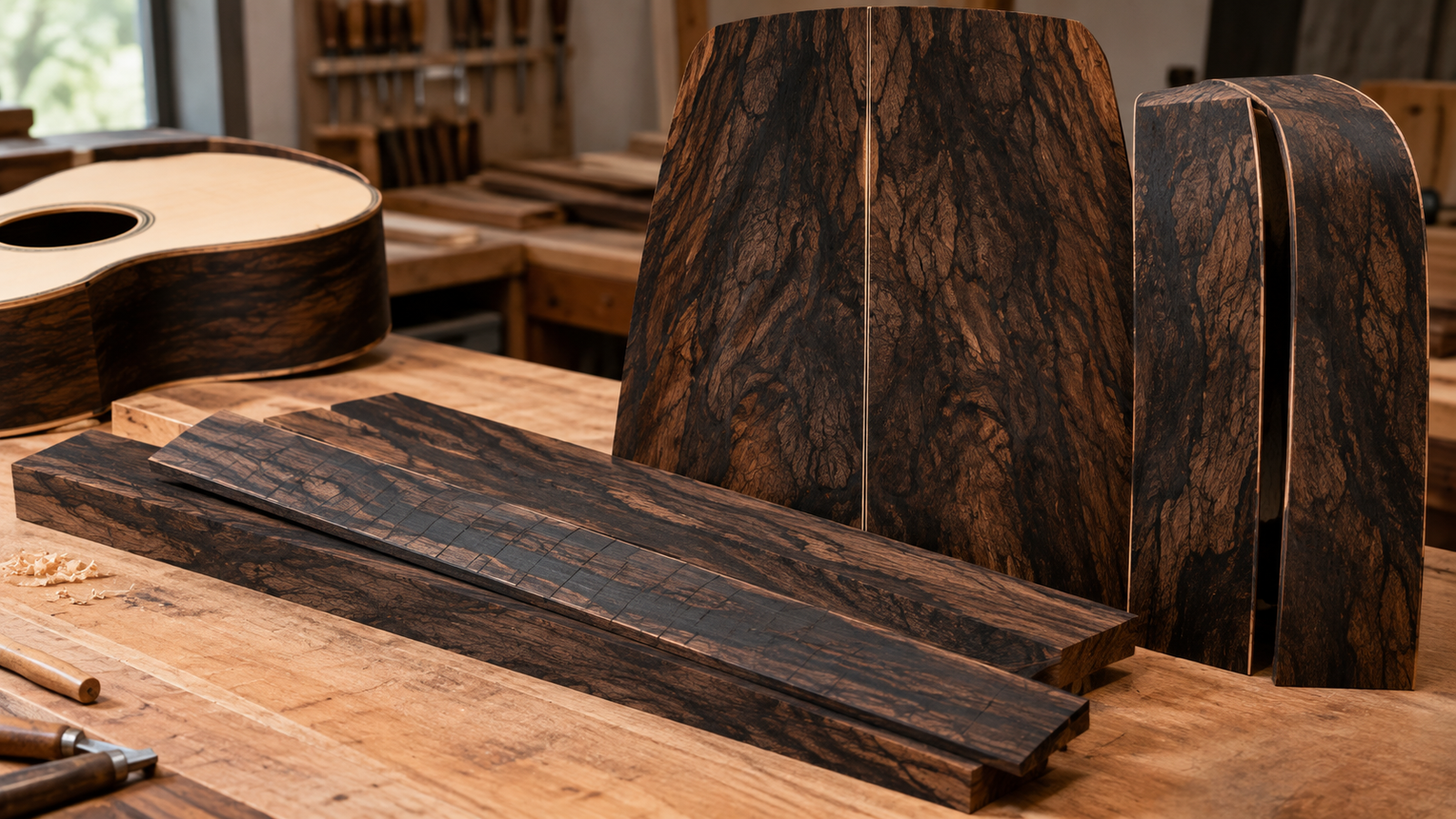
- Fingerboard: A common choice on high-end custom builds across the US and Europe, delivering both tonal quality and visual appeal
- Back & Sides: In American and Japanese high-end acoustic building, Ziricote back/side sets are often used as the visual centerpiece on flagship models
- Bridge: Some luthiers also use Ziricote for bridges, taking advantage of its high density
- Decorative Inlay: Given its distinctive figure, it’s also common for headstock veneers and binding, and is a frequent upgrade option on Australian boutique custom orders
Ziricote vs. Pale Moon Ebony: Which “Patterned Fingerboard” Should You Choose?
This is a common dilemma for buyers across Western markets configuring a custom build — both are figured dark hardwoods in a similar price range. In short: Ziricote’s figure resembles a web-like ink-wash painting with a deeper, more understated background tone, while Pale Moon Ebony offers stark black-and-white striped contrast, giving it a bolder, more “dramatic” visual impact.
We’ll break down the specific differences in an upcoming comparison article.
Buying Tips
For buyers sourcing internationally, keep an eye on:
- Spiderweb density and depth — the richer and more layered the figure, the higher the visual grade and price
- Natural cracks — Ziricote is prone to developing natural internal fissures during growth, so inspect boards carefully for potential hidden cracks
- Moisture content — tonewood should generally be kept between 8%-12%, and this matters even more when shipping to drier climates like continental Europe or the inland US, where improperly dried Ziricote is prone to cracking at areas of dense figure
- Origin and legal harvest documentation — given its relative rarity, and given that sales into the EU (subject to EUDR deforestation regulations) and the US (subject to the Lacey Act) carry compliance requirements, it’s worth confirming sourcing origin and legal harvest certification with your supplier — this is often the top priority for international buyers when sourcing
Final Thoughts
What sets Ziricote apart in the boutique guitar markets of the US, Europe, Australia, and East Asia is that ink-wash quality nature seems to paint effortlessly onto every board — no two pieces of Ziricote ever share the exact same figure, which is exactly why so many luthiers and collectors abroad are willing to pay a premium for a top-grade piece.
If you’re sourcing fingerboard or back/side material for a custom build that needs both tonal quality and visual impact, Ziricote is well worth serious consideration.
If you’re curious how to choose between Ziricote and Pale Moon Ebony, stay tuned for our upcoming comparison article.
Looking for Ziricote stock for your next build? Visit our Ziricote product collection to browse current inventory across grain grades and dimensions — with worldwide shipping available.