
When most people picture Ebony, they think of that classic solid black, dense, piano-key look. But in the boutique guitar and high-end furniture markets across the US and Australia, there’s an Ebony variant that shatters that stereotype entirely — Pale Moon Ebony.
Instead of the uniform inky black of traditional Ebony, it displays a dramatic black-and-white, light-and-dark mottled figure. This distinctive appearance has made Pale Moon Ebony increasingly popular for custom guitars, high-end furniture, decorative woodworking, and premium instrument components.
This guide introduces this striking, high-contrast tonewood, covering its appearance, physical properties, tonal characteristics, common applications, and what to look for when buying it.
What Is Pale Moon Ebony?
Pale Moon Ebony generally refers to a specific figured form of Sulawesi Ebony (genus Diospyros) from Indonesia, distinguished by its uneven color distribution.
It belongs to the same Ebenaceae family as other commercially important Ebony species, but differences in growing conditions and natural pigmentation can produce striking variations in color and figure.
Worth noting: “Pale Moon Ebony” is not a strict botanical classification. It is primarily a trade name used in Western tonewood markets for a highly figured Ebony product. Depending on the supplier and market, similar material may also be described as “Marbled Ebony” or “Grey/Black Ebony.”
When sourcing Pale Moon Ebony, it is therefore important to confirm the specific botanical species, country of origin, and documentation with the supplier rather than relying on the trade name alone.
Appearance and Grain Characteristics
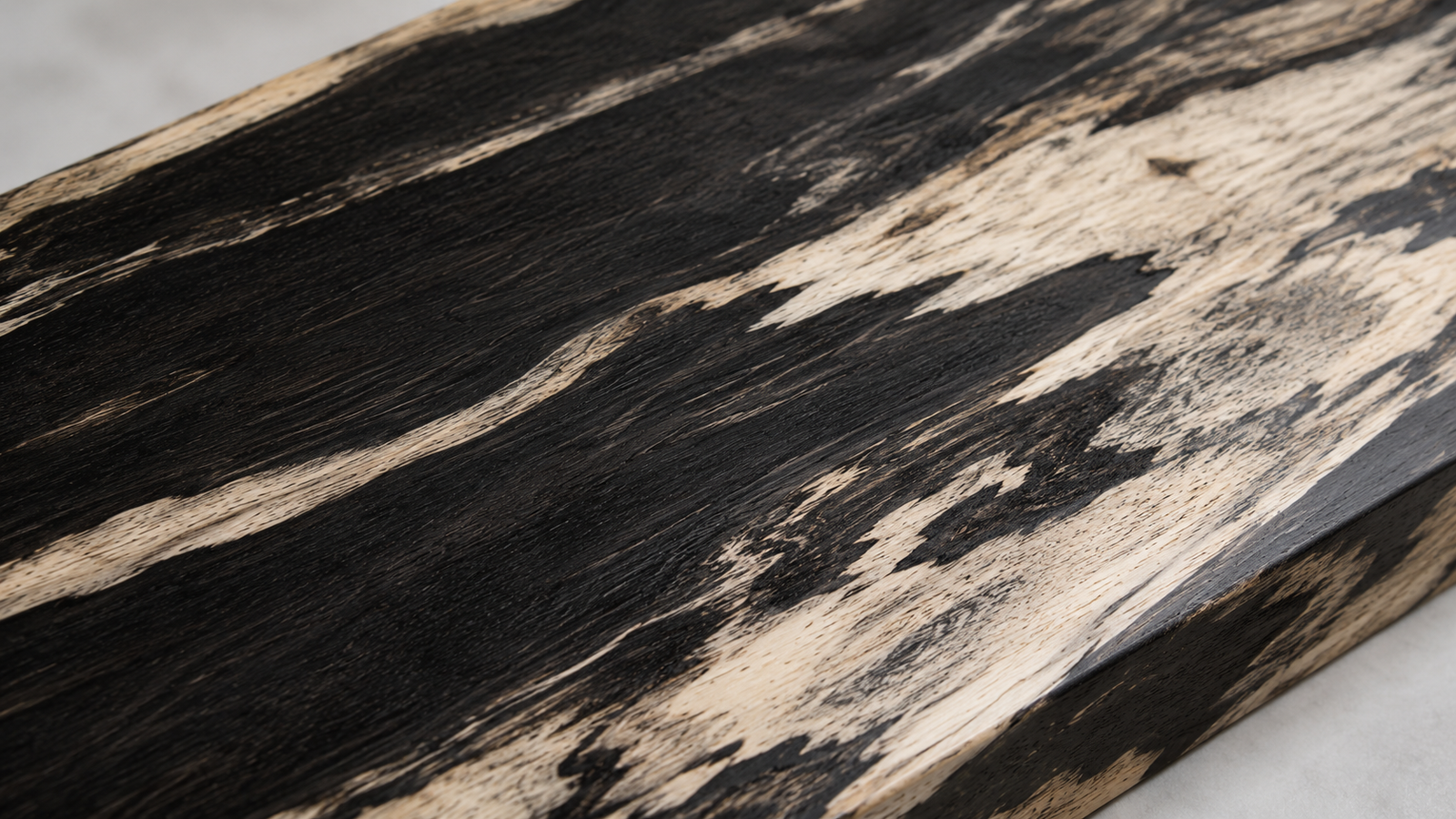
Pale Moon Ebony’s most striking feature is its bold black-and-white contrast.
Ivory-white, cream, and grey areas can appear alongside deep black patches and streaks, creating a highly distinctive mottled figure. Compared with conventional uniformly dark Ebony, Pale Moon Ebony offers a much more dramatic visual character.
Each piece can look completely different. Some boards are predominantly black with lighter accents, while others have a much more balanced distribution of black and light areas. Higher-grade pieces may feature especially unusual patterns, strong contrast, or visually balanced figure.
The grain itself is generally fine and dense, but the visual effect comes primarily from the natural variation in color rather than from a highly figured grain structure such as flame or quilt.
Density and Physical Properties
Pale Moon Ebony is a dense tropical hardwood and is generally considered suitable for applications where hardness, wear resistance, and dimensional stability are important.
Reported density can vary significantly depending on the specific species, growing conditions, moisture content, and individual board. Rather than treating a single density figure as universal for all Pale Moon Ebony, buyers should evaluate the actual stock being purchased.
Its dense structure allows the wood to take a smooth finish and provides a refined surface feel, which is particularly valuable for fingerboards and other frequently handled guitar components.
Because figured Ebony can contain natural variation in density and grain orientation, careful machining and sanding are recommended. Sharp tools, controlled feed rates, and appropriate sanding techniques can help produce a clean, even surface.
Tonal Characteristics
When used for guitar components, Pale Moon Ebony generally exhibits the characteristics associated with dense hardwoods.
Its high density can contribute to:
- Bright, clear attack — notes can feel immediate and well defined.
- Good note separation — useful for detailed chord work and complex passages.
- Strong sustain — dense hardwood construction can support a clear, sustained response.
- Crisp articulation — particularly suitable for players who prefer a precise and responsive feel.
However, the tonal contribution of a fingerboard should not be overstated. The overall sound of a guitar depends on the complete instrument, including the body woods, neck construction, scale length, bridge, pickups, strings, setup, and playing technique.
For this reason, Pale Moon Ebony is usually selected primarily for its visual character and premium appearance, rather than because it is expected to produce a dramatically different sound from other dense Ebony fingerboard materials.
Common Applications
Pale Moon Ebony is particularly attractive for projects where the wood itself is intended to become a visual focal point.
Fingerboards
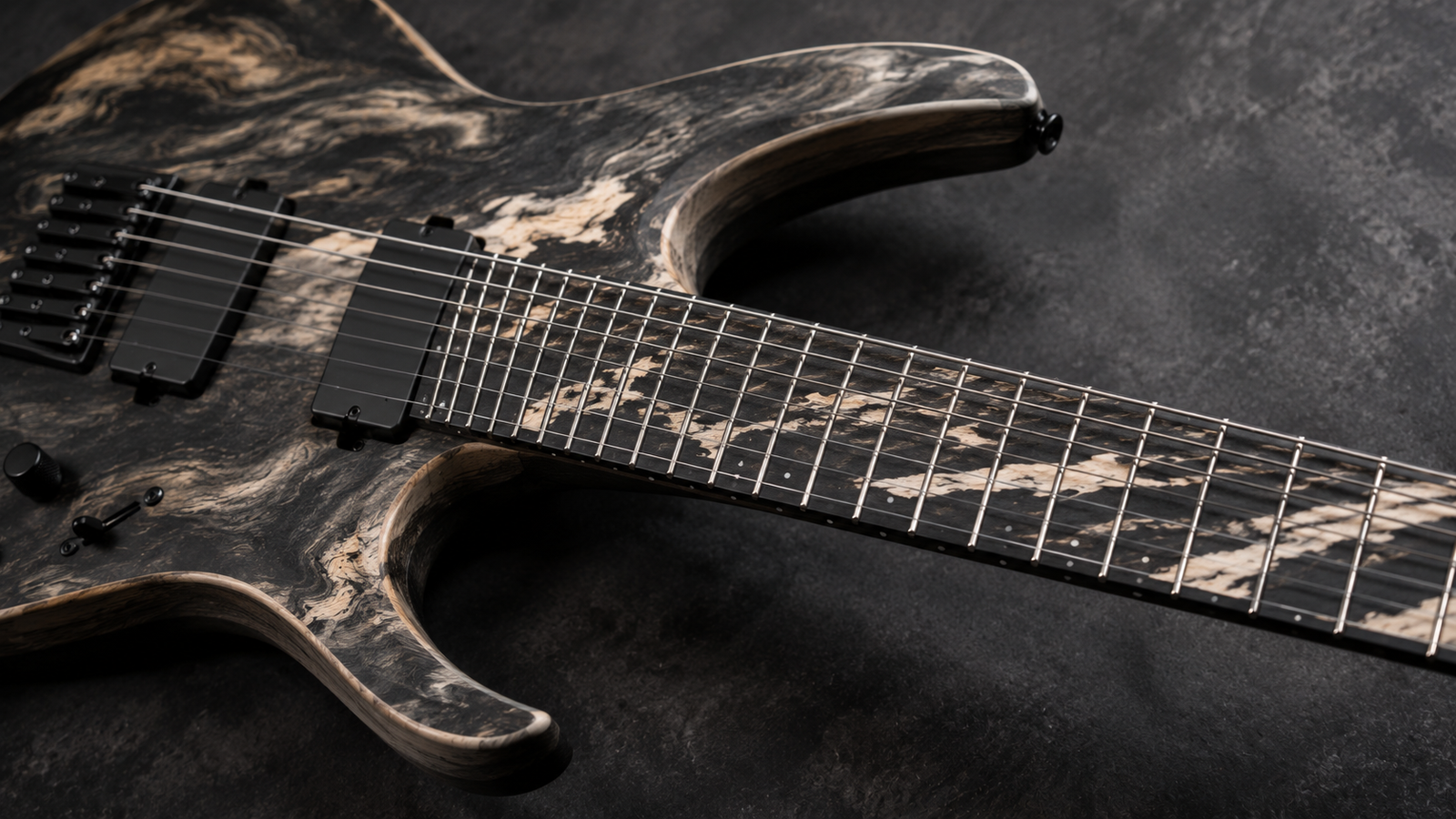
The fingerboard is one of the most popular applications. The strong black-and-white figure can transform an otherwise conventional guitar into a highly distinctive custom instrument.
Bridges
Some builders use Pale Moon Ebony for bridges, especially when they want the bridge and fingerboard to share a consistent visual theme.
Knobs and Hardware Accents
Small pieces can be used for guitar knobs, pickup covers, control plates, headstock veneers, and decorative accents. Because these components require relatively little material, highly figured offcuts can also be put to good use.
Headless and Multi-Scale Guitars
Modern headless and multi-scale guitar designs provide an especially good platform for dramatic fingerboard materials. The clean geometry of these instruments allows highly figured Ebony to become a major part of the overall visual design.
Pale Moon Ebony vs. Ziricote: Which “Patterned Fingerboard” Should You Choose?
Pale Moon Ebony and Ziricote are both attractive choices for builders who want a fingerboard with more visual character than conventional dark hardwoods.
Pale Moon Ebony is generally chosen for its strong black-and-white contrast. The dramatic light and dark distribution makes it immediately noticeable and works particularly well on modern, minimalist, headless, and multi-scale guitars.
Ziricote, by contrast, is known for its complex dark spiderweb-like grain patterns. Its overall appearance tends to have a deeper brown background with intricate dark lines, creating a more layered and organic visual effect.
In simple terms:
- Pale Moon Ebony → bold, high-contrast, black-and-white appearance
- Ziricote → darker, more complex, web-like grain
- Pale Moon Ebony → ideal for a dramatic modern aesthetic
- Ziricote → ideal for a natural, intricate, traditional-luxury aesthetic
Buying Tips
For international buyers, several factors are worth considering when selecting Pale Moon Ebony stock.
1. Contrast and Pattern Uniqueness
The visual grade of figured Ebony can vary considerably from piece to piece. Strong contrast, unusual figure, and attractive pattern distribution can increase the value of a board.
If the material is being purchased for a visible fingerboard, ask the supplier for photographs of the actual piece rather than relying only on representative product images.
2. Hardness and Material Consistency
Because natural Ebony can vary between individual boards, inspect the material carefully for grain irregularities, checks, cracks, or areas that may require additional machining.
For fingerboards, a consistent, hard surface is particularly important because the wood will experience repeated contact with frets, strings, and the player’s hands.
3. Moisture Content
Proper moisture control is essential for tonewood.
For guitar-making materials, suppliers and builders generally aim for moisture content appropriate to the environment where the instrument will be manufactured and used. The exact target should take into account local climate, storage conditions, and the final instrument’s environment.
When purchasing internationally, ask the supplier about the current moisture content and acclimatization recommendations before machining.
4. Origin and Compliance Documentation
Buyers should also pay attention to the species, origin, and legal documentation of the material.
The trade name “Pale Moon Ebony” does not by itself identify a specific botanical species. Depending on the actual species and country of origin, different import, export, and timber-legality requirements may apply.
For commercial international purchases, it is therefore advisable to request accurate species information and relevant documentation from the supplier before shipment.
Final Thoughts
Pale Moon Ebony challenges the traditional image of Ebony as a uniformly black hardwood.
Its defining characteristic is the dramatic contrast between dark and light areas, giving each board a distinctive appearance that can become the visual centerpiece of a custom guitar.
For builders looking for a fingerboard material with a bold, contemporary character, Pale Moon Ebony offers something that conventional black Ebony simply cannot: natural black-and-white figure with a highly individual pattern.
Ultimately, the best choice depends on the design of the instrument. If you want maximum contrast and a modern statement piece, Pale Moon Ebony is an excellent option. If you prefer intricate, web-like grain and a darker overall appearance, Ziricote may be the better choice.
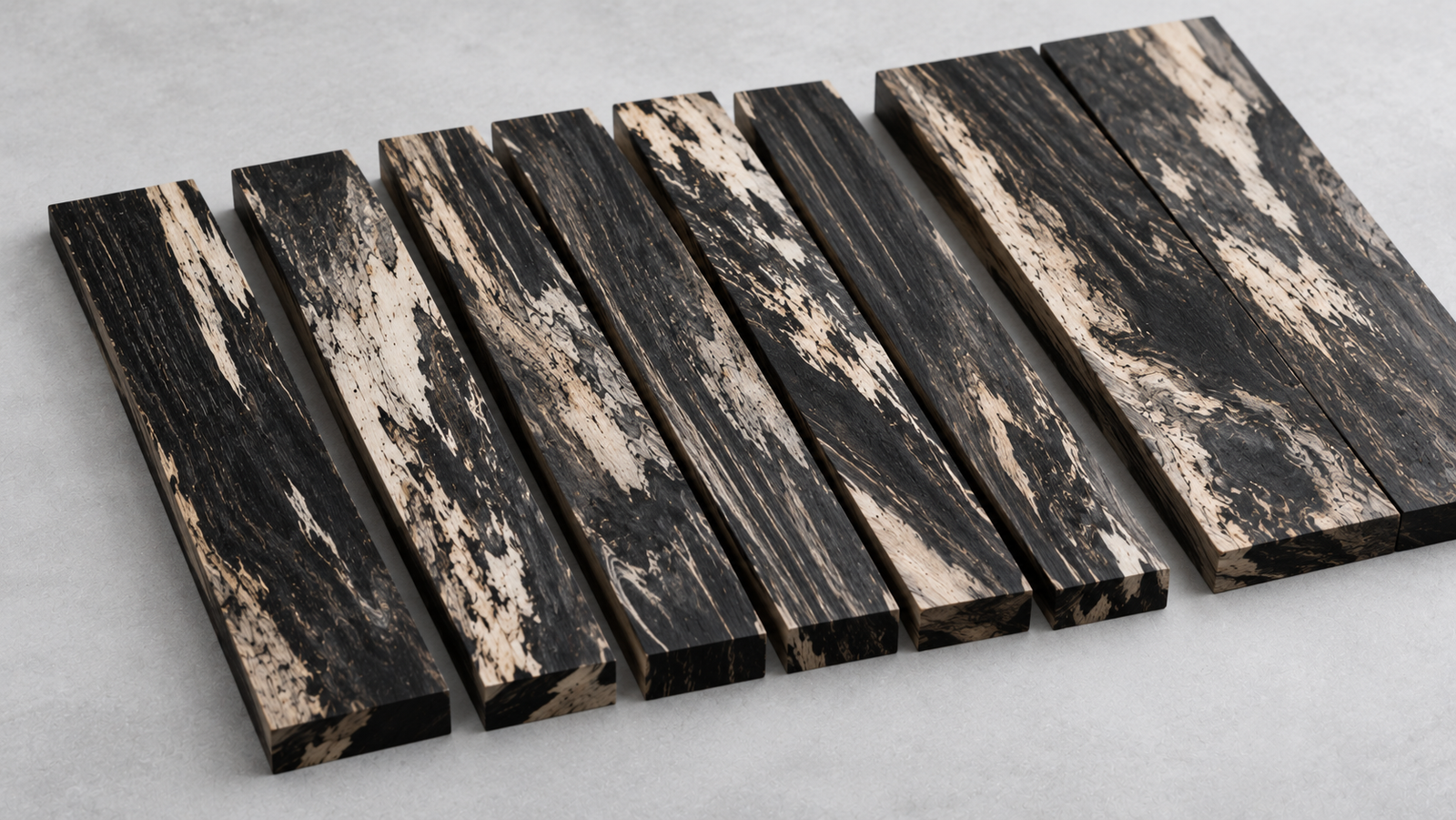
Looking for Pale Moon Ebony stock for your next build? Visit our Pale Moon Ebony Tonewood collection to browse available fingerboard blanks and other figured Ebony stock in different grades and dimensions. Worldwide shipping is available.